This article covers 3.2.4 Psychological problems of the AQA GCSE Psychology specification.
Antidepressants: Changing Brain Chemistry
- Antidepressant drugs treat depression at the biological level, changing the chemistry of the brain to reduce symptoms.
- They act on neurotransmitters, the chemical messengers that carry signals across the synapse between neurons.
- Depression is linked to low activity of the neurotransmitter serotonin, and antidepressants aim to raise it.
Key Idea
- Drug therapy aims to adjust neurotransmitter activity so that everyday functioning improves.
- It targets symptoms at the synapse rather than a person's thoughts or circumstances.
How Antidepressants Work
Definition
Antidepressant
A type of medication used to treat depression, most commonly by increasing the amount of the neurotransmitter serotonin available at the synapse.
- The most common antidepressants, SSRIs, block the reuptake of serotonin back into the sending neuron.
- This leaves more serotonin in the synapse for longer, which increases signalling between neurons.
- Over a few weeks this change is thought to lift mood and ease symptoms such as low energy.
Example
- On the NHS a GP might prescribe an SSRI such as fluoxetine for moderate depression.
- The person is usually told it can take two to four weeks before they notice a difference.
Weighing Up Antidepressants
- A strength is that drugs are easy to take and can work relatively quickly, which helps someone in crisis.
- A further strength is the strong evidence that they reduce symptoms for many people, freeing them to engage with other help.
- A weakness is side effects, which can be unpleasant and lead some people to stop taking their medication.
- Drug therapy is reductionist, treating the biology and not the thoughts or circumstances that a holistic approach would also address.
Common Mistake
- Do not say drugs 'cure' depression; they manage symptoms, and often work best combined with a talking therapy.
- Show the reductionism-holism debate by contrasting the biological fix with a fuller, whole-person view.
Cognitive Behaviour Therapy: Treating Depression by Talking
- CBT treats depression through conversation with a trained therapist, rather than through medication.
- It focuses on the here and now, changing the unhelpful thoughts and the behaviours linked to them that keep low mood going.
Key Idea
- CBT works on a person's present thoughts and the actions tied to them.
- By replacing negative thoughts with more realistic ones, it aims to lift mood.
How CBT Changes Thinking
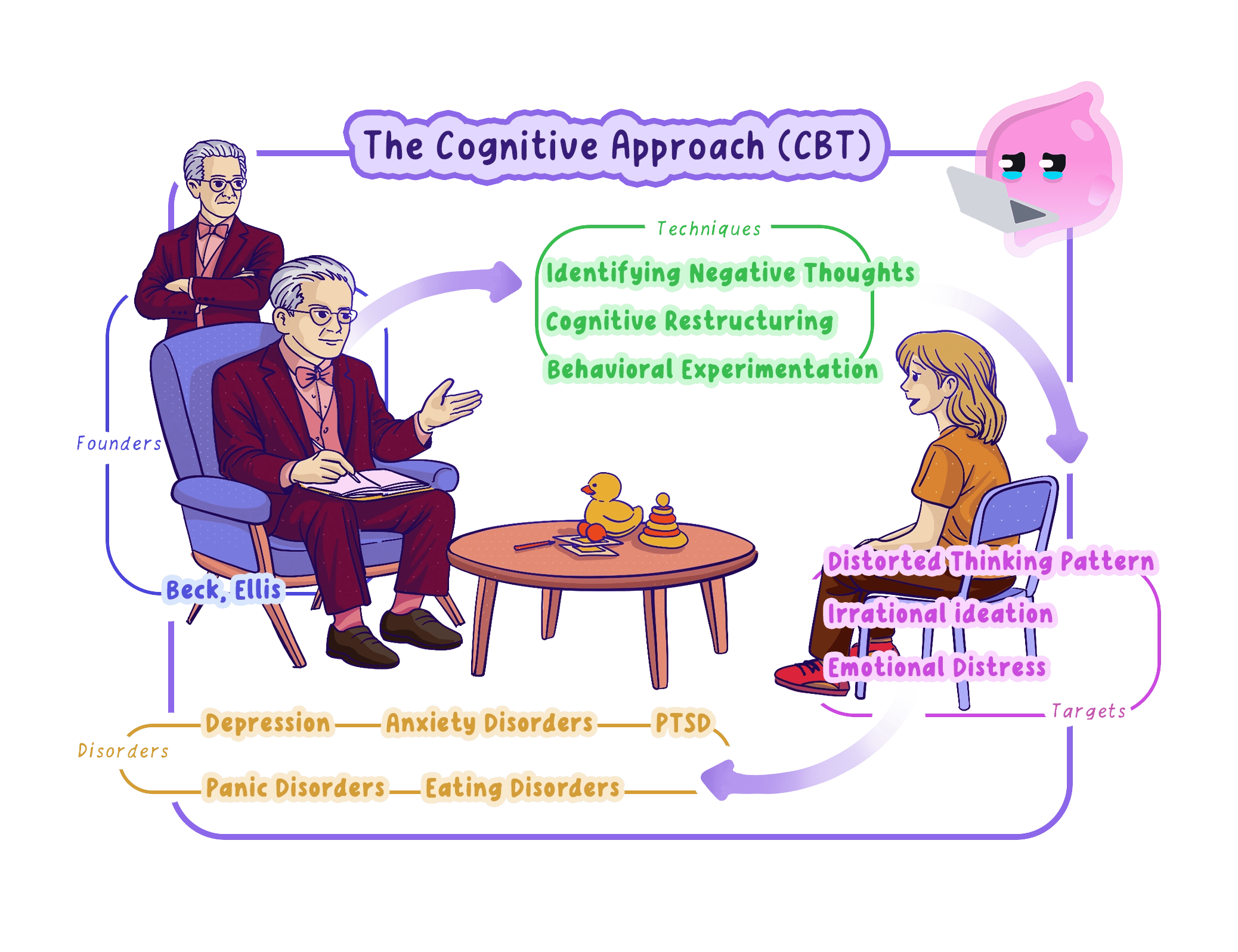
- CBT starts by helping a person identify the negative, automatic thoughts that fuel low mood.
- The therapist and client then challenge these thoughts, testing whether they hold up against real evidence.
- The client is set behavioural tasks, such as gradually facing avoided situations, to break the link between thought and behaviour.
- As unhelpful thoughts are replaced with more realistic ones, symptoms tend to ease.
Example
- Someone with depression might hold the belief 'I always fail'.
- In CBT they test this against real evidence, notice successes they had discounted, and adjust the belief, which lifts their mood.
Weighing Up CBT
- A strength is that CBT avoids the physical side effects that drugs can bring.
- Another strength is that it is more holistic, treating the person's thoughts and behaviour rather than their biology alone.
- A weakness is that it takes time, effort and motivation, so it may not suit someone in acute crisis.
- CBT has a strong evidence base and is structured and relatively quick, which is why it is widely used for depression, though it demands engagement and may not reach the deeper causes of distress.
Common Mistake
- Contrast CBT with drug therapy: CBT changes thinking, while antidepressants change brain chemistry.
- Use the holism-reductionism debate: CBT is more holistic than the reductionist drug approach.
Structuring Your Answer
- Name the treatment: antidepressant medication or CBT.
- Explain how it improves mental health, including the mechanism at the synapse or in a person's thinking.
- Evaluate with strengths, weaknesses and the reductionism-holism debate.
Self review
- How do antidepressants work at the synapse?
- What does CBT target, and how?
- Give one strength and one weakness of drug therapy.
- Why is CBT seen as more holistic than drug treatment?