This article covers 3.2.4 Psychological problems of the AQA GCSE Psychology specification.
Addiction as a Learned Behaviour
Definition
Reinforcement
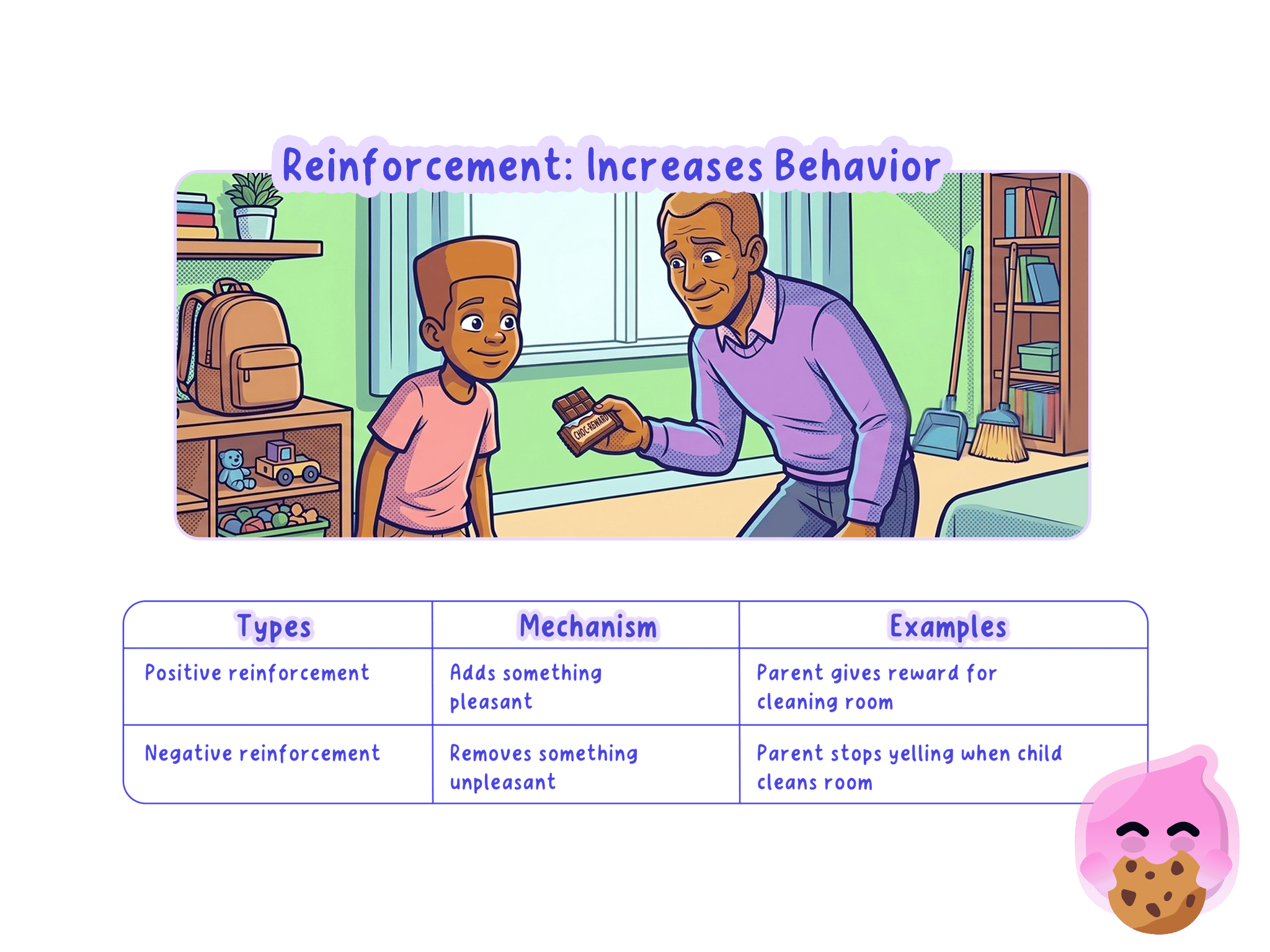
Anything that follows a behaviour and makes that behaviour more likely to happen again. Positive reinforcement adds something pleasant, such as praise, while negative reinforcement removes something unpleasant.
- The psychological explanation says addiction is learned, in the same way other behaviours are learned, rather than being fixed by biology alone.
- Learning theory points to two processes: reinforcement, which rewards use, and modelling, which is copying other people.
- Peer influence supplies both, because friends can reward use and also act as models to imitate.
Key Idea
- If a behaviour is rewarded, a person is more likely to repeat it, so addiction can be established and maintained.
- Because it is learned, this explanation also suggests the behaviour can be unlearned through treatment.
Reinforcement: Why Use Is Repeated
- Positive reinforcement happens when using a substance produces a pleasant feeling, which adds a reward and makes use more likely to be repeated.
- Negative reinforcement happens when using removes something unpleasant, such as the discomfort of withdrawal, which also strengthens the behaviour.
- Over time these rewards build a strong habit, because each use is followed by a consequence that encourages the next.
Example
- Consider someone who smokes: the first cigarette of the day eases their craving, which is negative reinforcement.
- The pleasant lift they feel is positive reinforcement, and together the two keep the habit going.
Peer Influence and Modelling
Definition
Modelling
Demonstrating a behaviour that other people can watch and imitate; the person whose behaviour is copied is called the model.
- Social learning theory says people imitate models, especially those they admire or want to fit in with.
- A young person may see friends using a substance and copy them to gain approval, which is modelling in action.
- That peer approval works as reinforcement, so modelling and reinforcement often combine to start and maintain an addiction.
Note
- The account fits how many habits form in social settings, which is a genuine strength.
- But it can play down biological factors such as genetic vulnerability, so a full explanation needs both.
Strengths and Weaknesses
- A strength is that it explains why addiction often appears within friendship groups and families that share habits, which fits everyday observation.
- A further strength is practical: if addiction is learned, treatments such as CBT and self-management can help a person relearn healthier behaviour.
- A weakness is that it may be environmentally reductionist, downplaying the genetic vulnerability suggested by twin studies.
- Another weakness is that not everyone exposed to substance-using peers develops an addiction, so learning cannot be the whole story.
Common Mistake
- Do not present learning theory as the only explanation; you gain marks for weighing it against the biological account.
- Use precise terms: name positive and negative reinforcement rather than just saying 'reward'.
Structuring Your Answer
- Explain reinforcement, naming both positive and negative reinforcement.
- Explain peer influence and modelling, and how they combine.
- Give a balanced evaluation with at least one strength and one weakness.
Self review
- How does reinforcement maintain an addiction?
- What is negative reinforcement in the context of addiction?
- How does modelling contribute to addiction?
- Give one weakness of the psychological explanation.