Fluid pressure increases with depth and density
Definition
Liquid pressure
The pressure caused by the weight of liquid above a point.
- A deeper point has a taller column of fluid above it, so a greater weight of fluid presses down.
- This produces a larger pressure and therefore a larger normal force on the same area.
- At the same depth, a denser fluid has more mass and weight in the same volume, so it produces greater pressure.
- At the same horizontal level in one stationary connected liquid, the pressure is the same.
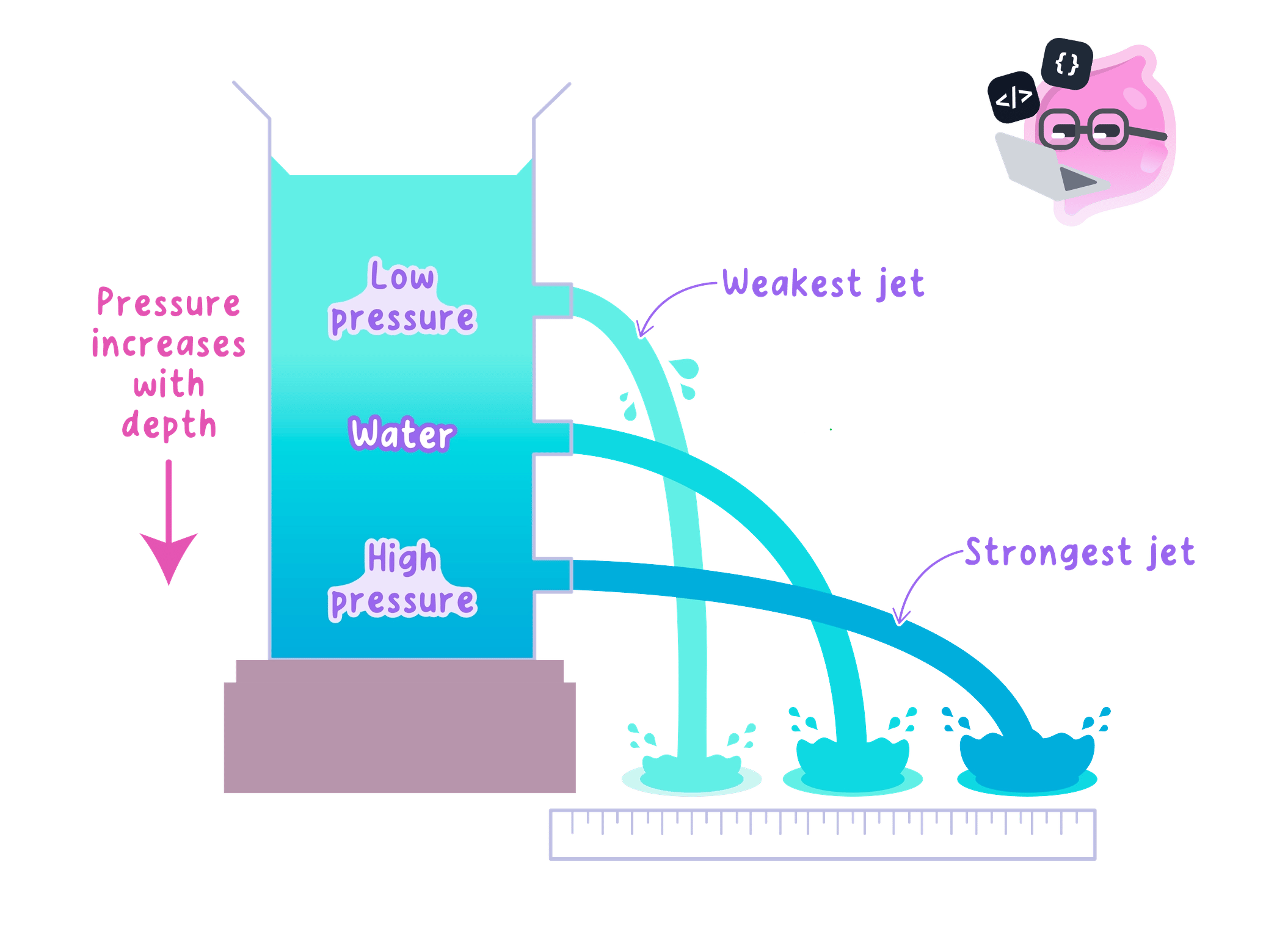
Jet distance provides qualitative evidence
- Water from a lower hole leaves faster and travels farther because the pressure difference between the inside and outside is greater.
- A fair comparison uses holes of equal size in the same container and measures their horizontal jet distances under the same conditions.
Example
Comparing points in a liquid
- Point B is twice as deep as point A in the same liquid, so the pressure due to the liquid at B is twice that at A.
- A point at the same depth in a denser liquid experiences greater pressure because the overlying liquid column weighs more.
Pressure difference drives motion
- A fluid moves from higher pressure towards lower pressure when a path is available.
- The quantitative equation and pressure differences are developed in the next article.
Common Mistake
Do not say that pressure increases because particles move faster at greater depth; the increase is caused by the greater weight of fluid above.
Self review
- Why does liquid pressure increase with depth?
- Why does a denser liquid produce greater pressure at the same depth?
- What does the three-hole water-jet demonstration show?
- At what locations in a stationary connected liquid is pressure equal?
