Question 24
FA student uses the circuit in the Figure to find the power of a lamp.
Figure
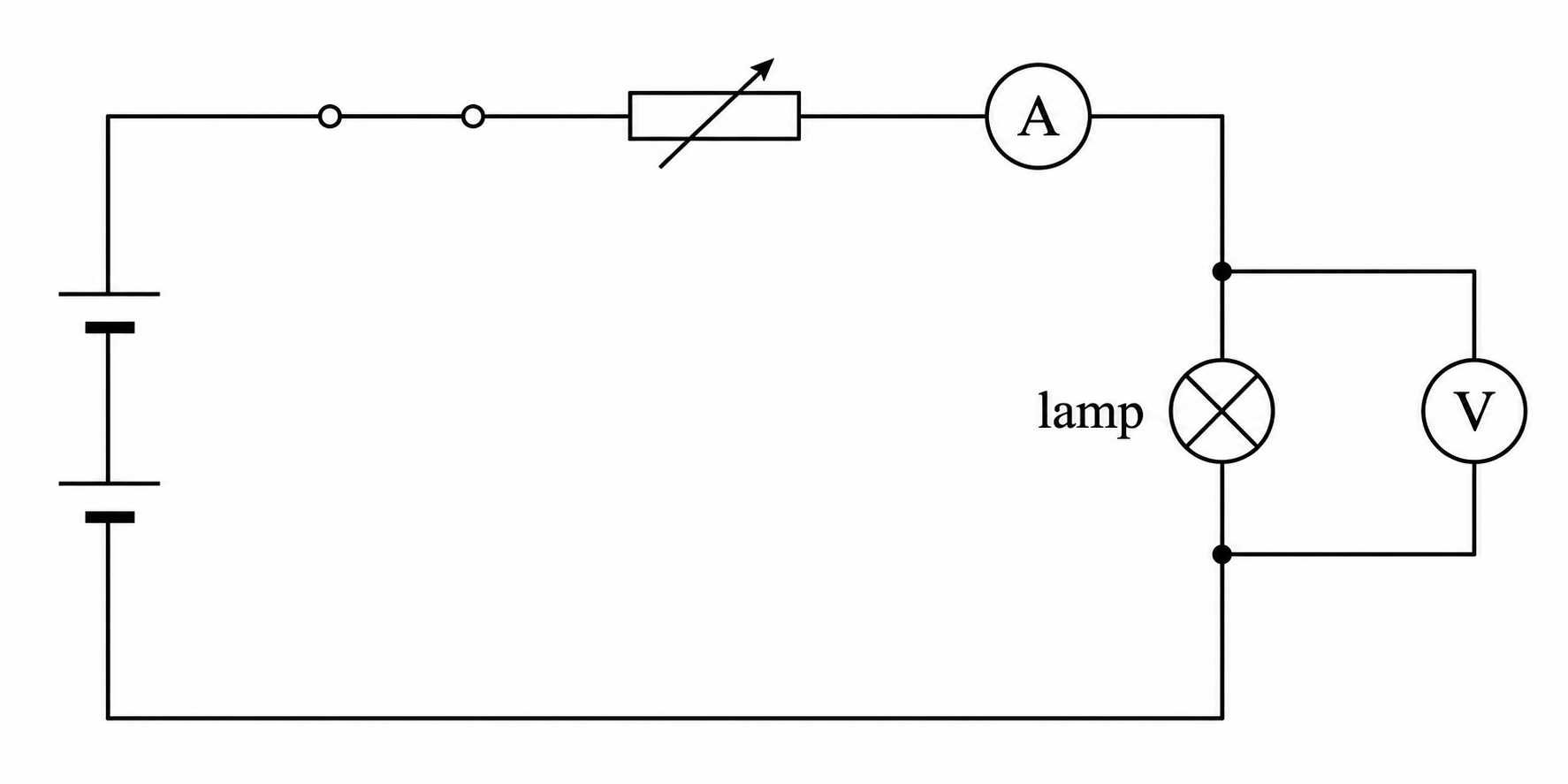
The ammeter reads 0.25 A and the voltmeter reads 6.0 V.
a.[1]
State the equation linking electrical power, current and potential difference.
b.[2]
Calculate the power of the lamp.
c.[3]
The lamp is switched on for 2.0 minutes.
Calculate the energy transferred by the lamp.
Use the equation
energy transferred=current×potential difference×time\text{energy transferred} = \text{current} \times \text{potential difference} \times \text{time}energy transferred=current×potential difference×time
d.[2]
The student adjusts the variable resistor so that the current in the lamp increases.
The potential difference across the lamp also increases.
Explain what happens to the power of the lamp.
10.3 Electrical energy and power Questions
105 exam-style questions on Edexcel GCSE Physics 10.3 Electrical energy and power, covering 10.3.1 The heating effect of an electric current, 10.3.2 Reducing energy transfer in wires, 10.3.3 Advantages and disadvantages of the heating effect, 10.3.4 Energy transferred by an electrical circuit, 10.3.5 Electrical power, and 10.3.6 Energy transfers in domestic devices. Each one has a worked solution and a mark scheme showing where the marks go.