Question 19
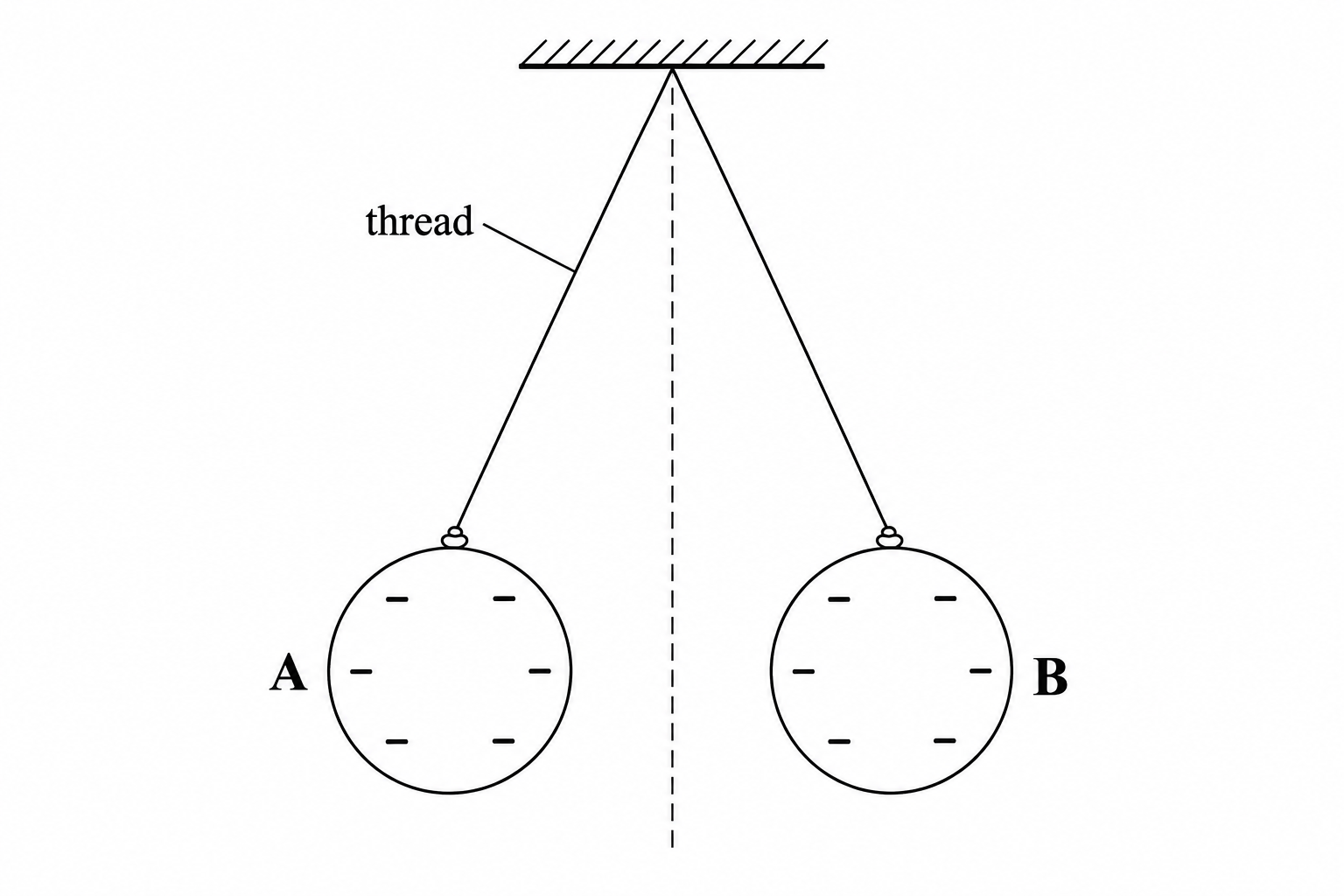
HTwo identical balloons, A and B, are rubbed with the same cloth.
Each balloon gains a negative charge.
The balloons hang from threads that are fixed at the same point.
The Figure shows the balloons.
Figure
a.[2]
Explain why the balloons hang apart.
b.[3]
Balloon A is given a larger negative charge. The charge on balloon B does not change.
A student says:
'Only balloon A will move further from the dashed line.'
Explain whether the student is correct.
c.[2]
A student touches balloon B with a metal wire that is connected to earth.
The balloons hang only slightly closer together than before.
Explain why.
11.1 Charging by friction Questions
91 exam-style questions on Edexcel GCSE Physics 11.1 Charging by friction, covering 11.1.1 Charging insulators by friction, 11.1.2 Forces between charges, 11.1.3 Electrostatic phenomena, and 11.1.4 Earthing and removing charge. Each one has a worked solution and a mark scheme showing where the marks go.