Original graph and the big rule
Original graph and the big rule
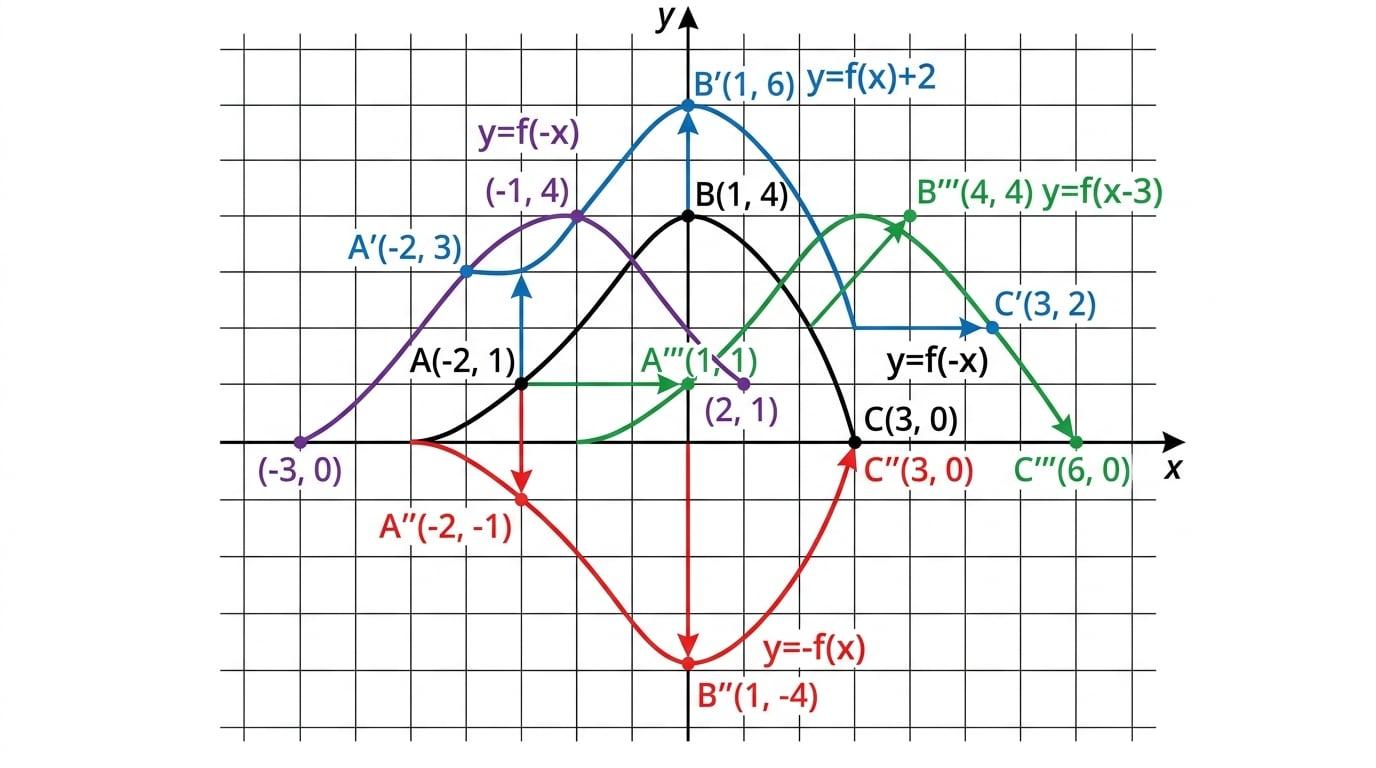
Treat y=f(x)y=f(x)y=f(x) as the original graph. If f(a)=bf(a)=bf(a)=b, then the graph passes through (a,b)(a,b)(a,b), so transformations can be tracked by moving old points to new positions.
Transforming Graphs y=f(x) Lesson
Step-by-step lessons on Eduqas GCSE Maths Transforming Graphs y=f(x). Each one builds up to exam-style questions. Build fluency with number, ratio and algebra first, since geometry, probability and statistics topics rely on them, and leave extra time nearer the exam for Higher-tier problem-solving and multi-step reasoning questions.