Wages are set by demand and supply
- The wage in any job is settled where the demand for that labour meets the supply of it, as shown in 2.7.1.
- So a high wage means either strong demand for that work, a limited supply of people able to do it, or both at once.
- Explaining a wage therefore means explaining a curve, and explaining a wage difference means explaining two.
Labour demand depends on output and productivity
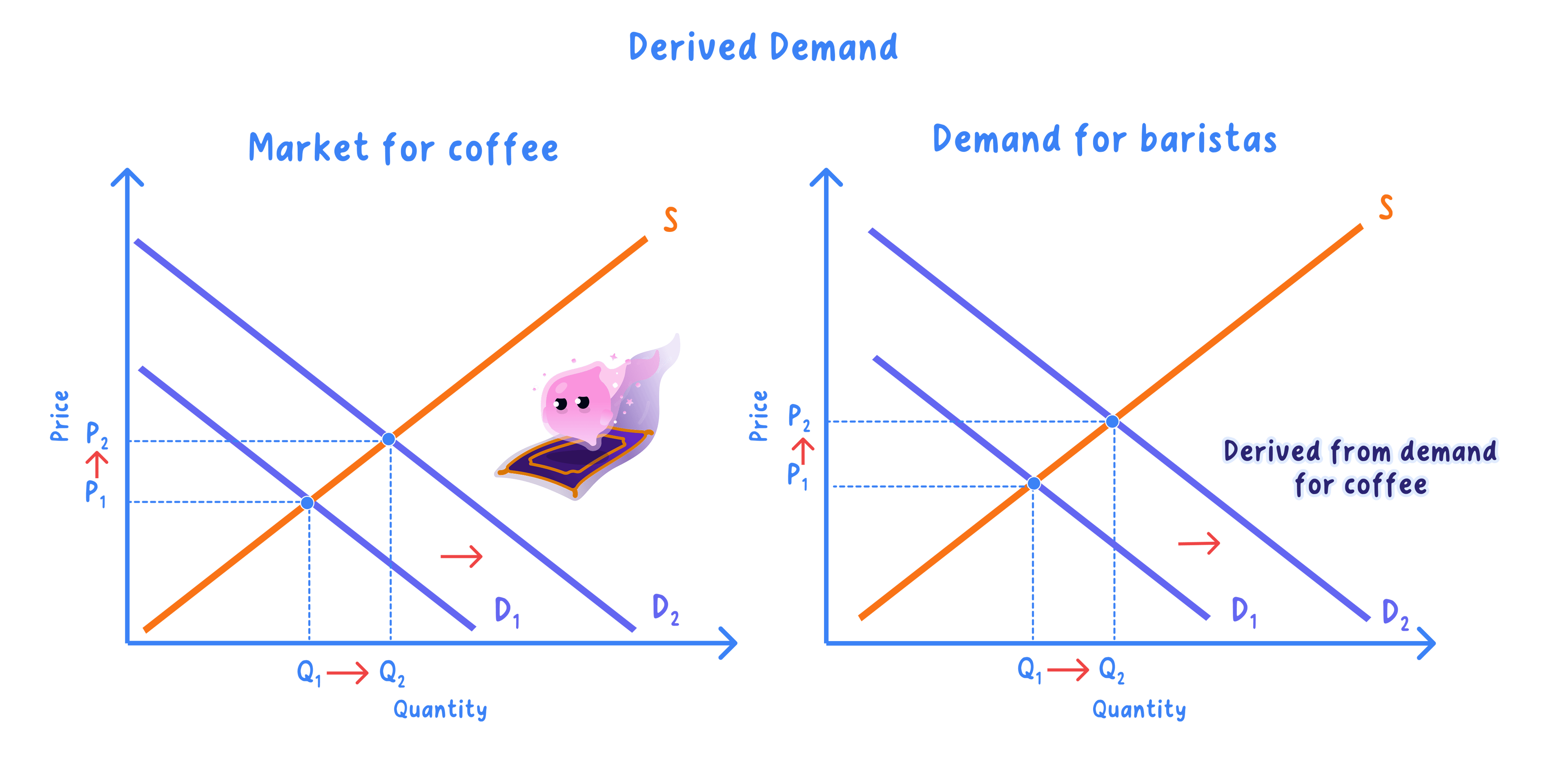
- Demand for the product: because labour demand is derived, anything that raises demand for the output raises demand for the workers who make it.
- Productivity: a more productive worker is worth more to an employer, so firms will pay more for labour that produces more per hour, as in 2.6.2.
- The price of capital: when machinery becomes cheaper firms substitute it for workers, so demand for labour falls.
- Other employment costs: employer National Insurance and pension contributions add to the cost of a worker beyond the wage, so higher costs reduce the number hired.
Labour supply depends on skills and alternatives
- Qualifications required: the fewer people who can legally or practically do the job, the smaller the supply and the higher the wage.
- Length and cost of training: a job needing years of study has a restricted supply, because few are willing to wait and pay for it.
- How pleasant the work is: unpleasant, dangerous or antisocial hours reduce the number willing to do it at any given wage.
- Wages elsewhere: workers compare a job with the alternatives, so a rise in pay in one occupation reduces supply to a competing one.
- The size of the working population: migration, retirement and how many people are economically active all change the total pool available.
Common Mistake
- Do not explain a high wage only by saying the job is important, since importance is not a curve and does not set a price.
- Do not treat labour demand as independent of the product market, because a fall in demand for the output reaches the wage.
Wages differ because the curves sit differently
- A surgeon is paid far more than a shop assistant because years of training keep the supply of surgeons very small while the demand is high.
- A refuse collector may be paid more than a receptionist despite needing fewer qualifications, because fewer people are willing to do the work.
- Comparing two jobs therefore means asking which curve differs and why, rather than which job seems more deserving.
Case study
- Median gross annual pay for a full-time UK employee was £39,039 in April 2025 (Source: ONS).
- A median means half of full-time employees earned more and half less, so the spread around it is what wage determination explains.
- Occupations sitting far above or below that figure are the ones where supply is most restricted or demand is weakest.
The market is not the only influence on pay
- A legal minimum sets a floor, so the National Living Wage was £12.71 an hour for workers aged 21 and over from 1 April 2026 (Source: GOV.UK).
- Where the market wage would be below that floor, the wage is set by law rather than by the two curves.
- Trade unions and collective bargaining can also raise a wage above the level a single worker could negotiate.
Exam technique
- Name whether it is demand or supply that differs when you compare two wages, because that is the analysis being asked for.
- Give a factor from each side when a question asks about both, since the specification names factors affecting supply and demand.
Self review
- Name three factors affecting the demand for labour.
- Name three factors affecting the supply of labour.
- Why is a surgeon paid more than a shop assistant?
- Why might a refuse collector earn more than a receptionist?
- Why does a legal wage floor mean the wage is not always set by the two curves?
