Commercial banks take in deposits and lend them out
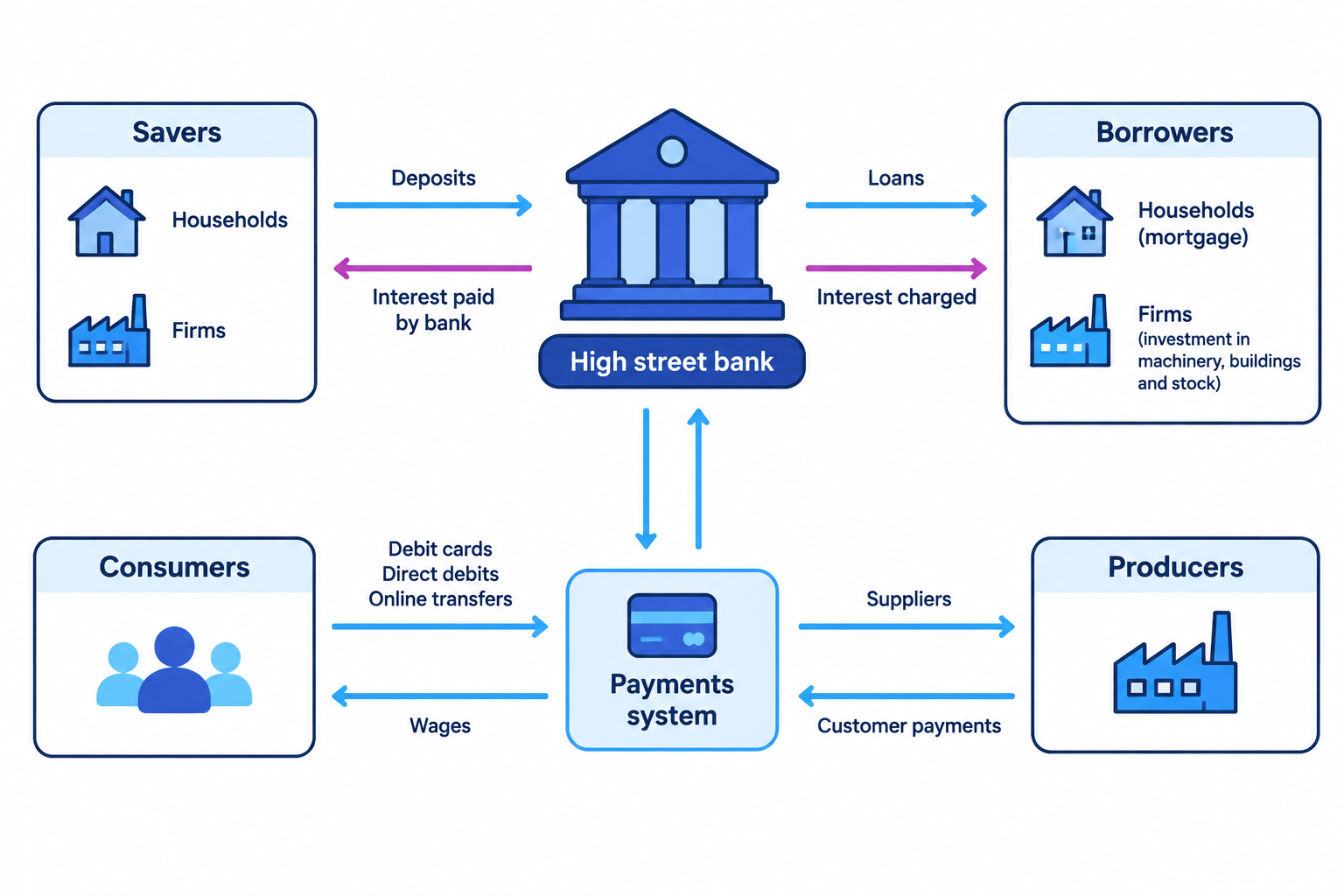
- A commercial bank, also called a high street bank, serves households and firms who need everyday banking.
- Its first job is accepting deposits, keeping customers' money safe in current and savings accounts.
- Its second job is making loans: to firms that need finance for investment, and to households, for example through a mortgage to buy a home.
- Banks make a profit from the gap between the interest they charge borrowers and the interest they pay savers.
- By lending to firms, banks help fund investment in machinery, buildings and stock.
Example
- Lloyds Bank takes in deposits from thousands of small businesses and individual savers.
- It lends some of this money to a small manufacturer that wants to buy a new production line.
- The manufacturer's investment is funded by money the bank first collected from savers.
They also run the payments system we use daily
- Banks provide a payments system that lets money move without cash changing hands.
- This includes debit cards, direct debits and online transfers.
- Banks such as Barclays and NatWest use the Faster Payments system to move money between UK accounts within seconds.
- A reliable payments system lets consumers buy goods quickly and safely, and lets producers pay wages and suppliers and receive money from customers.
Common Mistake
- Do not think a bank simply stores savers' money in a vault until they want it back.
- Most of that money is lent out straight away to fund borrowing and investment elsewhere in the economy.
Banks link savers, borrowers and investment together
- Savings accounts let households store money safely and earn interest.
- Loans let firms fund the investment needed to grow, buy equipment or open new sites.
- By connecting savers to borrowers, high street banks turn idle savings into active investment across the economy.
High street banks fund investment by lending out the money that savers deposit with them.
Self review
- Name the two main jobs of a commercial bank.
- How do commercial banks make a profit?
- Give one example of the payments system in action.
- How does bank lending help fund investment?
- Why is it wrong to think banks simply store savers' money?