Question 13
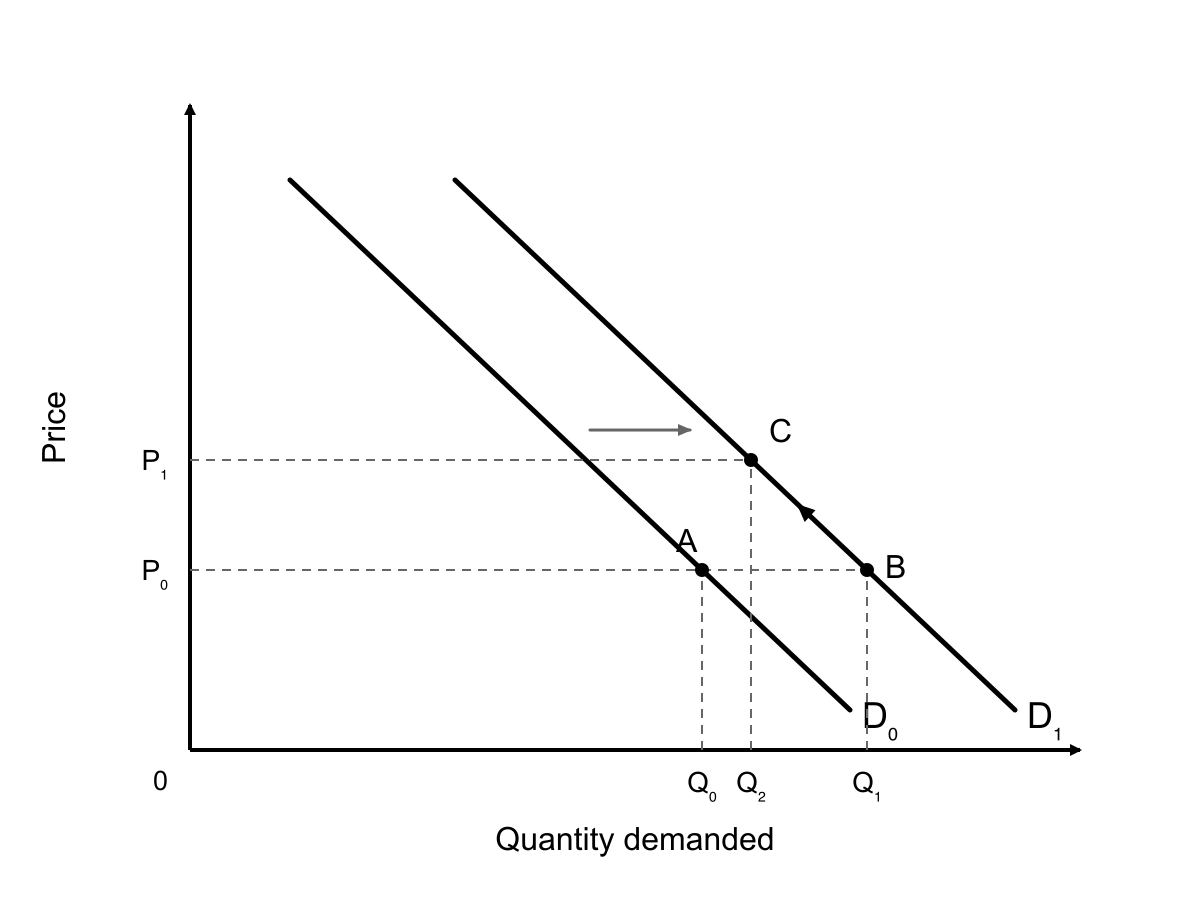 For a normal good, consumers' incomes rise and then the product's own price rises from P₀ to P₁. Which sequence is shown?
A leftward shift from D₀ to D₁, followed by a movement down D₁
A movement from A to B along D₀, followed by a leftward shift to C
A rightward shift from D₀ to D₁ at P₀, followed by a movement up D₁ from B to C
A rightward shift from D₀ to D₁, followed by a further rightward shift to C
1.3 How prices are determined Questions
236 exam-style questions on AQA GCSE Economics 1.3 How prices are determined, covering 1.3.1a Demand and the factors that influence it, 1.3.1b The demand curve, 1.3.2a Supply and the factors that influence it, 1.3.2b The supply curve, 1.3.3a Determining equilibrium price, 1.3.3b Applying diagrams and showing revenue, 1.3.4a Complements and substitutes, 1.3.4b Effects of changes on related markets, 1.3.5a Price elasticity of demand, 1.3.5b Factors affecting price elasticity of demand, 1.3.5c Measuring PED and its implications, 1.3.6a Price elasticity of supply, 1.3.6b Factors affecting price elasticity of supply, and 1.3.6c Measuring PES and its implications. Each one has a worked solution and a mark scheme showing where the marks go.