Question 8
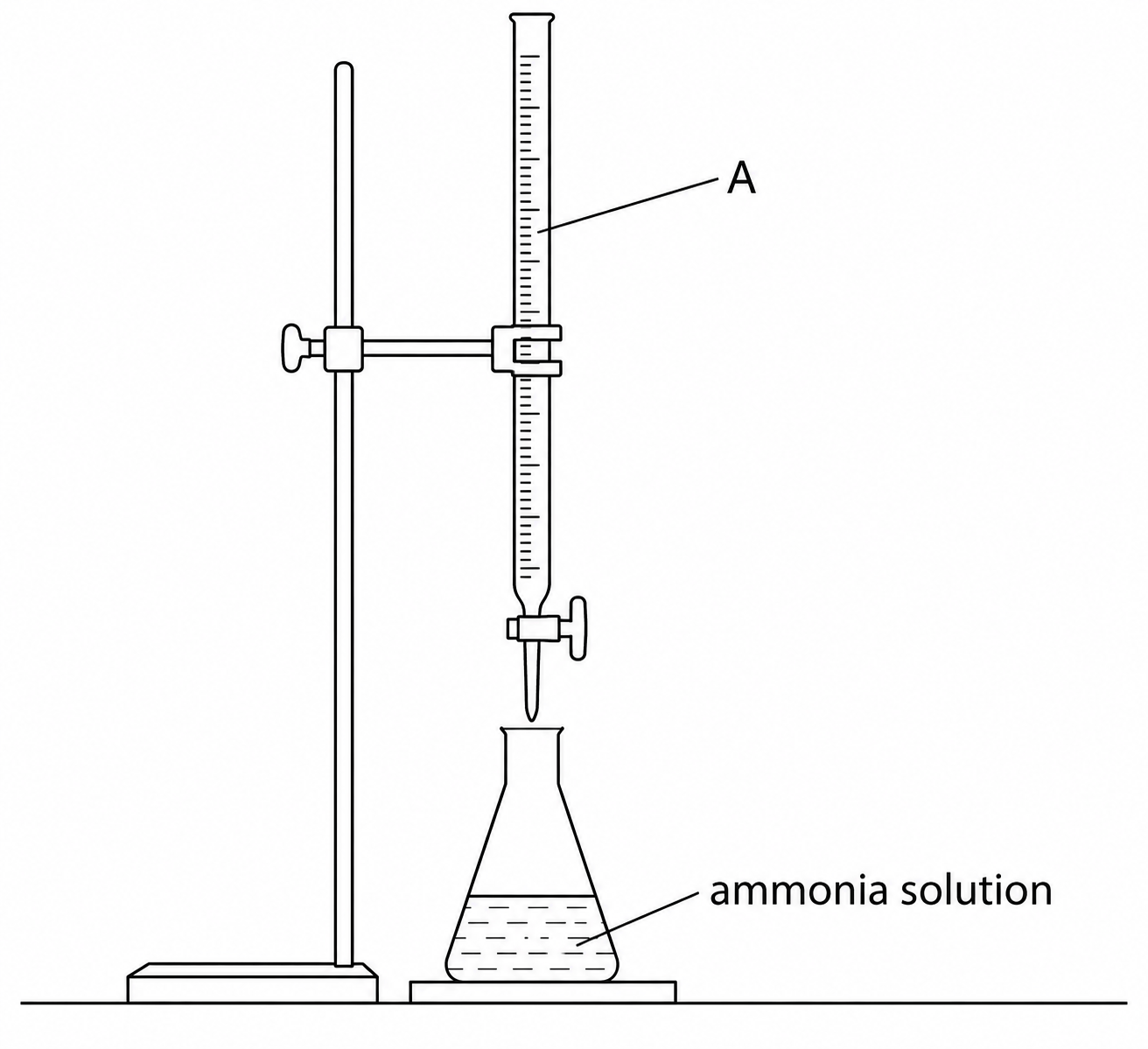
FA student made a sample of ammonium sulfate in the laboratory. The student added dilute sulfuric acid from the apparatus labelled A in Figure to 25 cm3 of ammonia solution until the ammonia solution was exactly neutralised. The student then made a pure, dry sample of ammonium sulfate crystals from the solution.
Figure: The apparatus used by the student to add dilute sulfuric acid to ammonia solution
a.[1]
Name the salt made when ammonia solution reacts with dilute sulfuric acid.
b.[1]
Use Figure to name the apparatus labelled A.
c.[2]
Describe how the student made a pure, dry sample of ammonium sulfate crystals from the neutralised solution.
d.[1]
Give one difference between this laboratory preparation of ammonium sulfate and the industrial production of ammonium sulfate.
10.4 The Haber process and the use of NPK fertilisers Questions
39 exam-style questions on AQA GCSE Chemistry 10.4 The Haber process and the use of NPK fertilisers, covering 10.4.1a The Haber process, 10.4.1b Equilibrium and rate in the Haber process, and 10.4.2 Production and uses of NPK fertilisers. Each one has a worked solution and a mark scheme showing where the marks go.