Question 14
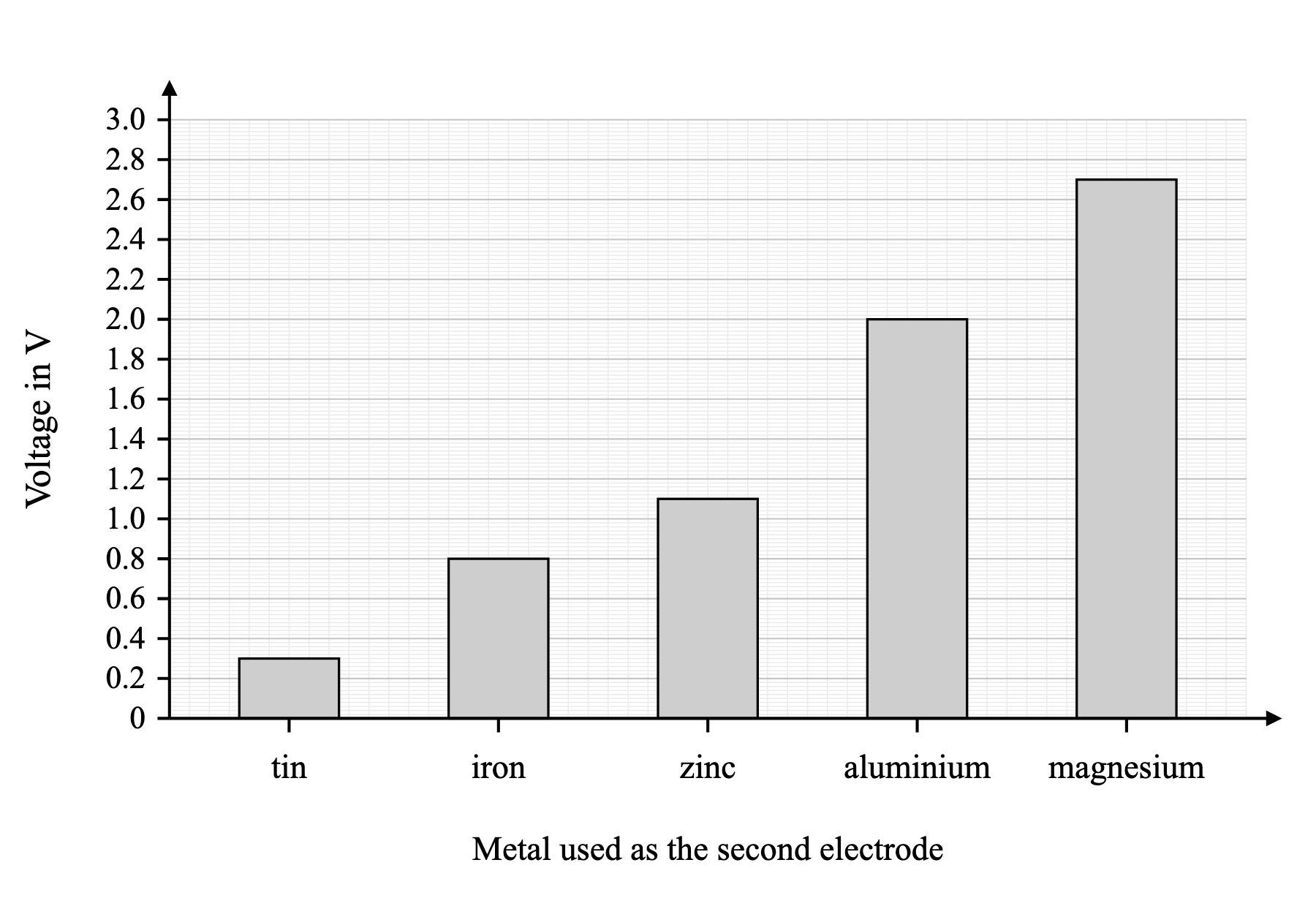
HA student made five cells. Each cell contained a copper electrode and one other metal electrode, standing in the same electrolyte. All five of the other metals are more reactive than copper. The figure shows the voltage of each cell.
Figure: The voltage produced by five cells, each containing a copper electrode and one other metal electrode
a.[1]
Give the name of the least reactive of the five metals shown in the figure.
b.[2]
Explain how the figure shows which of the five metals is the most reactive.
c.[2]
The student now makes a cell using a zinc electrode and a tin electrode, standing in the same electrolyte.
Determine the voltage of this cell.
5.2 Chemical cells and fuel cells Questions
90 exam-style questions on AQA GCSE Chemistry 5.2 Chemical cells and fuel cells, covering 5.2.1 Cells and batteries, 5.2.2a Fuel cells, and 5.2.2b Half equations for hydrogen fuel cells. Each one has a worked solution and a mark scheme showing where the marks go.