Question 10
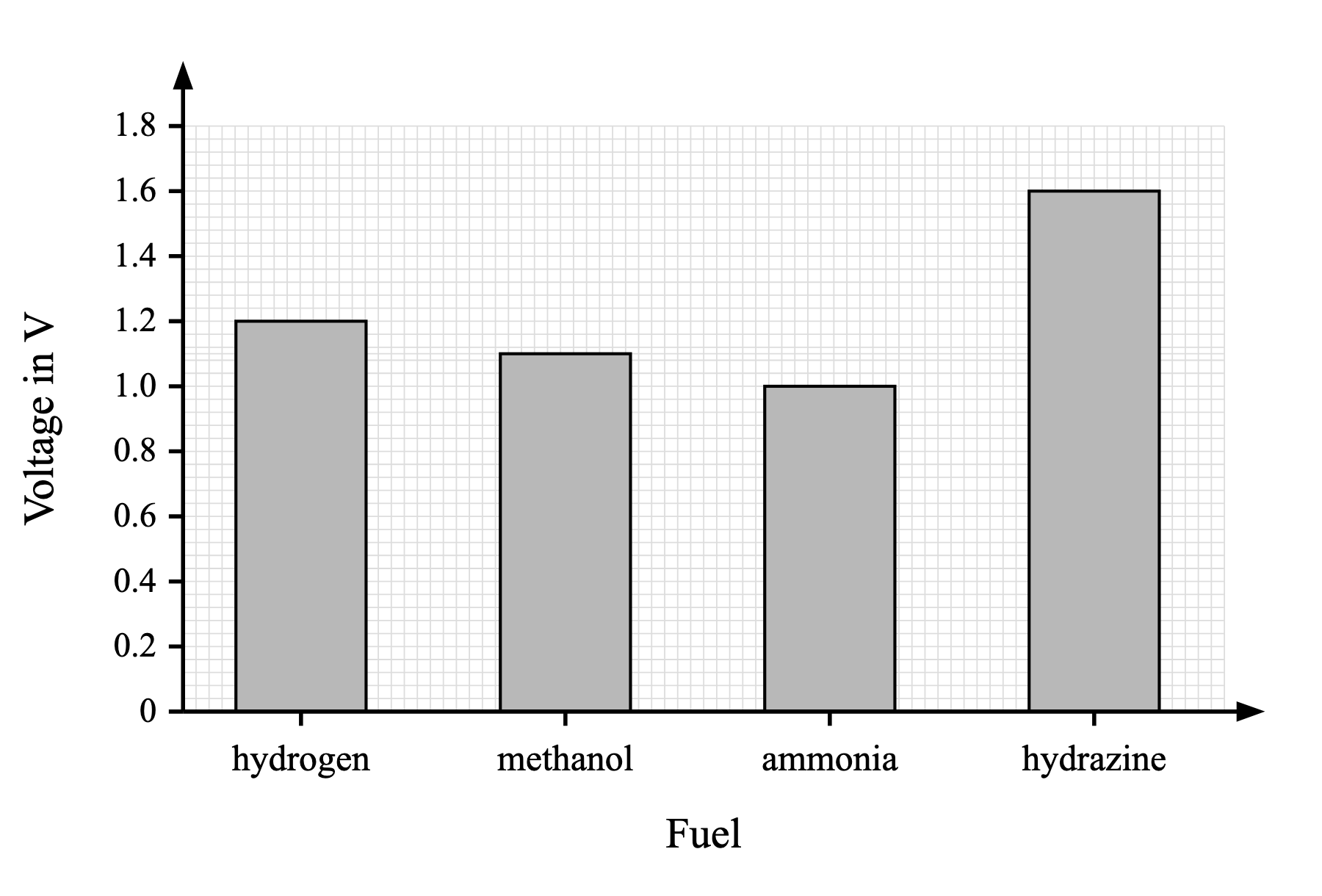
FA scientist measured the voltage produced by four fuel cells. Each fuel cell used a different fuel. The figure shows the scientist's results.
Figure: The voltage produced by four fuel cells, each of which used a different fuel
a.[1]
Give the fuel that produced the largest voltage.
b.[2]
Determine the difference between the largest voltage and the smallest voltage shown in the figure.
c.[2]
The hydrazine fuel cell produces nitrogen as well as water. The hydrogen fuel cell produces only water.
Explain one reason why a car maker might choose a hydrogen fuel cell rather than a hydrazine fuel cell, even though the hydrazine fuel cell produces a larger voltage.
5.2 Chemical cells and fuel cells Questions
90 exam-style questions on AQA GCSE Chemistry 5.2 Chemical cells and fuel cells, covering 5.2.1 Cells and batteries, 5.2.2a Fuel cells, and 5.2.2b Half equations for hydrogen fuel cells. Each one has a worked solution and a mark scheme showing where the marks go.