Ethical considerations: the fair choice when the cheap one is legal
Definition
Ethics: the moral standards of right and wrong that guide how a business treats the people it deals with.
- Acting ethically means choosing the fair and honest option even when a cheaper one is perfectly legal and would make more profit, and it shows up in four decisions.
- A fair price to suppliers: paying a farmer or a small maker enough to cover their costs and earn a living, instead of squeezing the price down because you are the bigger buyer.
- Pay and treatment of staff: wages above the legal minimum, proper breaks and settled hours rather than shifts cancelled the night before.
- Safe conditions all the way down the supply chain: checking that the factories making your goods abroad are safe and that no child labour is used at any stage, even though those workers are not on your payroll.
- Honest marketing: describing the product truthfully, so a word like handmade or recycled means what the shopper takes it to mean.
Environmental considerations: waste, emissions, sourcing and disposal
Definition
Sustainability: meeting today's demand without using up resources or damaging the environment that future generations will need.
- A business harms the environment when it makes, packs, moves and finally disposes of its product, so there are three places it can act.
- Waste and packaging: fewer layers, thinner materials and recyclable cartons rather than landfill, plus a plan for the product itself once the customer has finished with it.
- Emissions and energy: LED lighting, efficient ovens and fuller delivery vans on shorter routes cut carbon and the energy bill at the same time.
- Sustainable sourcing: buying materials that can be replaced, such as timber from managed forests or recycled plastic, instead of ones that run out.
The trade-off: what it costs and what it gives back
Every one of those choices has a price attached, and the table sets four common ones against what the business gets in return.
| Decision | What it adds to costs | What it can give back |
|---|---|---|
| Pay suppliers a fair price | Higher price for every unit bought | Reliable supply, believable claim |
| Pay staff above the minimum | Higher wage bill every month | Fewer people leaving, less retraining |
| Switch to recyclable packaging | New materials and machine changes | Greener shoppers, less landfill |
| Cut energy use and waste | Up-front spend on equipment | Lower bills from the first month |
- The first three rows all raise costs before they return anything, so the business either accepts a smaller profit on each sale or puts its prices up and risks losing the customer who was buying on price alone.
- The bottom row is where a business short of money starts, because using less energy and less material genuinely cuts costs from the first month rather than paying back years later in goodwill.
- More customers now choose businesses they trust, which holds sales up and can carry a higher price, which is how Innocent sells smoothies above the supermarket own-brand sitting beside it on the shelf.
- Staff also stay longer at a business they are proud of, so it spends less on recruiting and training replacements and keeps the experience it has already paid for.
Note
- The fourth benefit is avoiding the cost of being caught, because a report of unsafe factories or a polluted river brings bad publicity, cancelled orders and a campaign against the brand.
- How pressure groups run those campaigns, and how a business changes its marketing mix in response, is the next guide.
Judging it: should a business put ethics and the environment before profit?
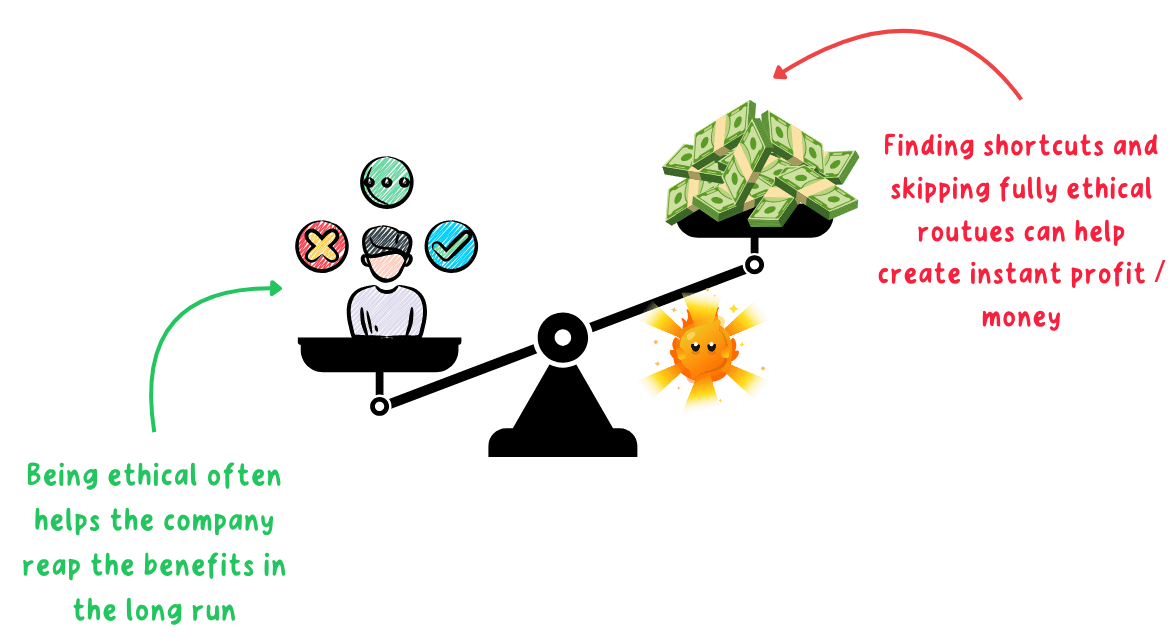
- Ethical or environmental changes are more likely to raise profit when customers value them enough to stay loyal or pay more, or when the change also reduces waste, energy use or staff turnover.
- The trade-off is harder for a cash-limited or price-led business because the extra cost arrives immediately while reputation and customer loyalty may take much longer to repay it.
- Overall, visible brands selling on trust have more reason to invest early, while a smaller price-led firm should prioritise ethical and environmental changes that also cut costs and add the more expensive measures as finances allow.
Exam technique
- Trace the change through its cost, the customer or staff response, and the effect on sales or profit.
- Do not assume ethical automatically means profitable; explain what must be true about the customers or cost savings for it to pay.
- For a judgement, compare the cost and benefit in the source-booklet business and commit to the better trade-off.
Self review
- Give two ethical considerations that reach beyond a business's own staff into its supply chain.
- Define sustainability.
- State three ways a business can reduce its environmental impact.
- Which environmental change lowers a business's costs instead of raising them, and how?
- Explain why the same ethical decision can raise profit for one business and cut it for another.
