What a cash-flow forecast is: spotting a shortfall before it arrives
- A cash-flow forecast is a month-by-month estimate of the money a business expects to come in and the money it expects to go out, set out with one column for each month.
- Its job is to show a shortfall before it happens, so the owner can arrange an overdraft or delay a payment while there is still time to do either.
Cash inflows: money arriving in the bank account
Definition
Cash inflow: money that actually arrives in the business's bank account in a given month, whether from customers, a lender, the owner or a grant.
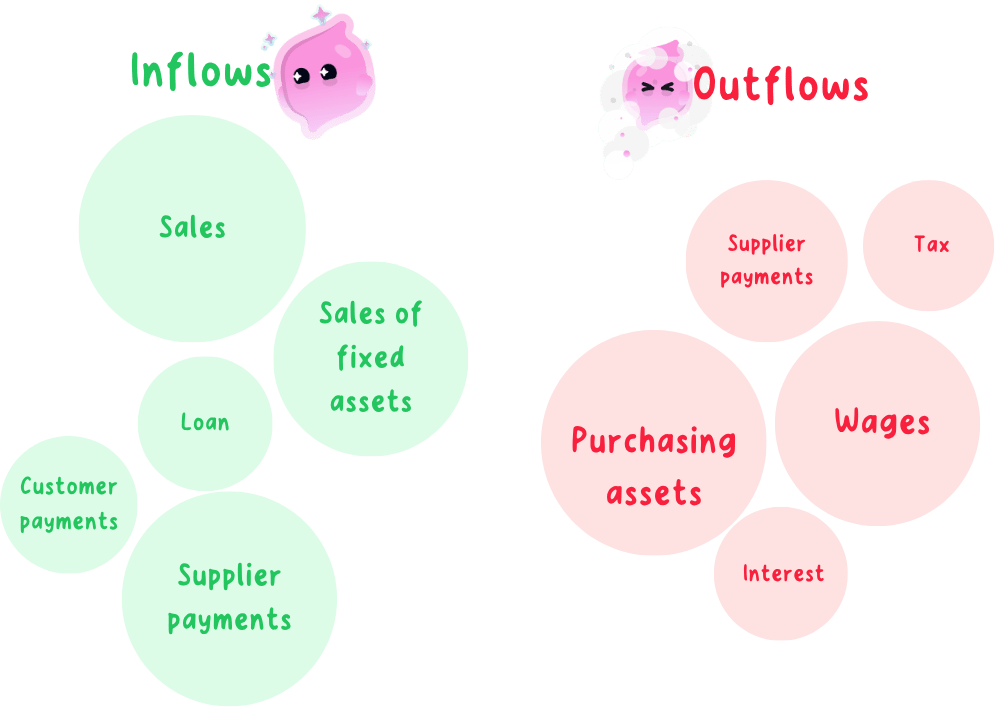
- Six inflows cover almost every figure a forecast asks you to enter.
- Cash sales: money taken at the till or through the website on the day the customer buys.
- Payments from credit customers: cash from sales made earlier, arriving when the invoice is settled, often 30 days later.
- Owner's capital: savings the owner pays into the business, usually a one-off sum at the start or when more money is needed.
- A bank loan being received: the whole sum lands in the account in one month, and the repayments become outflows in later months.
- Selling an asset: cash raised by selling a van, an oven or a machine the business no longer uses.
- Grants: money from a council or government scheme that does not have to be repaid.
- An inflow is money arriving in the bank, so Greggs records the cash the moment a sausage roll is sold at the till, while a bakery invoicing an office caterer on 30-day terms has made the sale but has no inflow until the customer actually pays.
Cash outflows: money leaving the bank account
Definition
Cash outflow: money that actually leaves the business's bank account in a given month, such as payments for stock, wages, rent or tax.
- Every outflow is entered in the month the money genuinely leaves the account, not the month the order was placed.
- Buying stock or raw materials: flour, packaging or goods for resale, usually the largest and most regular payment a small firm makes.
- Wages: paid weekly or monthly, and due whether trade that month was strong or weak.
- Rent, energy and other overheads: payments for the premises, electricity, insurance and phone line that fall on fixed dates.
- Loan repayments and tax: a set repayment to the bank each month, plus VAT and corporation tax paid to HMRC on their due dates.
- Buying equipment: a one-off payment for an oven, a till system or a van that hits one month hard.
A worked month: totalling March for a bakery in Leeds
The two tables below set out the figures a bakery in Leeds expects for March, with everything coming in shown first and everything going out shown second.
| Cash inflows (March) | Amount (£) |
|---|---|
| Cash sales | 5,400 |
| Payments from credit customers | 2,300 |
| Grant | 500 |
| Total cash inflows | 8,200 |
| Cash outflows (March) | Amount (£) |
|---|---|
| Stock | 3,100 |
| Wages | 2,400 |
| Rent | 900 |
| Energy | 350 |
| Loan repayment | 700 |
| Total cash outflows | 7,450 |
- The figures that get compared are the two totals at the foot of each table: £8,200 came in against £7,450 going out.
- More cash came in than went out that month, so the bakery ended March with a larger bank balance than it started with and did not need to borrow.
- Stock at £3,100 is the largest single outflow, so a supplier who charges less for flour frees far more cash than trimming the £350 energy bill ever could.
- A forecast is only an estimate, so one credit customer paying in April instead of March, or a supplier raising a price, pushes the real figures away from the plan.
- The next guide turns these two totals into net cash flow and a running opening and closing balance.
Exam technique
- Sort every figure into inflow or outflow before you add anything up, because one item in the wrong row spoils both totals.
- A bank loan is an inflow in the month it arrives, and the monthly repayment is a separate outflow in later months.
- Put a credit sale in the month the customer pays, not the month the order was taken.
- Label your two answers "total inflows" and "total outflows" so the method still earns credit if one figure is misread.
Self review
- What is a cash-flow forecast and what is it used to spot?
- Give three cash inflows other than cash sales.
- Why is a sale made on credit not an inflow in the month of the sale?
- Cash sales of £5,400, credit customer payments of £2,300 and a grant of £500: what are total inflows?
- Name two cash outflows that fall due on fixed dates every month.
