5.2.1 Genetic variation within a population
Variation within populations
Genetic variation
Genetic variation is the difference in DNA sequences between individuals of the same species.
Population
A population is all the organisms of one species living in the same area at the same time.
Allele
An allele is an alternative version of a gene.
- Individuals of the same species share many features, but a population usually contains a wide range of inherited differences.
- Members of a population usually have the same kinds of genes, while the alleles they carry and the combinations of those alleles can differ.
- A gene can have several alleles across a population, even though a diploid individual normally carries only two copies of that gene, one inherited from each parent.
- Genetic variation therefore includes both differences between DNA base sequences and differences in the combinations of alleles present in individuals.
- Two organisms can look very similar while differing at many positions in their DNA, so visible appearance alone underestimates genetic variation.
- The illustration shows different bases at the same position in a DNA sequence, which is one possible form of genetic variation.
- Three individuals of the same species have corresponding DNA fragments written as ACGTTA\mathrm{ACGTTA}ACGTTA, ACGCTA\mathrm{ACGCTA}ACGCTA and ACGTTA\mathrm{ACGTTA}ACGTTA.
- Comparing the same position in each fragment shows that the second individual has C\mathrm{C}C where the other two have T\mathrm{T}T.
- This difference is evidence of genetic variation, but it does not by itself show whether any visible characteristic is affected.
- The matching short fragments in the first and third individuals do not show that their entire genomes are identical.
Sources of genetic differences
Mutation
A mutation is a change in the base sequence of DNA.
- Mutations are the original source of new genetic variants, including new alleles.
- They occur without being directed towards a particular useful outcome, so an organism does not produce a specific mutation because it needs that characteristic.
- A mutation can be passed to offspring only if the altered genetic material is included in the cells that produce the offspring.
- In sexually reproducing animals, a mutation confined to an ordinary body cell is generally not passed to the next generation.
- Sexual reproduction brings existing alleles together in new combinations, which explains why offspring usually differ from both their parents and their siblings.
- Meiosis produces genetically different gametes, and the random meeting of gametes during fertilisation adds further combinations.
- The chromosome combinations in the diagram illustrate this mixing of inherited material; the mixing rearranges existing alleles rather than creating new versions of them.
Mutation can create a new allele, whereas meiosis and fertilisation produce new combinations of alleles.
Genetic and visible variation
- Genotype is the combination of alleles an organism has.
- Phenotype is the observable characteristics of an organism, produced by its genotype and its interactions with the environment.
- A difference in phenotype can result from genetic differences, environmental differences or both, so visible variation is not automatically evidence of different alleles.
- For example, a plant may be short because it carries alleles associated with short growth, because it receives too few mineral ions, or because both factors affect it.
- Most genetic variants do not change the phenotype, while some alter a characteristic and a small number can have a large effect.
- A variant with no obvious effect is still a DNA difference and therefore still contributes to genetic variation.
- When comparing individuals, use evidence about their inherited material to distinguish genetic variation from changes caused only by their surroundings.
- Explain genetic differences using different alleles or different DNA sequences, rather than saying that members of a species simply have completely different genes.
- If the evidence gives only a visible characteristic, consider whether the environment could also explain the difference.
- What does genetic variation mean?
- How can a population contain more alleles of a gene than one diploid individual carries?
- Which process creates new alleles?
- How does sexual reproduction produce new allele combinations?
- Why does a difference in appearance not always demonstrate genetic variation?
5.2.2 Developments in classification systems
Grouping organisms
Classification
Classification is the organisation of organisms into groups according to shared characteristics.
- A classification system organises the variety of living organisms so that their features can be compared and information about them can be shared.
- Classifications can use external appearance, internal structure, cell organisation and molecular information.
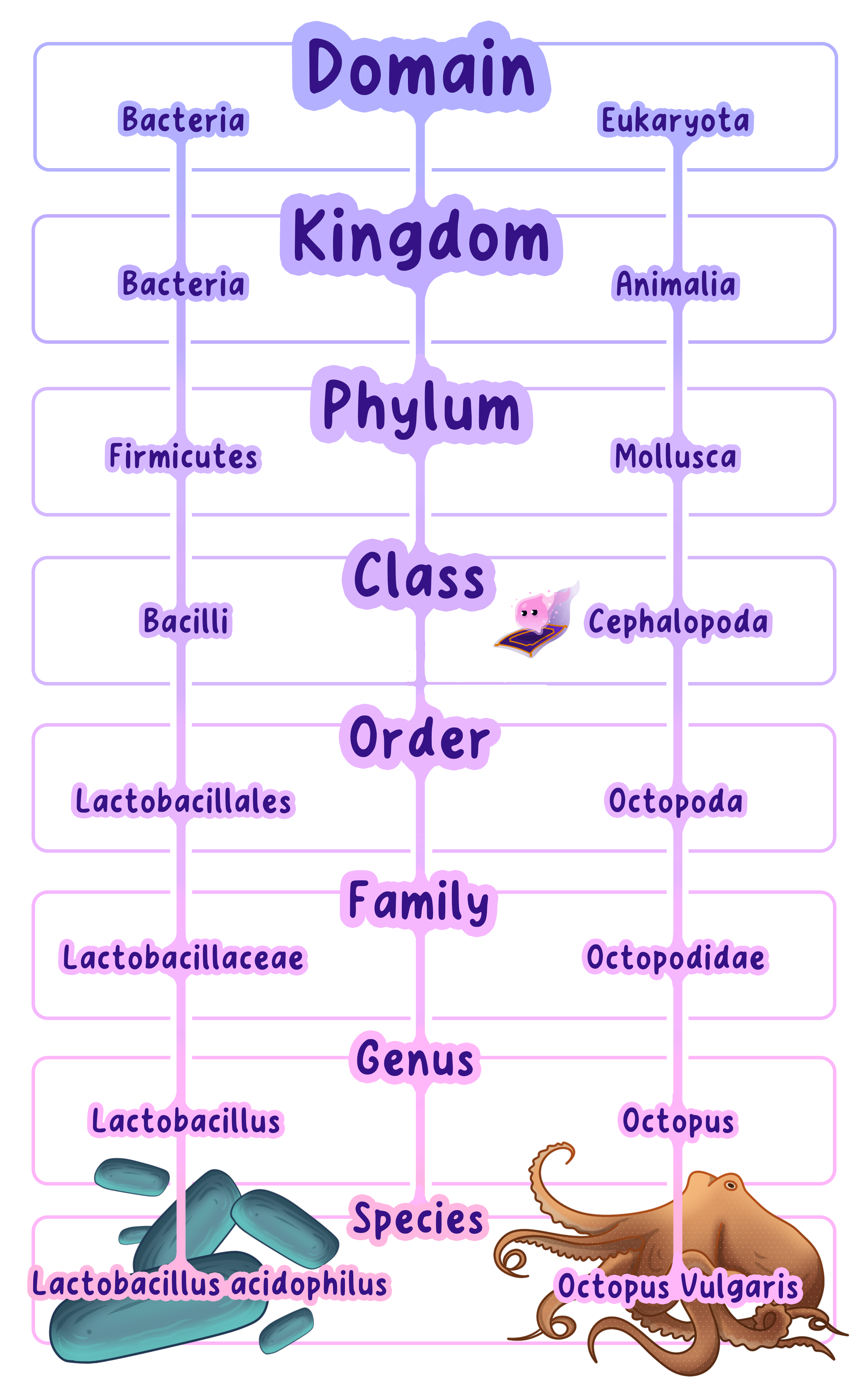
- The traditional hierarchy contains kingdom, phylum, class, order, family, genus and species, with domain placed above kingdom in a domain-based system.
- Each smaller group lies within a larger group, so species in the same genus also share a family.
- A natural classification aims to place more closely related organisms together in the smaller groups.
Artificial and natural systems
Artificial classification
Artificial classification groups organisms using selected convenient features rather than their evolutionary relationships.
Natural classification
Natural classification groups organisms according to their evolutionary relationships and common ancestry.
- An artificial system may use a few easily observed features, such as where organisms live or whether they have wings, because these make sorting convenient.
- Grouping all swimming animals together would combine fish with mammals such as dolphins, even though those animals do not share a recent common ancestor.
- A natural system uses evidence from many characteristics to represent common ancestry, rather than relying only on a convenient resemblance.
- Shared internal structures can reveal relationships that a similar outward shape hides, so both the number and biological significance of shared features matter.
- A shark, penguin and dolphin all have structures that help them swim, but similarity in function alone does not establish a close evolutionary relationship.
- The penguin and dolphin have corresponding forelimb bones inherited from a shared vertebrate ancestor, while their streamlined swimming forms do not place either within the fish.
- A sorting rule that groups bats with birds because both can fly is an artificial classification.
- Considering hair, milk production and other mammalian features places bats with mammals in a natural classification.
- The shared ability to fly is therefore insufficient evidence that bats and birds belong in the same small natural group.
DNA reveals relationships
Molecular phylogenetics
Molecular phylogenetics is the study of evolutionary relationships by comparing biological molecules such as DNA.
- Phylogeny is the evolutionary history and relationships of organisms.
- DNA sequencing determines the order of bases in DNA, allowing scientists to compare corresponding sequences from different organisms.
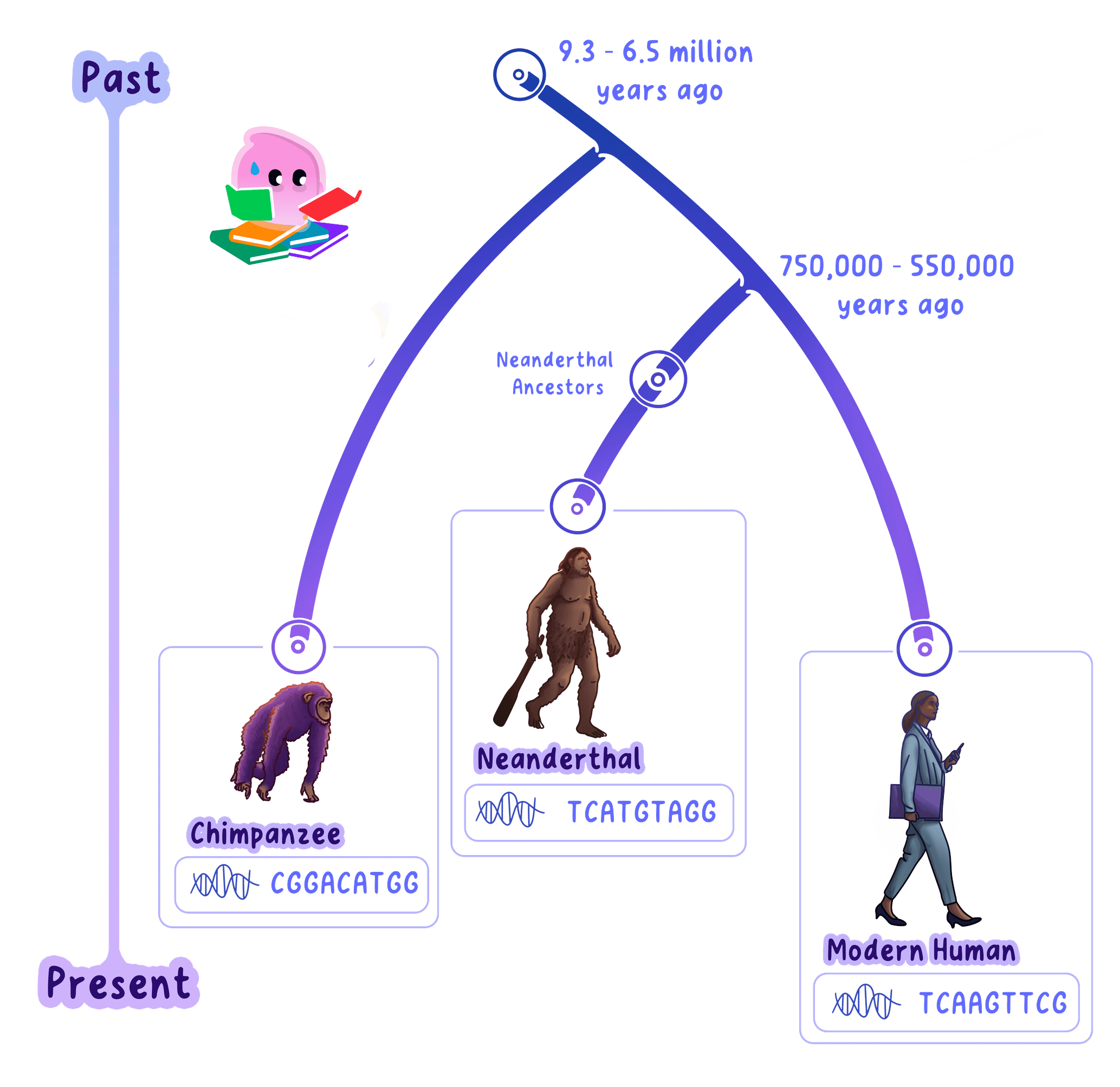
- For comparable DNA regions, a greater similarity in base sequence generally indicates a closer evolutionary relationship and a more recent common ancestor.
- Differences build up as lineages diverge, so comparing many corresponding sequences provides stronger evidence than comparing one short fragment.
- Scientists can also compare amino acid sequences in proteins and combine molecular findings with structural evidence.
- Molecular comparisons provide evidence about organisms that look very different as well as organisms whose appearance is misleadingly similar.
- If this evidence conflicts with an existing grouping, scientists can revise the classification to reflect the better-supported relationships.
- Improved microscopy also revealed differences in cell structures, helping scientists distinguish groups that earlier methods could not separate.
- Link similar DNA base sequences to a more recent common ancestor when explaining a close relationship.
- Explain reclassification as a response to new evidence, naming the evidence rather than simply saying that technology improved.
Reading evolutionary trees
- A phylogenetic tree is a branching diagram representing a proposed pattern of evolutionary relationships.
- A branch point represents a common ancestor, and the descendants connected through that point share that ancestor.
- To compare two species, trace their branches backwards to the first common branch point, then compare this with the branch points shared with other species.
- Species whose branches meet at a more recent common ancestor are more closely related, regardless of how close their names appear on the page.
- A labelled characteristic on a branch indicates a feature shared by descendants of that branch in the simplified tree.
- Evidence can change the groups shown on a tree, as illustrated by the grouping of birds with other descendants within the reptile lineage.
- The three-domain system separates Bacteria, Archaea and Eukaryota, reflecting molecular and cellular differences that older classifications did not fully recognise.
- Bacteria and archaea both lack a membrane-bound nucleus, but molecular differences support their placement in distinct domains.
- Eukaryota includes organisms whose cells contain nuclei, including animals, plants, fungi and protists.
- The broad ancestry diagram shows how present-day groups can be traced back towards shared ancestors; the branching relationships are the feature to interpret here.
- Some trees include a time scale, but branch length indicates time only when the diagram explicitly provides that information.
- The DNA comparison diagram illustrates how molecular differences can inform estimates of divergence, although exact dates cannot be read from an unscaled tree.
Names and identification
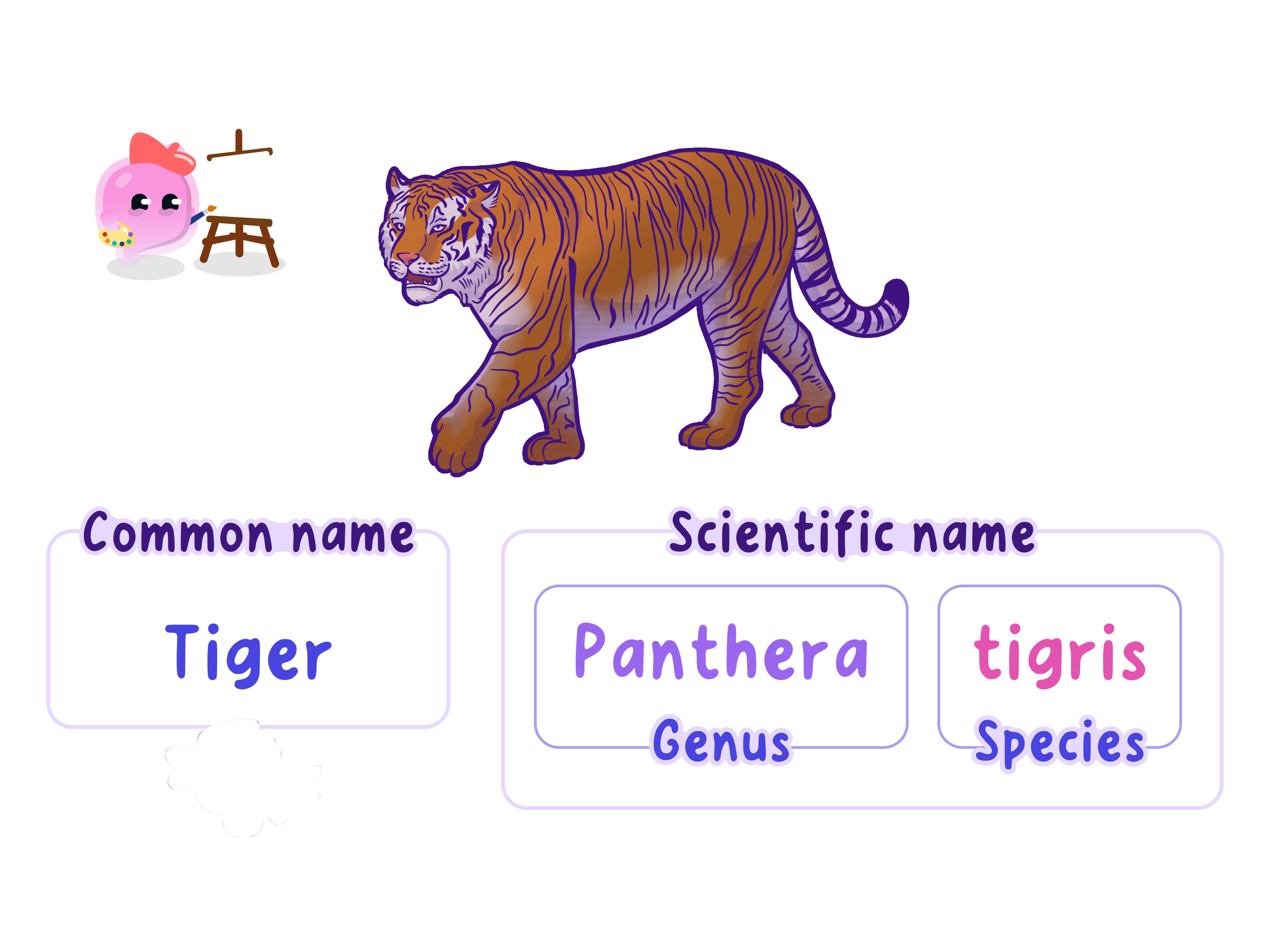
- A binomial name is the two-part scientific name of a species, consisting of its genus name and specific name.
- The genus starts with a capital letter and the specific name uses a lower-case initial, with both words italicised in print or underlined separately by hand.
- For example, the tiger belongs to the genus Panthera and has the specific name tigris, as the naming illustration shows.
- Scientific names allow people using different languages to identify the same species, avoiding ambiguity caused by shared common names.
- An identification key guides the identification of a specimen using observable features, whereas a natural classification describes how organisms are related.
- The leaf key illustrates a sequence of paired choices, but the order of those choices does not itself represent evolutionary ancestry.
The position of a species at the top, bottom or far right of a tree does not mean it is more advanced than the other species.
- What is the difference between artificial and natural classification?
- Why can similar functions give a misleading impression of relatedness?
- How can DNA sequencing change a classification?
- What does a branch point on a phylogenetic tree represent?
- Why is an identification key not necessarily an evolutionary tree?
5.2.3 How evolution occurs through natural selection
Selection favours inherited variants
Natural selection
Natural selection is the process in which individuals with advantageous inherited characteristics leave more offspring, making the responsible alleles more common over generations.
Selection pressure
A selection pressure is an environmental factor that affects the survival or reproductive success of organisms with different phenotypes.
- Individuals within a population have different alleles, and some of these genetic differences produce different phenotypes.
- Mutations are the original source of the variants on which natural selection acts, but they do not occur in response to an organism needing a particular advantage.
- A selection pressure, such as predation, disease or shortage of food, affects the reproductive success of individuals with different characteristics.
- A phenotype is advantageous only in relation to the conditions in which the organism lives, so a characteristic that helps in one environment may be less useful in another.
- Organisms often produce more offspring than the available resources can support, which creates competition for resources such as food, light, space and water.
- Individuals with a favourable inherited phenotype are more likely to survive long enough to reproduce successfully.
- Their offspring may inherit the alleles responsible for that phenotype, so those alleles are represented more frequently in the next generation.
- When this difference in reproductive success continues across generations, the advantageous alleles and associated phenotypes usually become more common.
- The result depends on inheritance as well as survival, because surviving without producing offspring does not pass an allele to the next generation.
- Connect the named phenotype to the actual pressure in the situation, such as darker fur making an animal harder for a predator to see.
- Carry the explanation through survival, reproduction, inheritance of alleles and an increased proportion in later generations.
- Use more likely when comparing survival, because a favourable characteristic does not guarantee that every individual survives.
Camouflage and predation
- In the illustrated mouse population, fur colour varies and the background is dark.
- Dark fur provides better camouflage, making dark mice less conspicuous to visual predators than pale mice.
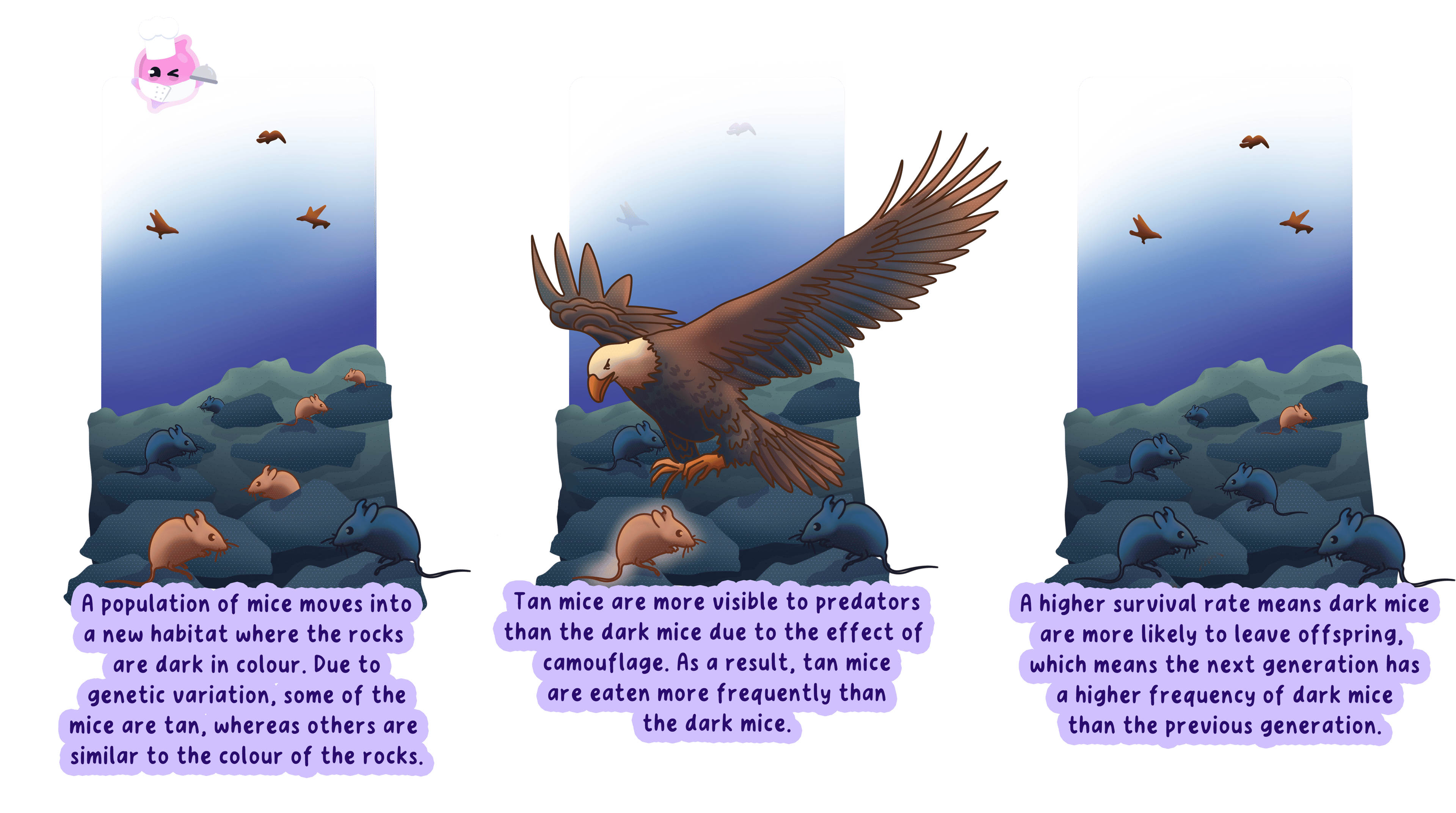
- Suppose that fur colour is inherited and both pale and dark mice live on dark rocks.
- Predators more easily detect pale mice against this background, so pale mice are more likely to be eaten.
- More dark mice survive to reproduce, increasing their contribution of alleles to the offspring population.
- Offspring that inherit alleles for dark fur also have better camouflage on the dark rocks.
- Across generations, the proportion of dark mice can increase without any pale individual deliberately changing its fur colour.
Changing selection pressures
- Reproductive success means the contribution an organism makes to future generations through its offspring.
- Biological fitness concerns reproductive success in a particular environment, so it does not simply mean being the strongest or largest organism.
- If the surroundings change from dark rock to pale sand, pale fur may become advantageous because the relationship between colour and visibility has changed.
- A change in conditions can therefore favour a different phenotype without directing a useful mutation to occur.
- A trait may also involve a trade-off, helping with one pressure while making another activity more difficult.
- A full explanation identifies the relevant pressure and weighs the effect of the characteristic in that specific setting.
- Organisms do not develop a useful inherited characteristic because they decide to adapt.
- An advantageous allele need not be dominant, because dominance describes expression in a heterozygote rather than usefulness in an environment.
Modelling camouflage and selection
- Aim: investigate whether background colour affects the survival of differently coloured model prey.
- Apparatus: equal-sized paper discs in two colours, two contrasting background sheets, a stopwatch, containers for collected discs and a results table.
- Variables: change the background colour, measure the number or proportion of each prey colour remaining, and keep disc size, starting numbers, searching time, lighting and searching area constant.
- Method:
- Place 202020 pale discs and 202020 dark discs at randomly chosen positions on a dark background, with no discs overlapping.
- Ask a participant who did not arrange the discs to collect the first visible discs, one at a time, for 10 s10\ \mathrm{s}10 s.
- Count the surviving discs of each colour and record both the number removed and the number remaining.
- Reset to the same starting numbers and repeat at least three times with new random positions.
- Repeat on a pale background, alternating which background is tested first to reduce effects of practice or fatigue.
- If different participants are used, have each participant test both backgrounds so differences in searching ability can be considered.
- Processing: calculate survival for each colour using percentage surviving=number remainingnumber at the start×100\text{percentage surviving}=\dfrac{\text{number remaining}}{\text{number at the start}}\times100percentage surviving=number at the startnumber remaining×100.
- Extending the model:
- To represent reproduction, create a new population with the same colour proportions as the survivors, keeping the total number of discs constant.
- Randomly redistribute this new population on the same background and repeat the search to represent another generation.
- Record the proportion of each colour after every round, making any necessary rounding consistent when whole discs are required.
- Expected pattern: the less conspicuous colour will often have a higher survival percentage, and its proportion may increase when survival is followed by model reproduction.
- Reliability: compare repeated trials because chance positions, search order and participant behaviour can alter individual results.
- Limitations: paper discs do not move, reproduce or mutate, and copying the survivors' colour proportions represents inheritance rather than demonstrating real genetic transmission.
- Safety: prepare discs carefully with scissors, keep small pieces away from mouths and clear loose discs from the floor.
- Why must a favourable characteristic be inherited for natural selection to increase its frequency?
- How does predation select between differently camouflaged mice?
- Why is survival alone insufficient to pass an allele to the next generation?
- How can a change of background reverse which fur colour is advantageous?
- What does the reproduction stage add to a paper-disc model of selection?
5.2.4 Evolution as change over time
Populations change across generations
Evolution
Evolution is a change in the inherited characteristics of a population over successive generations.
- Evolution concerns changes in inherited characteristics across successive generations, so the population is the unit whose characteristics are compared over time.
- A population can evolve when the relative abundance of inherited variants changes, even if it still belongs to the same species.
- Natural selection can produce this change when individuals carrying particular inherited variants contribute more offspring to later generations.
- This links present-day populations to earlier populations through descent with modification, meaning inheritance accompanied by changes across generations.
- Growth, learning and changes caused only by the environment during one individual's life do not by themselves show evolution.
- For example, a person developing larger muscles through training is a change within an individual, without evidence that the population's inherited characteristics have changed.
- An increase in the total number of organisms is also insufficient evidence, because the relative proportions of inherited characteristics might remain the same.
- In an illustrative population, an inherited colour occurs in 303030 out of 100100100 organisms in one generation and 120120120 out of 200200200 organisms several generations later.
- The initial proportion is 30100×100=30%\dfrac{30}{100}\times100=30\%10030×100=30%.
- The later proportion is 120200×100=60%\dfrac{120}{200}\times100=60\%200120×100=60%.
- The rise in proportion shows that the inherited colour became more common, while simply comparing the counts would mix this change with population growth.
- Representative data across generations would support an evolutionary change in the population.
New species can form
Species
A species is a group of organisms that can interbreed to produce fertile offspring.
Speciation
Speciation is the formation of a new species from an existing population.
- The fertile-offspring definition of species is useful for sexually reproducing organisms, although it cannot be applied directly to organisms that reproduce only asexually.
- Evolution may lead to speciation, but a change in one inherited characteristic does not automatically create a new species.
- One route begins when populations become isolated, for example when a geographical barrier prevents individuals from interbreeding.
- Separate populations then stop exchanging alleles through reproduction, allowing inherited differences to accumulate independently.
- Different conditions can favour different characteristics in each population, while new mutations can also introduce differences.
- Over many generations, the populations may become so different that individuals can no longer interbreed successfully to produce fertile offspring.
- They are then reproductively isolated, which marks the formation of distinct species under the fertile-offspring definition.
- Geographical separation alone does not show that speciation has occurred, because separated populations may still be capable of producing fertile offspring together.
- A population of seed-eating birds is separated onto two islands, with no movement of birds between them.
- Different food supplies favour different inherited feeding characteristics on the two islands.
- After many generations, differences may accumulate in characteristics involved in mating as well as feeding.
- If the populations can no longer interbreed to produce fertile offspring, they have formed distinct species.
- Different beak shapes alone would be insufficient to establish that final step.
Branching ancestry and timescales
- A common ancestor is an ancestral organism or population from which two or more later lineages descend.
- When one ancestral lineage gives rise to separate descendant lineages, evolution forms a branching pattern rather than a single ladder from simple to advanced organisms.
- Present-day species at different tips of a tree may share an earlier ancestor without one present-day species having evolved directly from the other.
- The branching diagram represents inherited differences accumulating in descendant lineages, with branch points indicating shared ancestors.
- Evolution has no predetermined goal, and natural selection favours characteristics according to the conditions encountered by each population.
- Major differences between lineages can accumulate over very long periods, but evolutionary change does not always require millions of years.
- The speed at which a measurable change appears depends on factors such as generation time, available genetic variation and the strength of selection pressures.
- Organisms with short generation times can pass through many generations during a short period, allowing inherited changes to be detected sooner.
- Include inherited characteristics, population and successive generations when defining evolution.
- For new species, explain the loss of the ability to produce fertile offspring, rather than stopping at geographical separation or different appearances.
- Why is an individual's growth not evidence of evolution?
- Why are proportions useful when comparing inherited characteristics across generations?
- What does speciation mean?
- Why does geographical separation not immediately create a new species?
- How can short generation times make evolutionary change easier to observe?
5.2.5 Evidence for evolution
Fossils preserve evidence
Fossil
A fossil is a preserved remain, impression or trace of an organism that lived in the past.
- The fossil record is the collection of fossils and information about where and when the organisms they represent lived.
- Fossils can preserve body parts, such as bones, teeth and shells, or traces, such as footprints, burrows and impressions.
- Rapid burial by sediment can protect remains from scavengers and reduce disturbance, increasing the chance that a record of the organism survives.
- Hard structures may remain while softer tissues decay, and minerals can replace or fill parts of the remains as the surrounding sediment becomes rock.
- An organism may also leave a mould or impression that records its shape after the original material has disappeared.
- Some remains are preserved when conditions greatly reduce decay, including freezing or entrapment in resin that later forms amber.
- A fossil does not have to be a complete organism, and its biological value depends on which features or activities have been preserved.
The record shows change
- Comparing fossils from rocks of different ages reveals that the kinds of organisms living on Earth have changed.
- In a sequence of sedimentary layers that has not been overturned or heavily disturbed, lower layers are generally older than the layers above them.
- The ages of the rocks therefore provide a sequence in which fossil characteristics can be compared.
- Some extinct organisms share features with later organisms, supporting the idea that later lineages descended from earlier forms.
- Fossils with combinations of features associated with different groups can provide evidence for evolutionary relationships and changes in body structure.
- A conclusion about change is stronger when it identifies the actual feature, describes how that feature differs between fossils, and relates the difference to their ages.
- Suppose a sequence of related fossil shells has a broad opening in older layers and a narrower opening in younger layers.
- The observation establishes a change in shell form through the dated sequence.
- Shared features elsewhere in the shells support a relationship between the organisms that produced them.
- Together, the similarities and age-related differences support descent with modification, although one short sequence cannot identify every ancestral step.
Gaps in the fossil record
- Fossilisation is uncommon because most organisms are eaten, decomposed or physically broken apart before preservation can occur.
- Soft-bodied organisms are less likely to leave recognisable remains than organisms with hard parts, so early life is poorly represented.
- Even when fossils form, erosion, heat, pressure and geological movement can damage or destroy them.
- Many surviving fossils are buried in inaccessible rocks or have not yet been discovered, so the available sample is incomplete.
- The absence of a fossil from a particular layer therefore does not prove that the organism never lived at that time.
- Gaps limit how confidently every stage can be reconstructed, while the overall record still provides evidence that organisms have changed.
- When explaining a gap, identify a preservation, destruction or discovery problem rather than merely saying that fossils are old.
- Link a fossil comparison to change through time or common ancestry, specifying the feature that supports the conclusion.
Resistance shows evolution happening
Antibiotic resistance
Antibiotic resistance is the inherited ability of bacteria to survive and reproduce in the presence of an antibiotic that would normally kill them or prevent their growth.
- A bacterial population may contain inherited differences that make some bacteria resistant to a particular antibiotic.
- A random mutation can produce a resistant variant before exposure, without the antibiotic directing that useful change.
- When the antibiotic is present, susceptible bacteria are killed or their reproduction is inhibited, while resistant bacteria are more likely to survive and reproduce.
- The resistant bacteria copy their genetic material during reproduction and pass the resistance variant to descendants.
- Their descendants form an increasing proportion of the population, so an inherited characteristic has become more common across generations.
- This is observable evolution because it concerns a population changing over generations, rather than an individual becoming accustomed to the antibiotic.
- Bacteria can pass through many generations in a short time, allowing the change to be observed much faster than many large changes represented in the fossil record.
- Measurements of the resistant proportion over time are more informative than a final resistant count alone, especially if the total population size has changed.
- Repeated observations support the conclusion more strongly than one sample because small samples can differ by chance.
- In an illustrative bacterial population, 555 out of 100100100 sampled bacteria are resistant before repeated exposure, compared with 808080 out of 100100100 after many generations under the same selection pressure.
- The resistant proportions are 5100×100=5%\dfrac{5}{100}\times100=5\%1005×100=5% and 80100×100=80%\dfrac{80}{100}\times100=80\%10080×100=80%.
- The rise supports a population-level change when the samples are representative and the resistance is inherited.
- The explanation connects the result to greater survival and reproduction of resistant bacteria, rather than claiming that the antibiotic taught susceptible bacteria to resist it.
Shared structures support ancestry
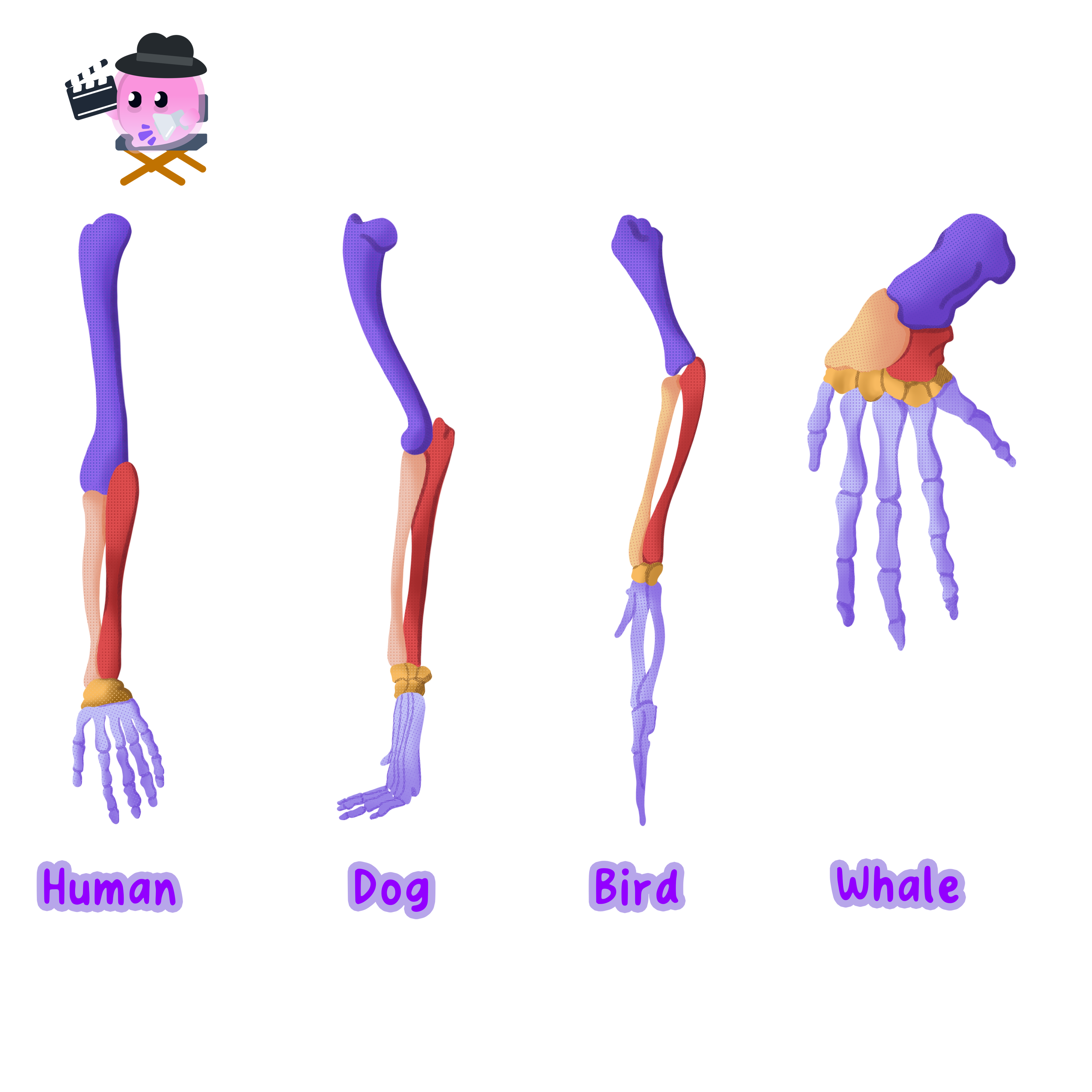
- Homologous structures are structures with a common evolutionary origin that may now perform different functions.
- The illustrated vertebrate limbs contain corresponding bones arranged in a shared basic pattern, although their proportions and uses differ.
- A human arm, dog forelimb, bird wing and whale flipper are used differently, but their corresponding structures support descent from a common ancestor.
- Together with evidence of change through time, inherited structural similarities help explain how related organisms can become different.
- Bacteria become more commonly resistant within a population; the patient does not become resistant to the antibiotic.
- Do not describe every member of a susceptible population as changing directly into a resistant bacterium.
- What kinds of remains or traces can form fossils?
- How can fossils from rocks of different ages support evolution?
- Why are soft-bodied organisms poorly represented in the fossil record?
- How does an increase in inherited antibiotic resistance demonstrate evolution?
- Why do corresponding limb bones support common ancestry?
5.2.6 Darwin and Wallace
Darwin's observations
- Charles Darwin developed an explanation of how species could change after comparing organisms, fossils and environments during and after his voyage on HMS Beagle.
- He observed that organisms in different places shared similarities but also had differences associated with their surroundings.
- Island organisms could resemble those on nearby mainland areas while possessing distinctive features, which raised questions about their origins.
- Fossils also showed that some extinct animals resembled living animals from the same broad region.
- These observations supported the possibility that species were related through common ancestry and had changed after populations became separated.
- Darwin also studied variation in domesticated organisms, where breeders could increase the occurrence of inherited characteristics by choosing which organisms reproduced.
- This helped him develop the idea that differences in survival and reproduction in nature could also change populations over generations.
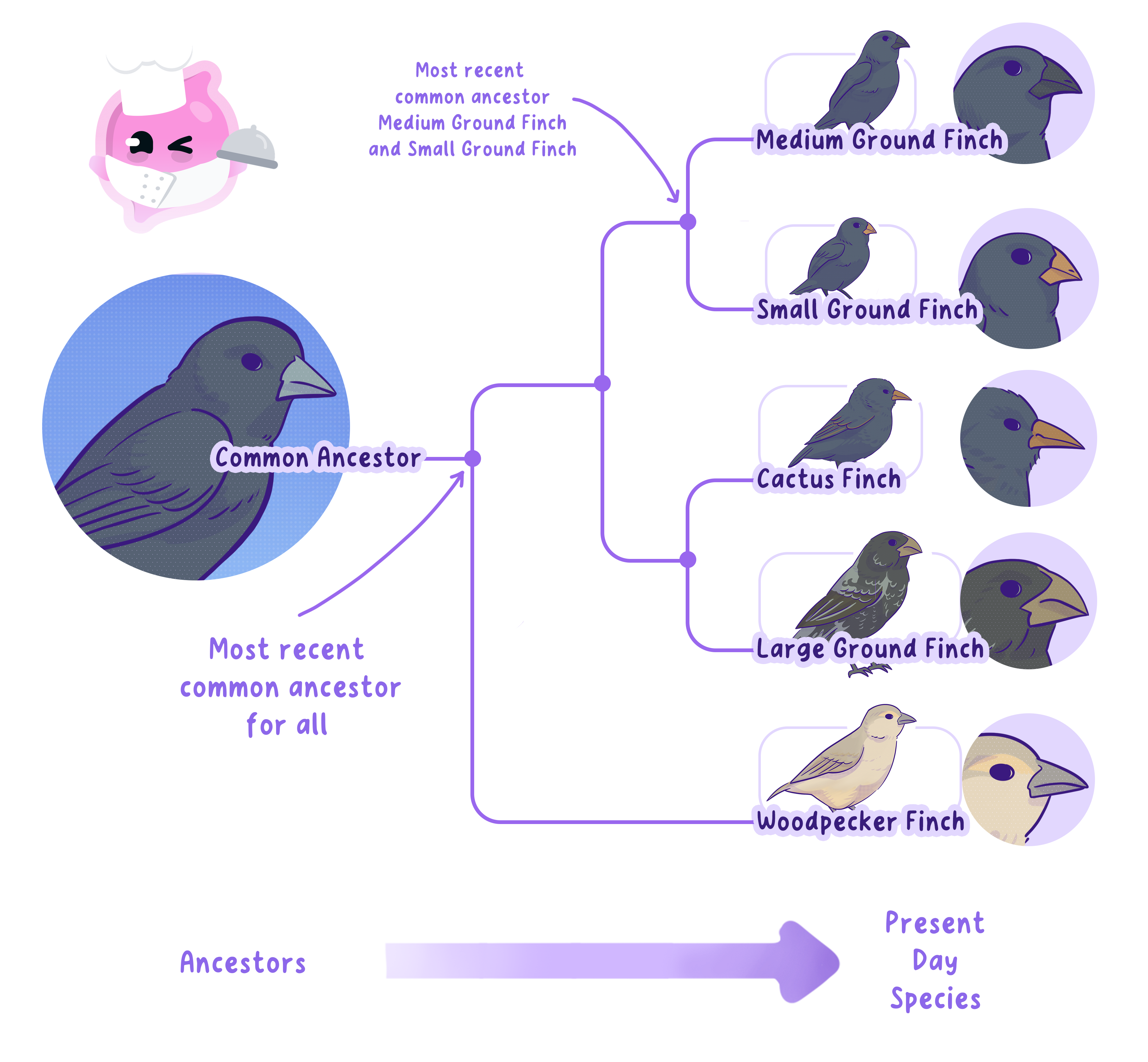
- The finch tree illustrates branching ancestry, with different descendant species traced back to shared ancestral populations.
Wallace and the joint announcement
- Alfred Russel Wallace independently developed an explanation of evolution by natural selection while studying organisms and their geographical distribution.
- His observations in tropical regions, including the Malay Archipelago, showed patterns in where related organisms lived.
- Wallace sent Darwin an account of his ideas in 185818581858, and their explanations were presented together to the Linnean Society that year.
- Darwin and Wallace were not present at that meeting, so a joint presentation does not mean that they personally delivered it together.
- Darwin published On the Origin of Species in 185918591859, setting out an extended argument supported by observations and comparisons.
- Both scientists are credited with identifying natural selection as a mechanism by which populations evolve.
- Their shared explanation connected existing inherited variation with differences in reproductive success, making it possible to explain adaptation without assuming organisms change deliberately.
- When discussing contributions, distinguish Darwin's accumulated observations and published argument from Wallace's independent development of natural selection.
- Connect their work to the explanation of evolution and common ancestry, rather than simply listing names and dates.
Evidence and acceptance
- The theory challenged the widely held view that species were fixed and had been created separately.
- Some objections reflected religious or cultural beliefs, while scientific questions concerned the evidence and the mechanism of inheritance.
- Darwin had assembled substantial evidence, but the fossil record was incomplete and the genetics needed to explain inheritance was not yet established.
- Neither Darwin nor Wallace could use knowledge of genes and DNA in the modern sense to explain how inherited variants were transmitted.
- Later work on inheritance and mutations supplied that missing mechanism and strengthened the explanation of natural selection.
- Further observations could be tested against the theory, allowing scientific confidence to develop as different lines of evidence supported the same explanation.
- An earlier proposal by Lamarck suggested that the use or disuse of structures caused changes during life that could then be inherited.
- The giraffe illustration represents that historical proposal: repeated stretching was supposed to lengthen the neck, with the acquired change passed to offspring.
- The natural-selection explanation instead depends on inherited differences already arising within populations and different contributions to later generations.
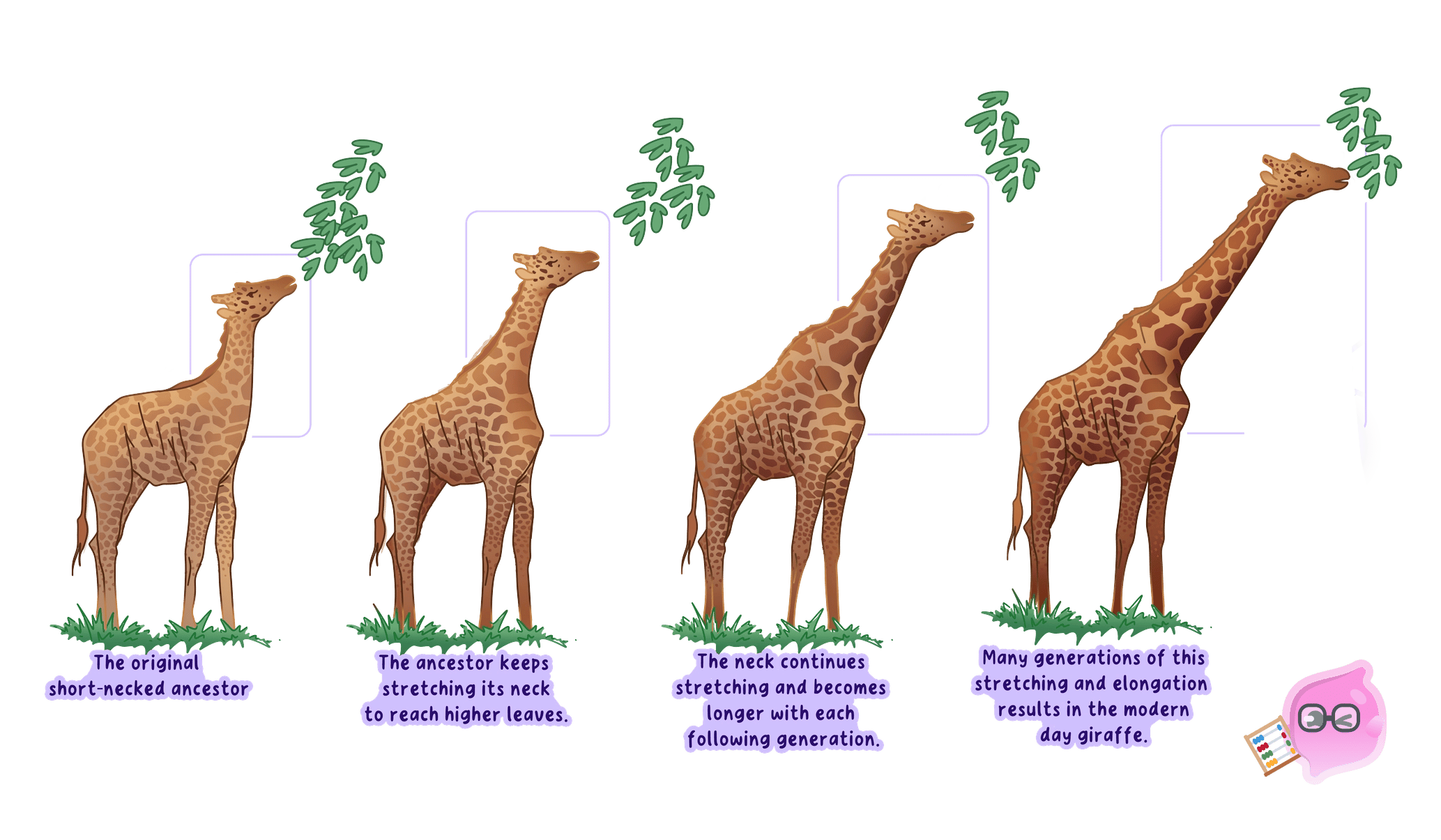
A characteristic acquired through exercise or repeated use is not automatically encoded as an inherited change in the reproductive cells.
Impact on modern biology
- Evolution provides a connected explanation for adaptation, the diversity of organisms and the similarities shared by related groups.
- It gives classification an evolutionary basis, because grouping organisms can aim to reflect ancestry rather than appearance alone.
- It also supports predictions about how populations may respond to changing conditions, including the spread of inherited resistance.
- Understanding that populations contain valuable genetic variation informs conservation, because preserving only a few genetically similar individuals may lose much of that variation.
- These applications extend the impact of Darwin's and Wallace's ideas beyond explaining the origin of visible differences between organisms.
Seed banks conserve variation
Biodiversity
Biodiversity is the variety of living organisms, including variation within species and the range of species and ecosystems.
Seed bank
A seed bank is a collection of stored seeds kept viable to conserve plant species and their genetic diversity.
- Seed banks store living plant material so that species and genetic variants remain available for future growth.
- Collections should represent many parent plants and, where appropriate, different populations, because seeds from a single parent do not capture all the variation in a species.
- Collecting a representative sample increases the chance of retaining alleles associated with different environmental tolerances and other inherited characteristics.
- Seeds are identified and labelled with their origin so that the stored material can be traced and used appropriately later.
- For species whose seeds tolerate drying and cold storage, dry conditions reduce metabolic activity and low temperatures slow deterioration, extending the period of viability.
- Stored seeds remain living and must be checked for viability, meaning their ability to germinate and grow under suitable conditions.
- If a sample loses viability, fresh material may need to be collected or plants grown to produce replacement seeds while maintaining the collection's genetic diversity.
- Stored seeds can help restore a plant population after local loss and provide material for research into inherited variation.
- A seed bank cannot preserve every species in the same way, because some seeds are damaged by drying or freezing.
- Seed storage also does not maintain all the interactions of a living habitat, so it supports conservation of wild populations rather than replacing habitat protection.
- Two collections each contain seeds from the same plant species, but one was collected from a single parent while the other represents many parents across several populations.
- The second collection is more likely to preserve a wider range of alleles.
- If conditions change, some of those retained variants may allow plants to survive and reproduce under the new conditions.
- The advantage comes from preserving genetic diversity, rather than simply storing a larger number of identical seeds.
- What observations helped Darwin develop his explanation of evolution?
- What was Wallace's contribution to the theory of natural selection?
- Why did the lack of a genetic explanation create a scientific difficulty for the early theory?
- Why should a seed bank sample many parent plants?
- Why can seed banks not replace habitat protection?
