6.3.1 Health and disease
What health means
Health
A state of complete physical, mental and social wellbeing, and not merely the absence of disease.
Disease
A condition in which part of an organism stops functioning normally, producing a recognisable set of symptoms.
Symptom
A change in the normal functioning or appearance of an organism that is produced by a disease.
- Health is a state of complete physical, mental and social wellbeing, so it is never measured only by whether a person is free of illness.
- Good physical health means the cells, tissues, organs and organ systems of the body are all working as they should.
- Good mental health means a person can think clearly, manage their emotions and cope with the ordinary demands of daily life.
- Good social wellbeing means having secure housing, enough food, safe water and supportive relationships with other people.
- A disease is a condition in which part of an organism stops working normally, and the changes this produces are called symptoms.
- A person can be carrying no pathogen at all and still be in poor health, for example someone living in cold damp housing on a diet that is short of protein and vitamins.
- The reverse also holds, because a person whose long term condition is well controlled by medicine can be in good general health.
- Being free of disease and being healthy are not the same thing.
- Disease is only one of several things that can pull a person out of good health.
Factors that affect health
- Diet affects health because the body needs energy, protein, vitamins and mineral ions to build tissues and repair damage.
- Stress affects health because long periods of it disturb sleep, appetite and mood, which makes existing conditions harder to control.
- A person's life situation affects health, including their housing, income, working conditions and whether clean water and sanitation are available.
- Access to medical care affects health because a disease that is diagnosed and treated early usually causes far less damage than one left untreated.
- Regular physical activity keeps the heart, lungs and muscles working efficiently and helps hold body mass in a healthy range.
These factors act together, which is why two people infected by the same pathogen can end up affected very differently.
Communicable and non-communicable diseases
Communicable disease
A disease caused by a pathogen that can be transmitted from one organism to another.
Non-communicable disease
A disease that is not caused by a pathogen and cannot be transmitted from one organism to another.
Pathogen
A microorganism that causes a communicable disease, such as a virus, a bacterium, a fungus or a protist.
- Every disease belongs to one of two groups, and the group depends on a single question: can it be passed to another organism?
- A communicable disease is caused by a pathogen, a microorganism such as a virus, bacterium, fungus or protist, which reproduces inside or on the host.
- Because the pathogen itself can move between organisms, the disease can spread through a population.
- Communicable diseases of humans include measles, influenza, cholera, tuberculosis and athlete's foot.
- Plants suffer communicable diseases too, for example tobacco mosaic virus in tomato plants and crown gall disease in fruit trees.
- A non-communicable disease is not caused by a pathogen, so nothing can move from a sick organism to a healthy one and it cannot be passed on.
- Non-communicable diseases include coronary heart disease, type 2 diabetes, most cancers, arthritis and asthma.
- Never describe a non-communicable disease as something you can catch.
- Only a pathogen can move from one organism to another, so only a communicable disease is transmitted.
- A disease that runs in families, such as cystic fibrosis, is inherited rather than caught, and is still non-communicable.
Comparing the two types
- A communicable disease usually appears quickly, often within days of the pathogen entering the body, because the pathogen reproduces rapidly.
- A non-communicable disease usually develops slowly over years, so symptoms may appear long after the cause first began acting.
- A communicable disease can often be treated by killing the pathogen, for example by using antibiotics against a bacterium.
- A non-communicable disease cannot be cured by killing a pathogen, because there is no pathogen present to kill.
- The number of cases of a communicable disease can rise sharply in weeks, whereas the number of cases of a non-communicable disease changes slowly as diets, activity levels and the age of a population change.
- Read the command word before you write, because "state" wants a named disease while "explain" wants the reasoning that links the cause to the symptom.
- Name the kind of pathogen as well as the disease, since credit is often reserved for the word virus, bacterium, fungus or protist.
- The mark most often dropped here is saying a disease "spreads" without saying how the pathogen passes from one organism to the next.
Deficiency diseases
Deficiency disease
A non-communicable disease caused by a shortage of a particular nutrient or mineral ion in the diet.
- A deficiency disease is one type of non-communicable disease, caused by a diet that is short of a particular nutrient or mineral ion.
- A shortage of carbohydrate removes the body's main fuel for respiration, so it breaks down its own stored fat and then its muscle protein to release the energy it needs.
- The person loses body mass, tires easily and feels cold, because less energy is being released to keep the body warm and active.
- When the shortage of energy is severe and long lasting in a young child the result is marasmus, in which the fat stores and muscles are wasted away and the child is far below the expected body mass for their age.
- A shortage of protein starves the body of the amino acids it needs to build new cells, repair damaged tissue and make enzymes and antibodies.
- Growth slows or stops in children, wounds heal slowly, and infections take hold more easily because fewer antibodies can be made.
- Severe protein shortage causes kwashiorkor, whose most recognisable sign is a swollen abdomen, caused by fluid leaking out of the blood and collecting in the tissues.
- A shortage of lipids leaves the body without its densest energy store, without the insulating fat layer under the skin and without the raw material for cell membranes.
- The person loses heat quickly and cannot keep a steady body temperature in the cold, and the skin becomes dry and scaly.
- Vitamins A, D, E and K dissolve in fat rather than in water, so a diet with almost no lipid in it also leads to a shortage of those vitamins.
- A shortage of dietary fibre matters even though fibre is not digested and releases no energy, because it is the bulk that gives the gut something to grip.
- Fibre holds water and keeps the contents of the intestine soft and bulky, so the muscles of the gut wall can squeeze them along by peristalsis.
- Without enough fibre the contents move slowly, more water is absorbed from them, and the result is constipation and a raised risk of bowel disease.
- Too little vitamin C causes scurvy, in which the gums bleed and wounds heal slowly, because vitamin C is needed to make the protein collagen.
- Too little vitamin D or calcium causes rickets in children, because the leg bones stay soft and bend under the weight of the body.
- Too little iron causes anaemia, because iron is needed to make haemoglobin, so the blood carries less oxygen and the person tires quickly.
- Every one of these conditions is corrected by returning the missing nutrient to the diet, which is further evidence that no pathogen is involved and that none of them can be passed on.
- Do not write that a deficiency disease is caused by "not eating enough food".
- Name the missing nutrient and say what the body needs it for, because that link is where the marks are.
- Define health.
- State the difference between a communicable and a non-communicable disease.
- Name two communicable diseases and two non-communicable diseases.
- Explain what happens in the body when the diet is short of carbohydrate, and then when it is short of protein.
- Explain why a diet low in fibre causes constipation even though fibre is never digested.
- Name the deficiency disease caused by too little vitamin C and the one caused by too little iron.
6.3.2 Interactions between diseases
How one disease leads to another
Comorbidity
The presence of two or more diseases or disorders in the same individual at the same time.
Pathogen
A microorganism that causes a communicable disease, such as a virus, a bacterium, a fungus or a protist.
- Diseases do not act in isolation, because having one disease often makes a second disease more likely to develop or more severe when it does.
- When a person has two or more diseases at the same time this is called comorbidity, and the combination is usually harder to treat than either disease alone.
- There are four routes by which one disease opens the door to another.
- Damage to the immune system leaves the body unable to destroy pathogens it would normally deal with easily.
- A virus infecting host cells can disturb how those cells divide and so trigger a cancer.
- An immune response to a pathogen can leave the body reacting to harmless substances afterwards, producing an allergy.
- Severe physical illness can lead to mental illness, because pain, disability and uncertainty all take a toll.
- A communicable disease can be the starting point of a non-communicable one.
- The second disease is still non-communicable, because it is the pathogen that spreads and not the condition it triggers.
HIV and tuberculosis
Immunosuppression
A reduction in the ability of the immune system to defend the body against pathogens.
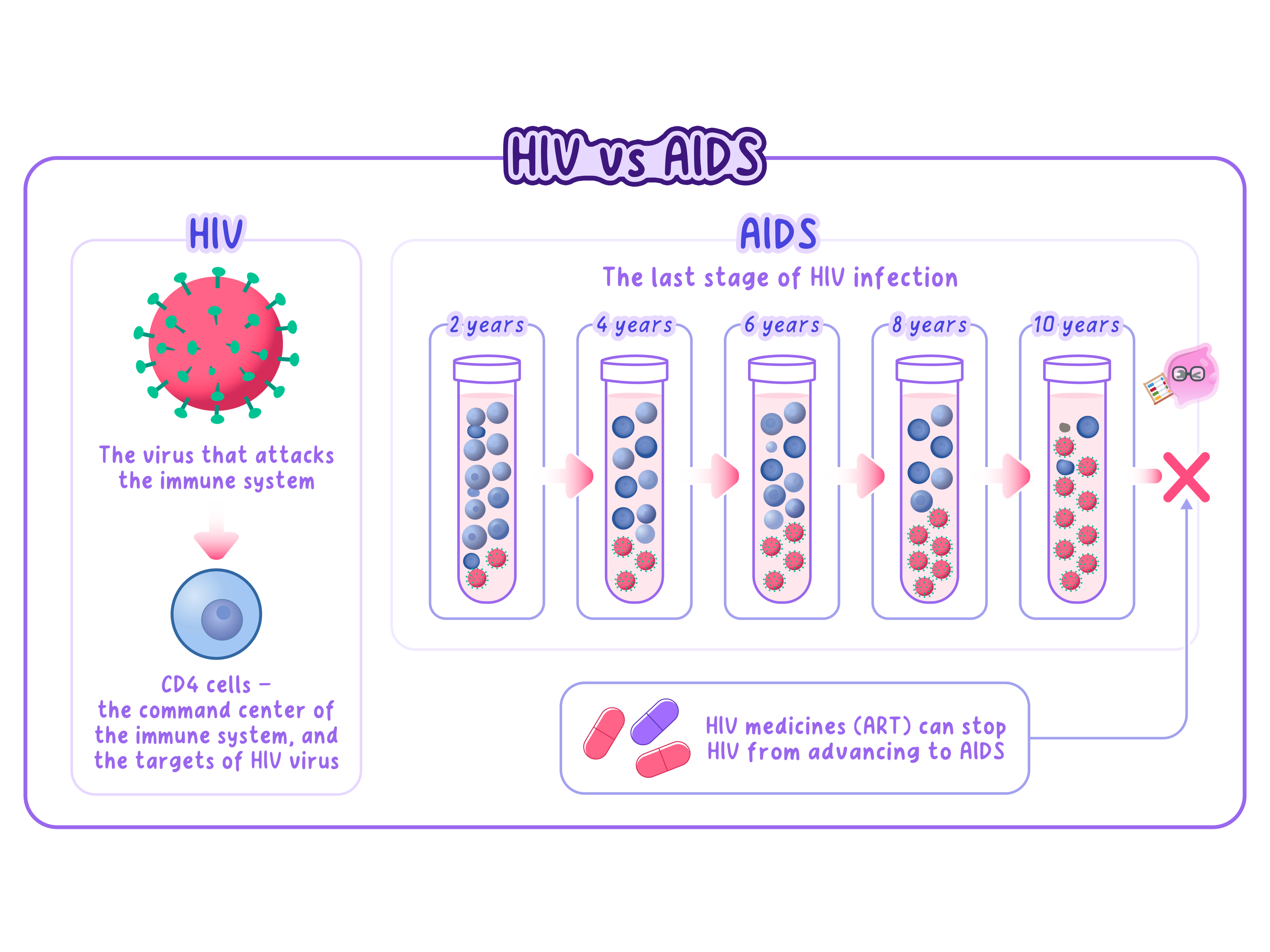
- HIV, the human immunodeficiency virus, infects a group of white blood cells called helper T lymphocytes, also known as CD4 cells, which coordinate the body's response to infection.
- The virus reproduces inside these cells and destroys them, so the number of CD4 cells in the blood falls steadily over several years while the number of virus particles rises.
- Soon after infection the person has a short flu-like illness, after which they may feel well for years even though the virus is still reproducing.
- Once the CD4 count drops far enough the immune system can no longer control pathogens, and the person is said to have AIDS, acquired immune deficiency syndrome.
- Tuberculosis is a communicable disease of the lungs caused by the bacterium Mycobacterium tuberculosis, which spreads in droplets breathed out by an infected person.
- In a healthy person white blood cells surround the bacteria and seal them inside small lumps of tissue in the lung, so the infection stays dormant and causes no symptoms.
- In a person with HIV there are too few working lymphocytes to hold the bacteria in place, so the dormant infection breaks out into active tuberculosis with a persistent cough, weight loss and fever.
- This is why tuberculosis is the infection that most often kills people living with untreated HIV, even though HIV itself destroys no lung tissue.
- Antiretroviral therapy slows the reproduction of HIV, so the CD4 count stays high, the immune system keeps working and the risk of tuberculosis falls sharply.
- Do not write that HIV kills a person directly.
- HIV destroys lymphocytes, and it is the infections that follow which cause the serious illness.
- HIV and AIDS are not the same thing, because AIDS is the late stage that develops only once the immune system has been badly damaged.
HPV and cervical cancer
Virus
A very small infectious particle made of genetic material inside a protein coat that can only reproduce inside a living host cell.
Non-communicable disease
A disease that is not caused by a pathogen and cannot be transmitted from one organism to another.
- Human papillomavirus, usually shortened to HPV, is passed on by skin to skin contact during sexual activity and infects the cells lining the cervix.
- Most HPV infections are cleared by the immune system within about two years and cause no lasting harm.
- A few strains of HPV insert their genetic material into the DNA of the cervix cells and make proteins that switch off the controls on cell division.
- The infected cells then divide uncontrollably, forming a mass of abnormal cells that can develop over many years into cervical cancer.
- The cancer itself is a non-communicable disease, because the tumour cannot pass to another person, yet the virus that started it is communicable.
- Cervical screening finds abnormal cells before they become cancerous, and vaccination against HPV before a person becomes sexually active stops the infection that starts the whole sequence.
Vaccinating against a virus is therefore one way of reducing the number of cases of a cancer, even though the cancer itself cannot be caught.
Other interactions between diseases
Allergy
A damaging immune response made by the body against a substance that is normally harmless.
- The immune response raised against a pathogen can leave the body over-reacting to harmless substances afterwards, which is why some children develop asthma or skin rashes following a viral infection of the airways.
- Physical damage to a barrier lets pathogens reach tissues that are normally sealed off, so a deep wound or a burn is frequently followed by a bacterial infection of the skin.
- A non-communicable disease can also make a communicable one more likely, because poorly controlled diabetes reduces blood flow to the feet and slows healing, so small wounds there become infected.
- Long or severe physical illness raises the risk of depression and other mental illness, because of continuing pain, loss of independence and the strain of an uncertain future.
- For all these reasons a doctor treats the whole patient rather than one illness in isolation, and controlling the first disease is often the most effective way of preventing the second.
- An interaction question is marked on the chain of reasoning, so set out each link in order rather than naming the two diseases and stopping.
- For HIV and tuberculosis the chain runs: HIV destroys lymphocytes, the immune response weakens, dormant tuberculosis bacteria are no longer controlled, active disease develops.
- Where a question gives data on rates of two diseases, quote a figure from the graph or table in your answer, because a comparison without numbers is rarely given full credit.
- Which cells does HIV infect, and what happens to their number over time?
- Explain why tuberculosis becomes active in a person infected with HIV.
- Describe how infection with HPV can lead to cervical cancer.
- Give one way a non-communicable disease can make a communicable disease more likely.
- What is meant by comorbidity?
6.3.3 Spread of communicable diseases
How pathogens pass between hosts
Transmission
The passing of a pathogen from an infected host to an uninfected organism.
Host
An organism in or on which a pathogen lives and reproduces.
Pathogen
A microorganism that causes a communicable disease, such as a virus, a bacterium, a fungus or a protist.
- Transmission is the passing of a pathogen from an infected host to an uninfected organism, and without it a communicable disease dies out with its host.
- A pathogen can only reproduce inside or on a host, so reaching a new host before the old one recovers or dies is essential to its survival.
- The route a pathogen uses depends on where it lives in the body, because a pathogen in the gut leaves in the faeces while one in the lungs leaves in exhaled droplets.
- The main routes are direct contact, body fluids, the air, water, food and vectors, and most pathogens use one or two of them rather than all six.
- Every method of controlling a communicable disease works by blocking one of these routes.
- Working out how a pathogen travels is therefore the first step in deciding how to stop it.
Direct contact and body fluids
Infection
The entry and reproduction of a pathogen inside the tissues of a host organism.
- Direct contact spreads a pathogen when infected skin touches healthy skin, or when both people touch the same surface.
- Athlete's foot is picked up from wet changing room floors and shared towels, where the fungus survives in warm damp conditions.
- Body fluids carry pathogens that cannot survive long in the open air, including blood, semen, vaginal fluid and breast milk.
- HIV passes between people during unprotected sexual intercourse, through needles shared between drug users, in a transfusion of infected blood, and from a mother to her baby during pregnancy, birth or breastfeeding.
- A pathogen that needs body fluids to travel cannot be caught from sharing a cup, a toilet seat or a hug, because it dries out and dies once outside the body.
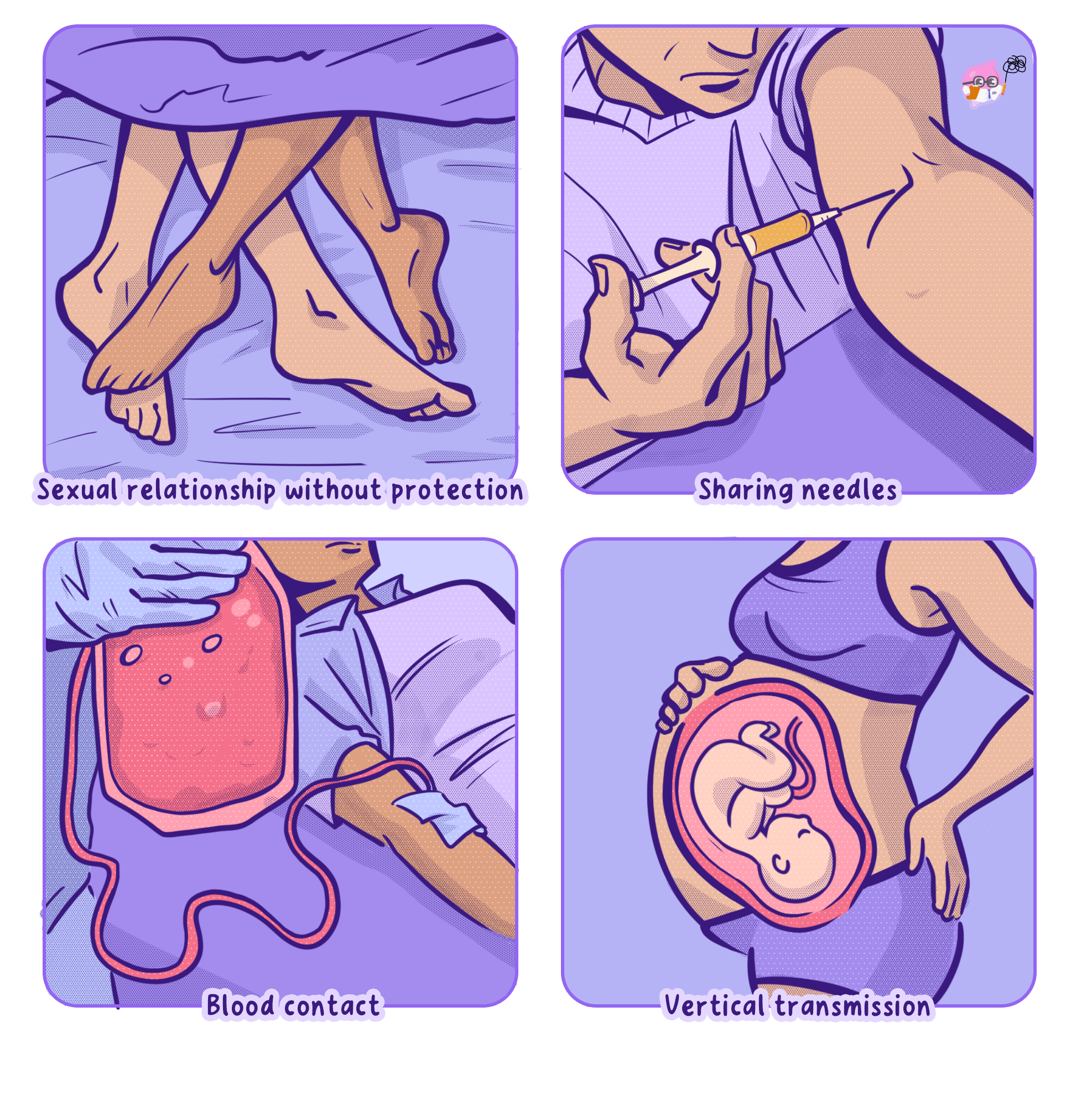
The fragility of a pathogen outside the body is exactly what makes barrier methods such as condoms and sterile needles so effective against it.
Air, water and food
- Airborne pathogens travel in the tiny droplets of liquid released when an infected person coughs, sneezes or talks.
- A single sneeze can release many thousands of droplets, which are then breathed in by anyone standing nearby or settle onto surfaces that are later touched.
- Influenza, measles and tuberculosis all spread this way, which is why they move quickly through crowded indoor spaces.
- Water-borne pathogens leave the body in faeces and enter drinking water that has been contaminated with sewage.
- Cholera spreads in this way, so outbreaks follow floods, earthquakes and any other event that mixes sewage with the water supply.
- Food-borne pathogens are swallowed in food that has been undercooked, stored too warm or handled with dirty hands.
- Salmonella grows in raw poultry and eggs, and also transfers onto salad when the same board or knife is used for both.
- Do not write that a disease is "spread by air" and leave it there.
- Say that droplets containing the pathogen are released in a cough or sneeze and then breathed in by another person.
Vectors and spread between plants
Vector
An organism that carries a pathogen from one host to another without developing the disease itself.
- A vector carries a pathogen from one host to another without developing the disease itself, so it acts as a living delivery system.
- A female mosquito takes up the malarial protist when it feeds on the blood of an infected person, then injects it into the next person it bites.
- Plants have no immune system and cannot move away from infection, so pathogens reach them by several distinct routes.
- Insects such as aphids and whitefly act as vectors, pushing their mouthparts into the phloem of one plant after another and carrying viruses with them.
- Wind carries the spores of fungal pathogens such as powdery mildew across whole fields in a single day.
- Rain splashes spores from infected soil and fallen leaves upwards onto healthy foliage.
- Direct contact passes pathogens between touching leaves, and gardeners transfer them on unsterilised secateurs, boots and hands.
- Infected seeds, tubers and cuttings carry a pathogen straight into a new crop before it has even germinated.
Crops are grown as dense stands of genetically identical plants, so a pathogen that infects one plant usually finds every neighbour equally easy to attack.
Reducing and preventing spread
- Hygiene removes pathogens before they reach a new host, because soap lifts them off the skin and running water washes them away.
- Disinfectants applied to kitchen worktops, door handles and hospital surfaces kill the pathogens that survive there between touches.
- Isolating infected people keeps them apart from others for as long as they remain infectious, so there is nobody nearby for droplets or contact to reach.
- Controlling vectors cuts transmission by removing the carrier, using insecticides, draining the standing water where mosquitoes breed and sleeping under treated nets.
- Treating water and sewage breaks the water-borne route, because filtration and chlorination kill the pathogens before the water is drunk.
- Safe food handling means cooking food right through, chilling it below the temperature at which bacteria reproduce quickly, and keeping raw meat away from food that will be eaten uncooked.
- In crops, growers remove and burn infected plants, rotate crops so a soil pathogen loses its host, sterilise tools between plants, control insect vectors and plant resistant varieties.
- Match the control measure to the route of transmission the question describes, because suggesting bed nets for a water-borne disease gains nothing.
- Every control measure needs its reason attached, so write that boiling water kills the bacteria rather than simply writing "boil the water".
- Where a question asks for more than one method, give methods that block different routes rather than three versions of washing your hands.
Vaccination and herd immunity
Herd immunity
The protection of unvaccinated individuals that results when so many members of a population are immune that a pathogen can no longer spread easily.
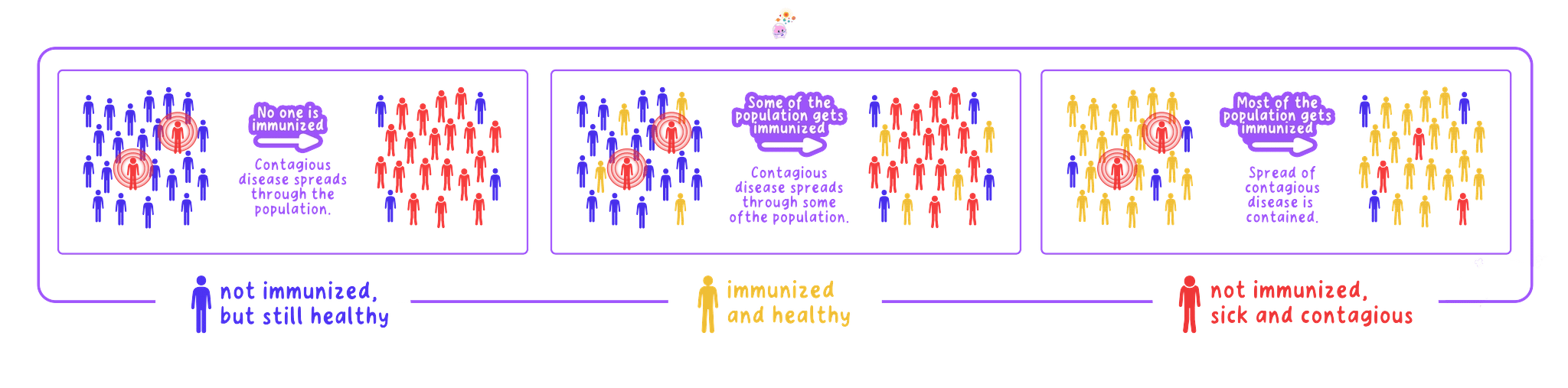
- A vaccinated person is already immune, so a pathogen that reaches them is destroyed before it can reproduce in large numbers.
- Because the pathogen never builds up inside that person, they do not pass it on, and the chain of transmission stops at them.
- As the proportion of vaccinated people rises, each infected person meets fewer and fewer susceptible people, so the average number of new infections caused by each case falls.
- Once that average drops below one new case per infected person the outbreak shrinks instead of growing, and the unvaccinated are protected as well, which is herd immunity.
- The proportion needed depends on how infectious the pathogen is, and measles is so infectious that roughly 95%95\%95% of a population must be vaccinated.
- Herd immunity matters most for babies too young to be vaccinated and for people whose immune systems are damaged, since neither group can be protected directly.
- If the vaccination rate slips below the threshold the pathogen begins to spread again, which is why outbreaks reappear in areas where uptake has fallen.
Working with numbers of cases
Incidence
The number of new cases of a disease that appear in a stated population over a stated period of time.
Epidemic
A rapid rise in the number of cases of a communicable disease within a population in a particular area.
- A raw count of cases cannot be compared between two places of different size, so figures are reported as an incidence per fixed number of people.
- Incidence is calculated using incidence=number of new casespopulation×100 000\text{incidence} = \dfrac{\text{number of new cases}}{\text{population}} \times 100\,000incidence=populationnumber of new cases×100000.
- The number of cases expected in another population is then estimated by reversing the calculation, multiplying the incidence by that population and dividing by 100 000100\,000100000.
- Numbers of pathogens grow in the same exponential way, because a bacterium divides in two by binary fission, giving N=N0×2nN = N_0 \times 2^nN=N0×2n where nnn is the number of divisions.
- Very large or very small values are written in standard form, so 512 000512\,000512000 bacteria is recorded as 5.12×1055.12 \times 10^{5}5.12×10⁵.
- A sharp rise in incidence above the level normally expected in an area is described as an epidemic, and one that spreads across several countries is a pandemic.
- A town of 250 000250\,000250000 people records 606060 new cases of an infection during one month.
- The incidence is 60250 000×100 000=24\dfrac{60}{250\,000} \times 100\,000 = 2425000060×100000=24 cases per 100 000100\,000100000 people.
- A nearby city of 900 000900\,000900000 people with the same incidence would be expected to record 24×900 000100 000=216\dfrac{24 \times 900\,000}{100\,000} = 21610000024×900000=216 new cases in the same month.
- One bacterium is left in warm food and divides every 202020 minutes for 333 hours.
- The number of divisions is n=18020=9n = \dfrac{180}{20} = 9n=20180=9.
- The number of bacteria present is N=1×29=512N = 1 \times 2^{9} = 512N=1×29=512, which shows how quickly a single pathogen becomes an infectious dose.
- Define transmission.
- Describe how a pathogen spreads from one person to another in exhaled droplets.
- Name three ways a pathogen can reach a healthy plant.
- Explain how vaccinating most of a population protects the people who are not vaccinated.
- Calculate the incidence per 100 000 people when 45 new cases occur in a population of 300 000.
6.3.4 Common infections and diseases
The four groups of pathogen
Virus
A very small infectious particle made of genetic material inside a protein coat that can only reproduce inside a living host cell.
Bacterium
A single-celled prokaryotic microorganism with no nucleus, some species of which are pathogens.
Fungus
A eukaryotic organism that is either single-celled or built from threads called hyphae and feeds by releasing enzymes onto its food.
Protist
A single-celled eukaryotic organism, some species of which are parasites that cause disease in a host.
- Communicable diseases of humans and of plants are caused by four groups of pathogen, and each group damages its host in a characteristic way.
- Viruses are not cells, so they take over the machinery of a host cell to make copies of themselves and the cell is destroyed as the new virus particles are released.
- Bacteria are cells that reproduce rapidly inside the body and damage tissues mainly by releasing poisonous toxins.
- Fungi grow threads called hyphae into the tissues of the host and release enzymes that digest those tissues so the fungus can absorb the products.
- Protists are single-celled organisms that live as parasites inside the host, and most of them rely on a vector to carry them from one host to the next.
Naming the group a pathogen belongs to also tells you how the disease can be treated, because antibiotics kill bacteria but have no effect at all on a virus.
Influenza, a viral infection
Infection
The entry and reproduction of a pathogen inside the tissues of a host organism.
- Influenza is caused by the influenza virus, which infects the cells lining the nose, throat and lungs.
- The virus attaches to a lining cell, enters it and forces the cell to build hundreds of new virus particles, which are released as the cell bursts and dies.
- Destroying the lining strips away the mucus and cilia that normally trap and sweep out dirt, which is why a bacterial chest infection often follows influenza.
- The symptoms are a sudden high temperature, aching muscles, headache, a dry cough and severe tiredness that lasts for a week or more.
- The virus is spread in droplets released when an infected person coughs or sneezes, and on hands and surfaces those droplets land on.
- There is no antibiotic treatment, so recovery depends on the immune system, and the yearly vaccine is offered to people most at risk of serious illness.
- Never suggest antibiotics as a treatment for a viral disease.
- Antibiotics work on structures and processes that only bacterial cells have, and a virus reproduces inside your own cells where the drug cannot reach it without killing them too.
Cholera, a bacterial infection
Toxin
A poisonous substance released by a pathogen that damages host cells and produces the symptoms of the disease.
- Cholera is caused by the bacterium Vibrio cholerae, which is swallowed in water or food contaminated by the faeces of an infected person.
- The bacteria that survive the stomach acid reach the small intestine, attach to its lining and multiply there in huge numbers.
- They release a toxin that acts on the lining cells and makes them pump salts out of the blood and into the gut.
- The contents of the gut are now a more concentrated solution than the blood, so water moves out of the blood and into the gut by osmosis through the partially permeable cell membranes.
- The gut fills with fluid, producing the severe watery diarrhoea that is the main symptom, and an adult can lose several litres in a few hours.
- Losing water and salts this quickly causes dehydration, the blood volume falls, and without treatment the person can die within a day.
- Treatment is an oral rehydration solution of clean water with salts and sugar dissolved in it, because the sugar helps the salts and therefore the water to be absorbed back across the gut wall.
- Do not write that the toxin digests or eats away the lining of the gut.
- The toxin moves salts into the gut and the water follows them by osmosis, so it is a movement of water down a concentration gradient rather than any damage to the tissue.
Athlete's foot, a fungal infection
- Athlete's foot is caused by a fungus that grows in the warm moist skin between the toes, conditions it needs to reproduce.
- Its hyphae grow into the dead outer layer of the skin and release enzymes that digest the protein keratin, and the fungus absorbs the products.
- The damaged skin becomes itchy, red, dry and cracked, and it flakes away carrying fungal spores with it.
- Those flakes are how the infection spreads, which is why it passes between people on wet changing room floors, in shared showers and on shared towels.
- It is treated with an antifungal cream or powder, and kept away by drying between the toes and wearing sandals in communal showers.
An antifungal is needed rather than an antibiotic, because a fungus is a eukaryote whose cells are far more similar to our own than a bacterial cell is.
Sexually transmitted infections
Sexually transmitted infection
A communicable disease transmitted from one person to another through sexual contact and the exchange of body fluids.
- A sexually transmitted infection is passed on during sexual contact, because the pathogens involved survive only in the moist conditions of body fluids.
- HIV is a virus that causes a short flu-like illness and then infects and destroys the lymphocytes that coordinate the immune response.
- Once too few of those cells remain, the body can no longer fight off other pathogens and the person is said to have AIDS.
- Antiretroviral drugs hold the virus at very low levels so the immune system keeps working, but they do not remove the virus from the body.
- Chlamydia is caused by a bacterium and often produces no symptoms at all, so it is passed on unknowingly for months.
- Untreated it scars the oviducts and sperm ducts, which is why it is a common cause of infertility, and it is cured with antibiotics if it is found.
- Gonorrhoea is also bacterial and gives a thick yellow or green discharge and pain on urinating, and strains resistant to the usual antibiotics are now common.
- Spread of all three is reduced by using a condom as a barrier, by screening people who have no symptoms, by treating partners at the same time and by not sharing needles.
- Learn each named disease as a set of four facts: the pathogen group, how it spreads, its symptoms and how it is treated or prevented.
- A question asking why an infection is hard to control is usually pointing at symptoms that are absent or mild, so say that an infected person passes it on without knowing.
- The mark most often lost is giving a symptom when the question asked for the effect on the body, so link the symptom back to the tissue the pathogen damages.
Tobacco mosaic virus in plants
Pathogen
A microorganism that causes a communicable disease, such as a virus, a bacterium, a fungus or a protist.
- Tobacco mosaic virus, usually shortened to TMV, infects tobacco, tomato, pepper and more than a hundred other species.
- It gives the leaves a distinctive mottled mosaic pattern of light green, yellow and dark green patches, and the leaves are often crinkled or narrowed.
- The pale patches contain far less chlorophyll, so they absorb less light, the rate of photosynthesis falls and the plant makes less glucose.
- With less glucose available for respiration and for building new tissue, growth is stunted and the crop yield drops.
- TMV is spread by contact between leaves and on the hands, clothing and tools of anyone working among the plants.
- The virus is unusually stable and survives for years in dried plant debris and in the soil, so infected material must be removed and destroyed rather than dug in.
There is no treatment once a plant is infected, so growers rely on removing diseased plants and on varieties bred to resist the virus.
Barley powdery mildew
- Barley powdery mildew is caused by the fungus Erysiphe graminis, one of the most damaging diseases of cereal crops.
- White fluffy pustules of fungal hyphae and spores appear on the upper surface of the leaves, later turning grey and brown.
- Fine hyphae push through the cell wall into the epidermal cells and absorb sugars directly from them, so food the plant made for itself is taken by the fungus.
- The white covering also blocks light from reaching the chloroplasts underneath, which lowers the rate of photosynthesis still further.
- Leaves yellow and die early, the grain that forms is small and light, and yields can fall by a fifth or more in a badly infected field.
- Spores are carried long distances on the wind, and the disease builds up fastest in mild damp weather and in crops sown thickly.
- Growers control it with fungicide sprays, by sowing resistant varieties and by avoiding heavy nitrogen fertiliser, which produces the soft leafy growth the fungus prefers.
The fungus takes sugars from living cells rather than killing them outright, because a dead leaf would stop photosynthesising and leave it with nothing to feed on.
Crown gall disease
- Crown gall disease is caused by the soil bacterium Agrobacterium tumefaciens, which attacks fruit trees, roses, grapevines and many other woody plants.
- The bacterium lives in the soil and can only get in through a wound, such as the damage done by a spade, a graft or frost at the base of the stem.
- Once inside it transfers a piece of its own DNA into the DNA of the plant cells around the wound.
- That inserted DNA switches on uncontrolled cell division, so the infected cells keep dividing and form a swollen lumpy growth called a gall.
- The disorganised gall tissue crushes and interrupts the xylem and phloem running through the stem, so water and dissolved sugars can no longer be transported properly.
- The plant above the gall is left short of water and minerals, so it grows poorly, wilts in dry weather and may die.
- Control depends on prevention, using clean planting stock, sterilised tools and careful handling so that the roots and stem base are not wounded.
- State how a virus damages the cells of its host.
- Explain how the cholera toxin causes severe diarrhoea.
- Name one sexually transmitted infection caused by a bacterium and one caused by a virus.
- Explain why tobacco mosaic virus reduces the growth of a tomato plant.
- Describe how crown gall disease stops a plant transporting water.
6.3.5 Physical plant defence responses
Why plants need physical defences
Pathogen
A microorganism that causes a communicable disease, such as a virus, a bacterium, a fungus or a protist.
Host
An organism in or on which a pathogen lives and reproduces.
- Plants have no circulating white blood cells and make no antibodies, so they cannot hunt down a pathogen once it is inside them.
- A plant is also rooted in one place, so it cannot move away from infected neighbours or from the insects carrying disease.
- Its defences are therefore built into its structure, and a physical defence is a barrier that stops the pathogen reaching living tissue in the first place.
- To infect a leaf a pathogen must cross two barriers in turn, first the waterproof layer on the outside and then the wall around each cell.
- Prevention is the whole of a plant's physical strategy, because it has no way of clearing an infection that has already taken hold.
- This is why almost every one of these defences is in place before any pathogen arrives.
The waxy cuticle
Waxy cuticle
A waterproof waxy layer secreted over the epidermis of a leaf that forms a barrier against pathogens and water loss.
- The waxy cuticle is secreted by the epidermal cells and forms a continuous waterproof sheet over the upper and lower surfaces of every leaf.
- Because it repels water, rain runs straight off instead of sitting on the surface as a film.
- Fungal spores need a film of surface water to germinate, and many bacteria need it to swim towards a stoma, so removing the water removes their route in.
- The wax is also a solid barrier in its own right, and a fungal thread cannot push through an intact cuticle to reach the epidermal cells beneath.
- Plants growing in exposed or dry places build a much thicker cuticle, which is why a holly leaf feels hard and glossy while a lettuce leaf tears easily.
- The cuticle is broken by hail, wind damage, grazing and careless pruning, and almost every leaf infection begins at a break of this kind.
The cuticle cannot cover the stomata, because gases must diffuse in and out, so these open pores are the weak point that many pathogens use.
Cell walls
Cellulose cell wall
A rigid layer of cellulose fibres surrounding a plant cell that supports the cell and forms a barrier to pathogens.
Lignin
A hard waterproof substance deposited in some plant cell walls that stiffens them and makes them difficult for pathogens to penetrate.
- Every plant cell is enclosed in a cellulose cell wall, so a pathogen that gets past the cuticle meets a second barrier at every single cell.
- Cellulose is built from long chains bundled into fibres that criss-cross in layers, which makes the wall extremely strong for its thickness.
- A fungal thread grows by pushing forwards with great force, and the cross-linked fibres of the wall resist that pressure.
- The wall also keeps the pathogen away from the cytoplasm, and a virus or bacterium that cannot reach the cytoplasm cannot reproduce.
- Some walls are strengthened further with lignin, a hard waterproof substance found in xylem vessels and in the woody parts of stems and roots.
- Lignified walls are much harder for enzymes to digest, so a pathogen that dissolves its way through ordinary cell walls is stopped by them.
- A plant can also lay extra material down inside the walls around a wound, which thickens them and seals the infected area off from healthy tissue.
Walling off an infected patch costs the plant those cells but saves the rest, which is why a diseased leaf often shows a dead brown spot ringed by healthy green tissue.
Bark and layers of dead cells
- The stems and roots of woody plants are covered by bark, which is made of layers of dead cells whose walls are soaked in a waterproof substance.
- These cells contain no cytoplasm, so a virus or bacterium that reaches them finds nothing it can use to reproduce.
- Bark is shed continuously in flakes and plates, so any pathogen that has settled on the outside is carried away before it can work inwards.
- Deciduous trees use the same trick on a yearly cycle, dropping every leaf in autumn and taking the season's fungal infections down with them.
- The tree then opens fresh, uninfected leaves in spring, which is why gardeners are told to rake up and burn fallen leaves rather than leave them under the tree.
- An apple tree infected with scab carries the fungus in its leaves through the summer.
- Leaf fall removes almost all of that fungus from the branches in a single season.
- The fungus survives the winter in the fallen leaves on the ground, so clearing them away in autumn greatly reduces the infection the following spring.
Defences against animals that damage plants
Herbivore
An animal that feeds only on plant material.
- Thorns, spines and stinging hairs make a plant painful to eat, so a herbivore moves on to something easier.
- This protects the plant against disease as well as against grazing, because every bite leaves a wound through which pathogens can enter.
- Dense hairs on a leaf surface hold small insects away from the epidermis, so an aphid carrying a virus cannot reach the phloem to feed.
- Leaves that droop or curl when touched, as in the sensitive plant, throw feeding insects off and make the plant look smaller and less worth eating.
- Closing the stomata shuts the one opening in the cuticle, which denies pathogens their easiest route into the leaf.
- Mimicry works by appearance rather than by force, and some passion flower species grow small yellow spots that look like butterfly eggs.
- A female butterfly avoids laying on a leaf that already appears to carry eggs, so no caterpillars hatch there and the leaf is never eaten.
- Almost no plant relies on a single defence, and a rose bush combines a waxy cuticle, cellulose walls, woody stems and thorns at the same time.
- Name the structure and then say what it stops, because "the plant has a waxy cuticle" on its own is a description rather than an explanation.
- When a question asks how a structural defence reduces disease, finish the chain by linking it to fewer wounds or fewer entry points for pathogens.
- Keep physical defences separate from chemical ones in your answer, since a barrier keeps a pathogen out while a chemical acts on the pathogen itself.
- Explain two ways the waxy cuticle stops a fungus infecting a leaf.
- Why does a cellulose cell wall prevent a virus reproducing inside a plant cell?
- State what lignin does to a cell wall and why that matters for defence.
- Describe how shedding bark and dropping leaves protect a tree from disease.
- Explain how thorns reduce the number of infections a plant suffers.
6.3.6 Chemical plant defence responses
How chemical defences work
Antimicrobial substance
A chemical produced by an organism that kills microorganisms or slows their growth.
Pathogen
A microorganism that causes a communicable disease, such as a virus, a bacterium, a fungus or a protist.
- A chemical defence is a substance the plant makes that attacks the pathogen itself, rather than a barrier that keeps the pathogen outside.
- This matters because a barrier is useless once it has been broken, and a chemical can still act on a pathogen that has already got in.
- Some of these substances are present in the tissues all the time, so a pathogen meets them the moment it arrives.
- Others are made only after the plant detects damage or infection, which saves the energy and raw materials that making them all year would cost.
- Because the substances are soluble they diffuse through the tissue around the infected area, so they reach the pathogen wherever it has spread to.
- Chemical defences fall into two jobs: killing microorganisms, and making the plant unpleasant or dangerous to eat.
- Both jobs reduce disease, because an animal that stops feeding also stops making the wounds that let pathogens in.
Antibacterial and antifungal substances
Fungus
A eukaryotic organism that is either single-celled or built from threads called hyphae and feeds by releasing enzymes onto its food.
Zone of inhibition
The clear area of agar surrounding a disc of antimicrobial substance in which bacteria have been prevented from growing.
- Antibacterial substances damage the cell wall or the cell membrane of a bacterium, so it either bursts or can no longer take in what it needs to reproduce.
- Garlic produces allicin when its tissue is crushed, and mint and witch hazel produce oils that act in the same way.
- Antifungal substances stop fungal threads growing into the tissue, usually by breaking down the membranes of the growing hyphae.
- Oat roots contain a substance that punches holes in fungal membranes, and the bark of many trees is rich in compounds that do the same.
- Many plants make both kinds at once, which is why plant tissue rots far more slowly while it is alive than it does after it dies.
- The effectiveness of an extract is compared by growing bacteria on agar and measuring the clear zone of inhibition it produces, since a larger zone means the substance has diffused further and still killed bacteria.
Comparing the antibacterial effect of plant extracts
- Aim: to find out which of several plant extracts is the most effective at inhibiting the growth of bacteria, by measuring the zones of inhibition they produce on a seeded agar plate.
- Apparatus: sterile agar plates already seeded with a harmless culture of bacteria, sterile filter paper discs, sterile forceps, a pestle and mortar, fresh garlic, mint and onion, distilled water, a measuring cylinder, a filter funnel and filter paper, a Bunsen burner, adhesive tape, a marker pen, an incubator set to 25 ∘C25\ ^\circ\text{C}25 ∘C, a 30 cm30\ \text{cm}30 cm ruler and eye protection.
- Method, making the extracts:
- Weigh out 5 g5\ \text{g}5 g of the first plant material and grind it in the mortar with 10 cm310\ \text{cm}^310 cm3 of distilled water until it forms a smooth paste.
- Pour the paste through filter paper in a funnel to remove the solid fragments, because a lump of tissue sitting on the agar would block the disc rather than release the extract evenly.
- Repeat with the same mass and the same volume of water for each of the other plants, so that concentration is kept the same throughout.
- Method, setting up the plate:
- Turn the plate over and draw four evenly spaced sectors on the base with the marker, labelling one for each extract and one for the control.
- Soak a filter paper disc in the first extract for the same length of time you will use for all of them, then hold it against the side of the beaker to drain off the surplus.
- Pass the forceps through the Bunsen flame and let them cool, then lift the lid of the plate just far enough to reach in at an angle and lay the disc flat in its sector.
- Press the disc down gently so its whole surface touches the agar, since a disc resting on one edge releases extract into the agar unevenly.
- Repeat for the other extracts, flaming the forceps between each one, and place a disc soaked only in distilled water in the fourth sector as the control.
- Method, incubating and measuring:
- Fix the lid with two short pieces of tape on opposite sides, leaving the rest of the rim open so that air can still reach the culture.
- Incubate the plate upside down at 25 ∘C25\ ^\circ\text{C}25 ∘C for 484848 hours, so that condensation collects in the lid instead of dripping onto the agar and smearing the colonies.
- Without opening the plate, measure the diameter of each clear zone in millimetres across two directions at right angles and take the mean.
- Set up three plates for each extract and calculate a mean for every one, so that a single unusual plate does not decide the result.
- Results: a cloudy lawn of bacteria covers the agar apart from a clear circle around each disc that released an antibacterial substance, and the control disc has no clear zone at all.
- Maths: convert each mean diameter to a radius with r=d2r=\dfrac{d}{2}r=2d and find the area of the zone with A=πr2A=\pi r^{2}A=πr2, because area is proportional to the number of bacteria killed while diameter is not.
- A disc giving a zone of diameter 18 mm18\ \text{mm}18 mm has an area of A=π×92=254 mm2A=\pi \times 9^{2}=254\ \text{mm}^{2}A=π×92=254 mm2 to three significant figures.
- Watch out: the control disc is what proves the water itself killed nothing, discs must be identical in size and soaked for equal times, plates must all be incubated together at one temperature, and a zone measured through a closed lid is measured accurately only if the ruler is held flat against the base.
- Safety: wear eye protection, keep the incubator at 25 ∘C25\ ^\circ\text{C}25 ∘C so that bacteria which grow at human body temperature are not favoured, never reopen an incubated plate, tie long hair back near the Bunsen burner, wash your hands after handling plates and hand every used plate in for sterilising before disposal.
Chemicals that deter animals
Herbivore
An animal that feeds only on plant material.
- Poisons kill or sicken an animal that eats the plant, so the rest of that population learns to leave the species alone.
- Foxglove leaves contain a substance that disturbs the rhythm of the heart, deadly nightshade berries contain one that blocks nerve signals, and tobacco leaves contain nicotine, which is toxic to insects.
- Bitter-tasting chemicals work without harming the animal, because a mouthful that tastes unpleasant is spat out and the plant is left alone.
- Tannins in oak and tea leaves bind to proteins in the mouth and gut, which makes the leaf taste harsh and makes its protein harder to digest.
- Fewer animals feeding means fewer holes bitten in the leaves, and since almost every infection starts at a wound this cuts the rate of disease as well.
- Some plants release scent chemicals into the air as soon as a caterpillar starts to feed, and these attract wasps that lay their eggs in the caterpillar.
- Do not describe a thorn or a thick cuticle as a chemical defence.
- A chemical defence is a substance the plant produces, so the answer must name a poison, a bitter compound or an antimicrobial substance.
Plant defence chemicals as medicines
- A substance that kills a bacterium in a leaf may also kill the same bacterium in a person, so plant defences have long been a starting point for medicines.
- Aspirin is based on a compound from willow bark, where the plant uses it as part of its response to infection, and it is now used to relieve pain and fever.
- Quinine comes from the bark of the cinchona tree and was the first effective treatment for malaria.
- Digitalis, the foxglove poison that deters herbivores, is used in carefully measured doses to steady a failing heart.
- The dose is what separates a poison from a medicine, which is why these substances are extracted, purified and measured precisely rather than taken as raw plant material.
- Say what the chemical does to the pathogen or to the animal, because naming the compound alone rarely earns the mark.
- In a zone of inhibition question, compare the treated discs with the control before drawing any conclusion about which extract worked.
- A larger clear zone shows the substance is more effective, and it is worth adding that this is because it stopped growth even where it had diffused further and become more dilute.
- State the difference between a physical and a chemical plant defence.
- Explain how an antibacterial substance kills a bacterium.
- Give two ways a plant uses chemicals to stop animals eating it.
- Why does deterring herbivores also reduce the amount of disease a plant suffers?
- Explain why a disc soaked only in distilled water must be included when testing plant extracts on an agar plate.
6.3.7 Detecting and identifying plant diseases
Signs that a plant is diseased
Pathogen
A microorganism that causes a communicable disease, such as a virus, a bacterium, a fungus or a protist.
Symptom
A change in the normal functioning or appearance of an organism that is produced by a disease.
- Stunted growth is the commonest sign, because a diseased plant diverts resources away from making new tissue or has lost leaf area for photosynthesis.
- Spots on the leaves mark patches of tissue the plant has killed off and sealed away to stop a fungal or bacterial infection spreading.
- Areas of decay appear where a pathogen has digested the tissue, leaving it soft, brown and rotting, most often on fruit, stems and roots.
- Abnormal growths such as galls form when a pathogen makes the plant's own cells divide out of control.
- Malformed stems and leaves appear twisted, curled or narrowed when a virus disturbs the way new tissue develops.
- Discolouration ranges from the mottled mosaic of a viral infection to the white powdery coating of a fungus and the general yellowing of leaves that are dying back.
- Visible pests such as aphids, caterpillars and whitefly are a sign in themselves, since they both damage the plant and carry pathogens between plants.
The same symptom can be produced by several different causes, so a sign is where an investigation starts rather than where it finishes.
Diagnosis in the field
- The first step is careful observation with the naked eye and a hand lens, recording which parts of the plant are affected and how badly.
- The pattern across a field is as informative as the symptom itself, because an infection usually starts in one patch and spreads outwards over the following weeks.
- A problem that appears evenly across the whole crop at once points instead to the soil or the weather, since a pathogen needs time to travel.
- Whether the oldest or the youngest leaves are affected first narrows the possibilities further, and so does the position of the marks on each leaf.
- The symptoms are then matched against a gardening manual, an identification key or an online database of photographs of known plant diseases.
- A hand lens or a portable microscope shows the structures that a photograph cannot, such as fungal threads, masses of spores and the insects feeding on the underside of a leaf.
- A field testing kit gives a chemical answer on the spot, using a strip carrying antibodies that bind to the pathogen and produce a coloured line within minutes.
- Field methods are quick and cheap and need no laboratory, but they can mistake one disease for another that looks similar, so a doubtful result is sent away for testing.
Examining a diseased leaf by observation and microscopy
- Aim: to record the symptoms of a diseased leaf, then use a light microscope to find the fungal structures that identify the pathogen causing them.
- Apparatus: diseased and healthy leaves of the same species, a hand lens, a light microscope, glass slides, cover slips, forceps, a mounted needle, a scalpel, a white tile, clear adhesive tape, distilled water in a dropping pipette, filter paper, a 30 cm30\ \text{cm}30 cm ruler, a sharp pencil, a plant disease identification guide and eye protection.
- Method, recording the symptoms:
- Lay the diseased leaf beside a healthy one on the white tile so that differences in colour and shape stand out against the same background.
- Describe the colour, the shape of the marks and where they sit on the leaf, noting whether they follow the veins or ignore them.
- Measure the diameter of several spots with the ruler and record the values in millimetres in a results table.
- Estimate the percentage of the leaf area affected, and repeat this on ten leaves so that the figure represents the plant rather than one bad leaf.
- Turn the leaf over and use the hand lens to check the lower surface, where fungal growth and insect pests are usually found first.
- Method, preparing the slide:
- Press a short piece of clear adhesive tape sticky side down onto a powdery or spotted patch, then peel it off so that spores and threads come away on the tape.
- Lay the tape flat on a slide over a single drop of distilled water, which spreads the material out and stops air being trapped underneath.
- For a section instead, cut a thin sliver from the edge of a lesion on the white tile, cutting away from your fingers so that both healthy and diseased tissue are included.
- Place the sliver in a drop of water on a slide, hold a cover slip at about 45∘45^\circ45∘ on the mounted needle, rest one edge beside the drop and lower it slowly so the air is driven out.
- Draw off any surplus water with the corner of a piece of filter paper.
- Method, viewing and recording:
- Clip the slide to the stage, rotate the ×4\times4×4 objective into place and focus upwards with the coarse focus until the material appears.
- Move up to ×10\times10×10 and then ×40\times40×40, using the fine focus only, so the high-power lens cannot be driven down into the cover slip.
- Look for branching threads, chains or clusters of spores, and compare their shape and arrangement with the pictures in the identification guide.
- Draw what you can see with a sharp pencil in single unbroken lines with no shading, label it with straight ruled lines and write the total magnification beside the drawing.
- Results: a fungal infection shows threads and spores lying on and within the tissue, while a leaf damaged by a virus or by a shortage of minerals shows discoloured cells and nothing growing among them.
- Maths: total magnification is the eyepiece value multiplied by the objective value, so ×10\times10×10 with ×40\times40×40 gives ×400\times400×400, and the real size of a spore is found with A=IMA=\dfrac{I}{M}A=MI before converting using 1 mm=1000 μm1\ \text{mm}=1000\ \mu\text{m}1 mm=1000 μm.
- Percentage leaf area affected is calculated with area affectedtotal leaf area×100\dfrac{\text{area affected}}{\text{total leaf area}} \times 100total leaf areaarea affected×100, and a mean is taken across all ten leaves.
- Watch out: a section cut too thickly lets no light through, a sliver taken from the dead centre of a lesion contains only decayed tissue, harmless moulds growing on a dying leaf are easily mistaken for the pathogen, and a drawing should record what is on the slide rather than the picture in the guide.
- Safety: wear eye protection, cut on a tile away from your fingers, avoid breathing in spores by keeping the leaf still and working at arm's length, wash your hands afterwards, seal the used material in a bag for disposal and carry the microscope with one hand under the base.
Identification in the laboratory
Antigen
A molecule on the surface of a cell or pathogen that is recognised as foreign and has a shape unique to that organism.
- A sample of infected tissue sent to a laboratory can be tested for the pathogen itself, which gives a certain answer rather than a likely one.
- Antigen testing works because every pathogen carries antigens on its surface whose shape is unique to that species.
- Antibodies with a binding site complementary to that antigen are produced, and each one is attached to a coloured dye or to an enzyme that produces a colour.
- Ground-up plant tissue is added to a well or a test strip coated with those antibodies, and anything that does not bind is washed away.
- A colour appears only if the antigen was present to hold the antibodies in place, so a colour change identifies the pathogen.
- DNA testing works because the genetic material of each pathogen has a base sequence found in no other organism.
- DNA is extracted from the plant sample and copied many times over, so that even a trace of pathogen DNA becomes enough to detect.
- Short labelled lengths of single-stranded DNA called probes are added, and each probe has a base sequence complementary to part of the pathogen's DNA.
- A probe binds only to the matching sequence, so a signal from the label shows that the pathogen's DNA is in the sample.
- DNA testing can separate two strains that look identical under a microscope, which matters when only one of them is resistant to the chemical the grower plans to use.
- A laboratory can also grow the pathogen from the sample on agar and examine its spores at high magnification, which is slower than a test kit but shows the living organism.
- Laboratory methods are accurate and specific but cost more and take days, so a crop is usually screened in the field and only doubtful cases are sent away.
Both laboratory tests rely on the same principle of complementary shapes, an antibody fitting an antigen and a probe fitting a base sequence, which is why either can identify one pathogen among thousands.
Ruling out a mineral deficiency
Mineral deficiency
A disorder in a plant caused by a shortage of a mineral ion that is needed for normal growth.
Chlorosis
The yellowing of plant leaves caused by a failure to make enough chlorophyll.
- An unhealthy plant is not always an infected one, because a shortage of a mineral ion in the soil produces symptoms that look very like disease.
- A shortage of nitrate ions gives stunted growth and pale older leaves, because nitrate is needed to make the amino acids from which proteins are built.
- Without enough protein the plant cannot make new cells, so growth slows and the plant stays small.
- A shortage of magnesium ions causes chlorosis, in which the leaves turn yellow, because magnesium is a component of chlorophyll.
- With less chlorophyll the leaf absorbs less light, the rate of photosynthesis falls and the plant grows poorly even in bright conditions.
- Three things separate a deficiency from an infection: it affects the whole crop evenly, there are no spots, spores or growths to find under a lens, and it does not spread outwards over time.
- The diagnosis is confirmed by testing the soil for the ion in question, and by adding a fertiliser containing it and seeing whether new growth comes through green and healthy.
- When a question asks how a disease is identified, give one field method and one laboratory method rather than two versions of looking at the plant.
- Say what is actually being detected, because "a test kit is used" scores nothing while "antibodies bind to the antigen on the pathogen and a colour appears" scores the marks.
- If a question describes symptoms spread evenly over every plant in a field, check for a mineral deficiency before naming a pathogen.
- Give four signs that a plant may be diseased.
- Describe how a plant disease can be diagnosed in the field.
- Explain how detecting an antigen identifies the pathogen in a sample.
- Explain how a DNA probe shows that a particular pathogen is present.
- State two ways you could tell a magnesium deficiency from a fungal infection.
6.3.8 White blood cells and platelets
Defence cells in the blood
White blood cell
A white blood cell is a blood cell with a nucleus that defends the body against pathogens.
Platelet
A platelet is a fragment of a cell in the blood that helps blood to clot at a wound.
Pathogen
A microorganism that causes a communicable disease, such as a virus, a bacterium, a fungus or a protist.
- Blood is made of a liquid called plasma carrying red blood cells, white blood cells and platelets.
- Red blood cells carry oxygen, while white blood cells and platelets are the parts of the blood that defend the body against pathogens.
- White blood cells are much less common than red blood cells, with roughly one white blood cell for every 600600600 red blood cells in a healthy person.
- Unlike red blood cells, every white blood cell has a nucleus, and the shape and size of that nucleus is one way of telling the different types apart.
- The number of white blood cells rises during an infection, because the body makes more of them to fight the pathogen.
- There are two main types of white blood cell, the phagocytes and the lymphocytes, and each has a structure suited to a different job.
- Platelets are not whole cells but tiny fragments of cells, and their job is to start the formation of a blood clot when a blood vessel is damaged.
- A cell is adapted to its function when its structure makes it able to carry out that function well, so every feature described below should be linked to what it lets the cell do.
Phagocytes
Phagocyte
A white blood cell that engulfs and digests pathogens by phagocytosis.
Phagocytosis
The process in which a phagocyte surrounds a pathogen, takes it into the cell and digests it with enzymes.
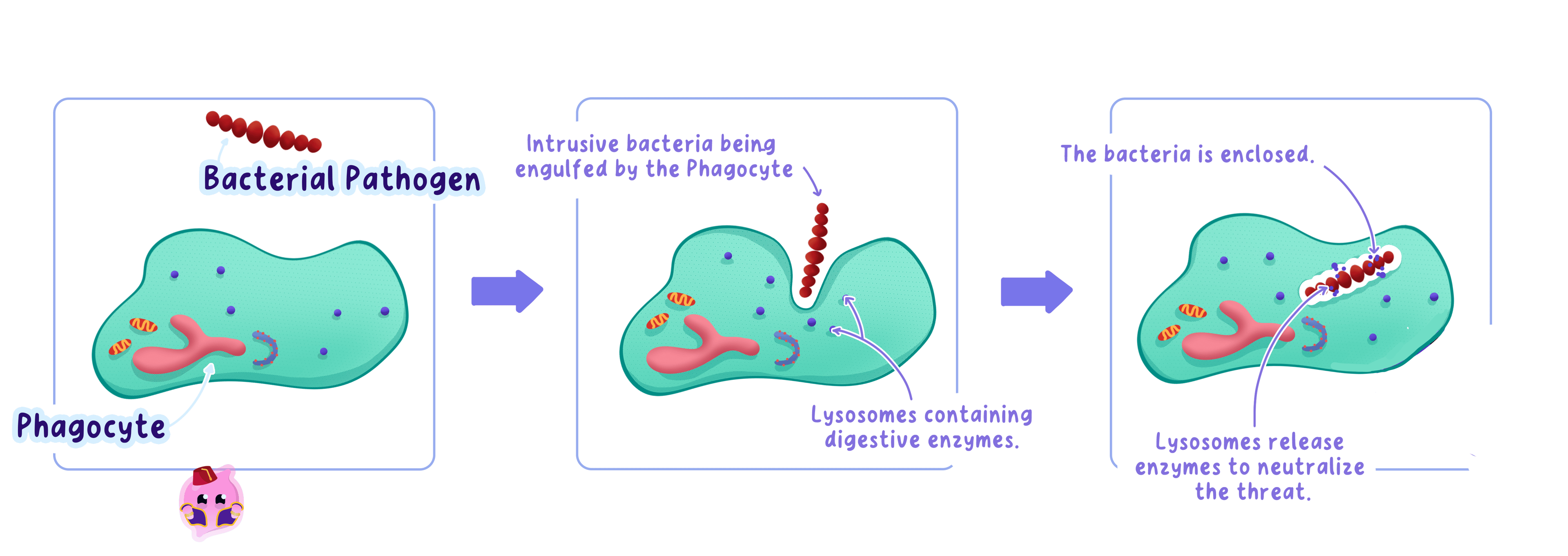
- A phagocyte destroys pathogens by phagocytosis, which means it takes a pathogen inside itself and digests it.
- Phagocytes are non-specific, so the same phagocyte will engulf a bacterium, a virus, a fungal spore or any other cell it recognises as foreign.
- Phagocytosis happens in a fixed sequence of steps.
- The phagocyte is attracted towards the pathogen by chemicals released by the pathogen and by damaged tissue.
- The phagocyte's cell membrane flows around the pathogen until the pathogen is completely engulfed inside a small bag of membrane called a vacuole.
- Small sacs called lysosomes fuse with the vacuole and release digestive enzymes onto the pathogen.
- The enzymes break the pathogen down into small harmless molecules, which the phagocyte absorbs or releases.
- Each feature of a phagocyte is linked to one of these steps.
- A flexible cell membrane and fluid cytoplasm let the phagocyte change shape so it can wrap around and engulf a pathogen.
- Receptors on the membrane detect chemicals from the pathogen, so the phagocyte can move towards the site of infection.
- Large numbers of lysosomes in the cytoplasm provide the enzymes needed to digest the engulfed pathogen.
- A lobed nucleus makes the cell flexible enough to squeeze through the gaps between the cells of capillary walls, so it can leave the blood and reach pathogens in infected tissue.
- Many phagocytes die after engulfing large numbers of bacteria, and the pus in an infected cut is largely made of dead phagocytes and the remains of pathogens.
- Do not write that a phagocyte "eats" a pathogen, because the marks are given for the words engulfs and digests.
- Do not write that phagocytes make antibodies, because antibodies are made only by lymphocytes.
- Do not describe phagocytosis as specific, because a phagocyte engulfs any pathogen it meets.
Lymphocytes
Lymphocyte
A white blood cell that produces antibodies and antitoxins in response to a specific antigen.
Antibody
A protein produced by lymphocytes that binds to a specific antigen with a complementary shape.
Antitoxin
A protein produced by lymphocytes that binds to a specific toxin and neutralises it.
- A lymphocyte is a white blood cell with a large, round nucleus that fills most of the cell and leaves only a thin layer of cytoplasm around it.
- Lymphocytes defend the body by producing antibodies and antitoxins, which are both proteins.
- Antibodies bind to antigens, the molecules on the surface of a pathogen, and each antibody has a shape that fits only one type of antigen.
- Antitoxins bind to the toxins released by some bacteria and stop the toxins damaging body cells.
- Each feature of a lymphocyte is linked to making these proteins in large amounts.
- The large nucleus contains the genes that code for the antibody proteins.
- The cytoplasm contains many ribosomes, which are the sites of protein synthesis, so the cell can make antibody molecules quickly.
- A well-developed network of membranes inside the cytoplasm packages the antibodies so they can be released from the cell in large numbers.
- A lymphocyte that meets its matching antigen can divide rapidly by mitosis, producing many identical lymphocytes that all make the same antibody.
- Because each lymphocyte makes only one kind of antibody, lymphocytes give a specific defence that targets one pathogen at a time.
- Lymphocytes work more slowly than phagocytes the first time a pathogen is met, because the right lymphocytes must first multiply before enough antibody is made.
Platelets and blood clotting
Fibrin
An insoluble protein that forms a mesh of fibres at a wound and traps blood cells to form a clot.
Blood clot
A solid mass of fibrin, platelets and trapped red blood cells that seals a damaged blood vessel.
- Platelets are small, disc-shaped fragments of large cells in the bone marrow, and they have no nucleus.
- Their small size lets huge numbers of them circulate in every blood vessel, so there are always platelets close to any wound.
- When a blood vessel is cut, platelets stick to the damaged vessel wall and to one another, forming a loose platelet plug over the gap.
- The platelets and the damaged tissue then release chemicals that set off a chain of reactions in the plasma.
- These reactions convert the soluble plasma protein fibrinogen into insoluble threads of fibrin.
- The fibrin threads form a mesh across the wound that traps red blood cells and more platelets, producing a blood clot.
- At the surface of the skin the clot dries and hardens into a scab, which stays in place while new skin grows underneath.
- The clot has two defence functions.
- It stops blood loss, which prevents the loss of blood volume and the fall in blood pressure that would follow.
- It forms a barrier that stops pathogens entering the body through the break in the skin.
- A person with too few platelets bruises easily and bleeds for longer from small cuts, which shows how important platelets are to sealing wounds quickly.
Clotting after a grazed knee
- A student falls on a playground and grazes her knee, breaking the skin and many small capillaries.
- Within seconds, platelets stick to the damaged capillary walls and clump together to plug the smallest gaps.
- Chemicals released at the wound convert fibrinogen into fibrin, and a mesh of fibrin threads traps red blood cells to form a clot.
- Over the next hour the clot dries into a scab, which seals the graze so bacteria from the playground surface cannot enter the blood.
- Any bacteria that entered before the scab formed are engulfed by phagocytes that squeeze out of nearby capillaries into the tissue.
Explaining how a cell is adapted
- Name the feature and then state what it allows the cell to do, such as "a lobed nucleus lets the phagocyte squeeze out of capillaries to reach an infection".
- Use the precise verbs examiners look for, which are engulf, ingest and digest for phagocytes, and produce or release for antibodies and antitoxins.
- When asked about platelets, go beyond "they clot the blood" and say that the clot prevents pathogens entering the wound, because that is the defence mark.
- Keep the two white blood cells separate in your answer, since mixing up which cell engulfs and which makes antibodies is the most common way to lose marks.
- State two ways in which white blood cells differ from red blood cells.
- Describe the steps of phagocytosis in the correct order.
- Explain how a lobed nucleus helps a phagocyte to defend the body.
- Explain why a lymphocyte needs a large number of ribosomes.
- Describe how platelets and fibrin form a clot, and give two reasons why the clot helps defend the body.
6.3.9 Non-specific defence systems
Non-specific defences
Pathogen
A microorganism that causes a communicable disease, such as a virus, a bacterium, a fungus or a protist.
Non-specific defence
A defence that acts against all pathogens in the same way rather than targeting one particular pathogen.
- A pathogen can only cause disease once it has entered the body and begun to reproduce in the tissues.
- The body's first line of protection is a set of non-specific defences that stop pathogens getting in, or kill them at the point of entry.
- They are called non-specific because they act against all pathogens in the same way, whether the invader is a virus, a bacterium, a fungus or a protist.
- They are also always present, so they work immediately and do not need the body to have met the pathogen before.
- The non-specific defences fall into two groups.
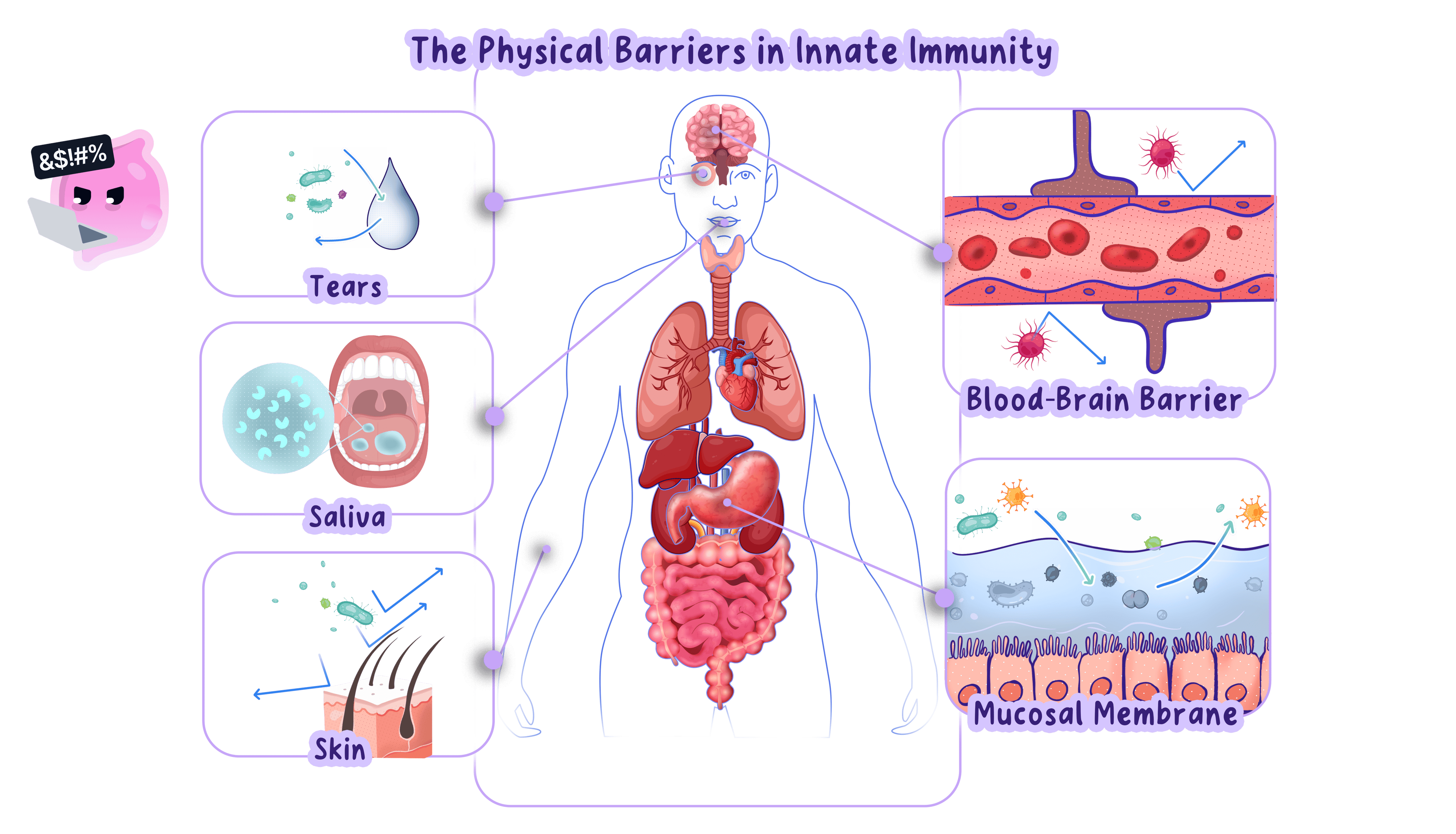
- Physical barriers block the entry of pathogens, and include the skin, the hairs and mucus of the nose, and the mucus and cilia of the airways.
- Chemical defences kill pathogens or stop them growing, and include stomach acid and the enzyme lysozyme in tears and saliva.
- Every place where the body is open to the outside, such as the nose, mouth, eyes and breaks in the skin, is protected by at least one of these defences.
The skin
Sebum
An oily substance secreted by glands in the skin that waterproofs the surface and slows the growth of microorganisms.
- The skin covers the whole outer surface of the body and is the largest barrier to pathogens.
- Its outer layer is made of many layers of dead cells packed with a tough protein, so pathogens cannot pass through intact skin and there are no living cells for viruses to infect.
- These dead cells are constantly worn away and replaced, so any pathogens settled on the surface are shed with them.
- Glands in the skin secrete an oily substance called sebum, which waterproofs the surface and contains chemicals that slow the growth of microorganisms.
- Sweat keeps the skin surface slightly acidic and salty, which many bacteria cannot grow in.
- Harmless microorganisms live naturally on healthy skin, and they compete with pathogens for space and nutrients so that pathogens find it harder to settle.
- When the skin is cut, the barrier is broken, and a blood clot quickly seals the wound so that pathogens cannot enter through the gap.
- Burns and large wounds are serious partly because they remove a wide area of this barrier, which is why patients with burns are at high risk of infection.
The nose and airways
Mucus
A sticky fluid secreted by goblet cells that traps dust and pathogens.
Goblet cell
A cell in the lining of the airways that secretes mucus.
Cilia
Tiny hair-like structures on the surface of some epithelial cells that beat together to move mucus.
- Every breath draws air containing dust, bacteria, viruses and fungal spores into the body.
- The nose is the first filter, because the hairs inside the nostrils trap large particles and the mucus lining the nasal cavity traps smaller ones.
- The trachea and bronchi are lined with two types of cell that work together.
- Goblet cells secrete sticky mucus that coats the lining and traps pathogens and dust as air flows past.
- Ciliated epithelial cells carry cilia on their surface, which beat in a coordinated wave.
- The beating cilia sweep the mucus, carrying its trapped pathogens, upwards and away from the lungs towards the back of the throat.
- The mucus is then swallowed, so the pathogens reach the stomach, where the acid kills most of them.
- This system keeps the delicate alveoli almost free of pathogens, which matters because the thin walls of the alveoli would be easy for pathogens to cross.
- Smoking damages this defence, because chemicals in tobacco smoke stop the cilia beating and cause more mucus to be made.
- Mucus then collects in the airways, and smokers cough to move it, which is why smokers suffer more chest infections such as bronchitis.
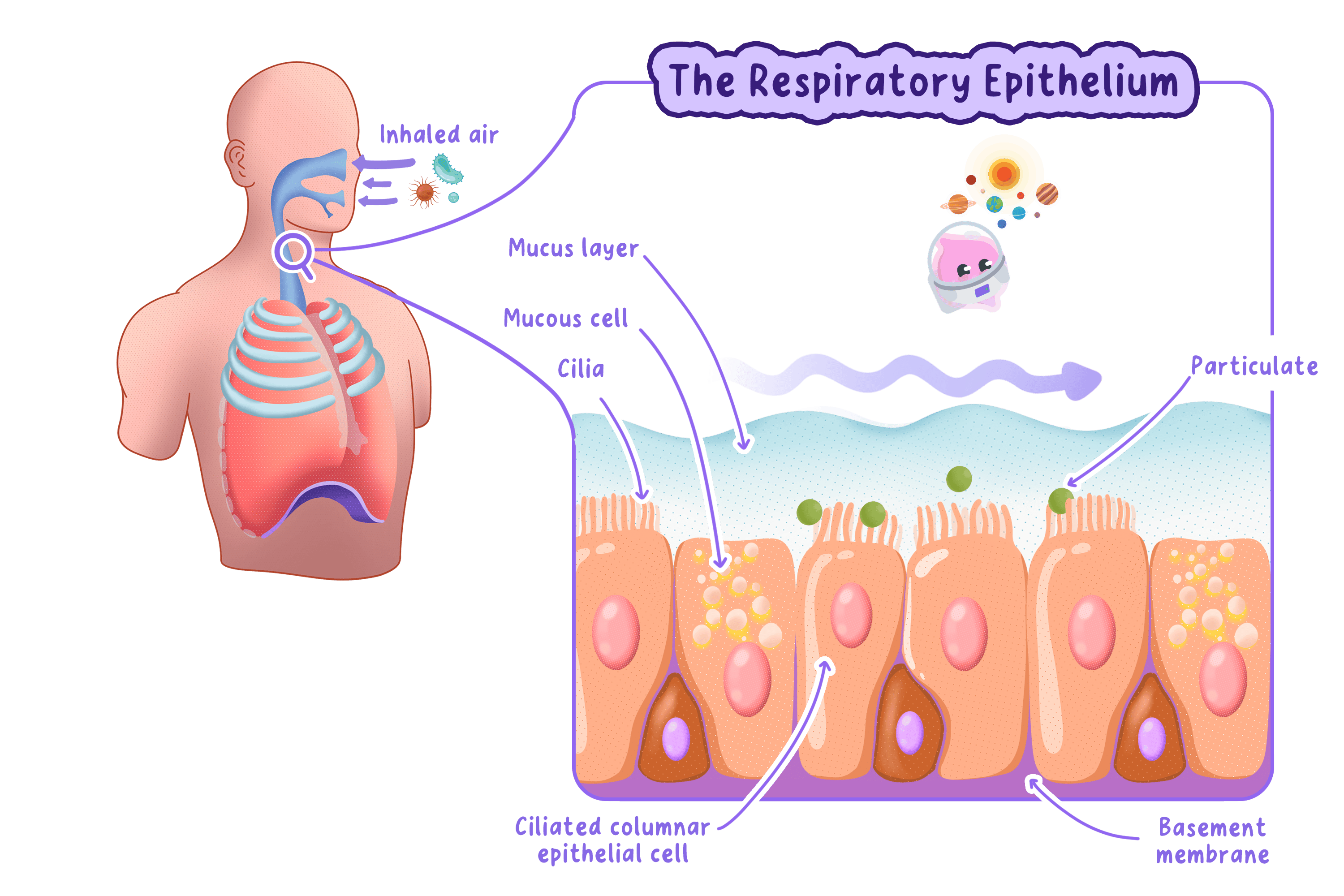
- Do not write that cilia trap pathogens, because it is the mucus that traps them and the cilia that move the mucus.
- Do not write that cilia "kill" pathogens, because they only move the mucus to the throat.
- Do not confuse the cilia on airway cells with the hairs in the nose, which are a separate barrier.
Chemical defences
Stomach acid
Hydrochloric acid secreted by the stomach lining that kills most pathogens swallowed in food and drink.
Lysozyme
An enzyme in tears, saliva and mucus that kills bacteria by digesting their cell walls.
- Food and drink always carry some microorganisms, and the stomach is the main defence against those that are swallowed.
- Cells in the stomach lining secrete hydrochloric acid, which gives the stomach contents a pH of about 222.
- This acidity denatures the enzymes and other proteins of most pathogens, so they are killed before they reach the intestines.
- Some pathogens survive the acid, and this is how food poisoning bacteria such as Salmonella can still cause disease when a large number are eaten.
- Tears, saliva and mucus contain an enzyme called lysozyme.
- Lysozyme digests the cell walls of bacteria, so the bacterial cells burst and die.
- Tears wash over the surface of the eye every time you blink, so bacteria landing on the eye are both washed away and attacked by lysozyme.
One breath and one meal
- A student sitting on a crowded bus breathes in droplets containing cold viruses and bacteria.
- Hairs in the nose trap the largest droplets, and mucus in the nasal cavity traps many of the rest.
- The droplets that reach the trachea stick to the mucus there, and the cilia sweep this mucus up to the throat within minutes.
- The student swallows the mucus without noticing, and stomach acid at about pH 222 kills most of the trapped bacteria.
- Later, a sandwich carrying a few bacteria is eaten, and the same acid kills most of those bacteria before they leave the stomach.
Describing non-specific defences
- For each defence, name the structure and then say exactly how it stops the pathogen, such as "goblet cells make mucus that traps pathogens".
- Match the defence to the entry point in the question, so an answer about the airways should use mucus and cilia rather than skin.
- When the question says "non-specific", explain that the defence works against all pathogens and is always present.
- Keep white blood cells out of an answer about barriers unless the question asks about them, because the question is about stopping pathogens entering.
- Explain what is meant by a non-specific defence.
- Give two ways in which the skin prevents pathogens entering the body.
- Describe how goblet cells and ciliated epithelial cells work together to protect the lungs.
- Explain how stomach acid kills pathogens.
- State where lysozyme is found and describe how it kills bacteria.
6.3.10 The immune system
Antigens and the immune system
Immune system
The body system of white blood cells and the proteins they make that recognises and destroys pathogens inside the body.
Antigen
A molecule on the surface of a cell or pathogen that is recognised as foreign and has a shape unique to that organism.
Specific immune response
A response by lymphocytes that targets one particular pathogen by recognising its antigens.
- Pathogens that get past the skin, mucus and other barriers enter the tissues and the blood, where the immune system is the next line of defence.
- The immune system is made up of the white blood cells and the proteins they release, and its job is to find and destroy pathogens inside the body.
- Phagocytes give the first, non-specific part of this response by engulfing and digesting any pathogen they meet.
- Lymphocytes give the specific immune response, which targets one particular type of pathogen and destroys it far more effectively.
- To respond to a pathogen, the immune system must first recognise it as foreign.
- Every cell has molecules called antigens on its surface, and these are usually proteins with a particular three-dimensional shape.
- The antigens on your own cells are recognised as self, so lymphocytes do not attack them.
- The antigens on a pathogen have different shapes, so they are recognised as non-self, and this is what triggers the response.
- Each type of pathogen carries its own unique antigens, so the measles virus, the chickenpox virus and the bacterium that causes tuberculosis each trigger a different response.
How antibodies destroy pathogens
Antibody
A protein produced by lymphocytes that binds to a specific antigen with a complementary shape.
Agglutination
The clumping together of pathogens caused by antibodies binding to antigens on more than one pathogen at a time.
- The body contains millions of different lymphocytes, and each one carries receptors of one shape and can make antibodies of only that shape.
- When a pathogen enters the body, only the lymphocytes whose antibodies are complementary to its antigens can bind to it.
- The specific immune response then follows a sequence of steps.
- The lymphocyte with the matching antibody binds to the antigen and is activated.
- The activated lymphocyte divides rapidly by mitosis, producing a clone of many genetically identical lymphocytes.
- The cloned lymphocytes release large numbers of antibodies into the blood, all with the same shape.
- The antibodies bind to the antigens on the surface of the pathogens.
- An antibody is a Y-shaped protein with two identical binding sites, one at the tip of each arm.
- Each binding site has a shape that is complementary to one antigen, so the antibody fits that antigen and no other.
- Once they have bound, antibodies destroy pathogens in several ways.
- Because each antibody has two binding sites, it can attach to two pathogens at once, and this causes agglutination, the clumping of many pathogens together.
- Clumped pathogens cannot spread through the body as easily, and a phagocyte can engulf a whole clump at once.
- Bound antibodies act as markers that tag the pathogen, so phagocytes recognise and engulf it more quickly.
- Antibodies that cover the antigens of a virus stop it attaching to and entering host cells, so it cannot reproduce.
- The phagocytes then engulf and digest the tagged and clumped pathogens, so the two types of white blood cell work together.
- Do not write that antibodies "kill" pathogens on their own, because they bind to them, clump them and mark them for phagocytes to destroy.
- Do not describe an antibody as a cell, because it is a protein made by a lymphocyte.
- Do not write that antibodies and antigens have "the same shape", because the correct word is complementary.
Antitoxins
Toxin
A poisonous substance released by a pathogen that damages host cells and produces the symptoms of the disease.
Antitoxin
A protein produced by lymphocytes that binds to a specific toxin and neutralises it.
- Some bacteria cause the symptoms of disease by releasing toxins, which are poisonous substances that damage body cells.
- The toxins released by the bacteria that cause tetanus and diphtheria are examples, and these toxins can be fatal even when the number of bacteria is small.
- Lymphocytes respond by producing antitoxins, which are proteins with a shape complementary to one particular toxin.
- An antitoxin binds to the toxin and neutralises it, so the toxin can no longer damage cells.
- Antitoxins deal with the toxin while antibodies and phagocytes deal with the bacteria that are releasing it.
Memory cells and immunity
Memory cell
A lymphocyte that stays in the blood after an infection and produces antibodies rapidly if the same antigen enters the body again.
Immunity
The ability to destroy a particular pathogen before it causes symptoms because memory cells for its antigens are already present.
- When a lymphocyte is activated and divides, some of the cells in the clone do not release antibodies straight away but become memory cells.
- Memory cells stay in the blood for many years, sometimes for life, after the infection has been cleared.
- If the same pathogen enters the body again, the memory cells recognise its antigens immediately.
- They divide rapidly and produce antibodies much faster and in much larger amounts than the first time.
- The pathogens are destroyed before they can reproduce enough to cause symptoms, so the person does not become ill.
- A person who has memory cells for a pathogen in this way has immunity to the disease that it causes.
- Immunity is specific to one pathogen, so having had chickenpox gives immunity to chickenpox but no protection against measles.
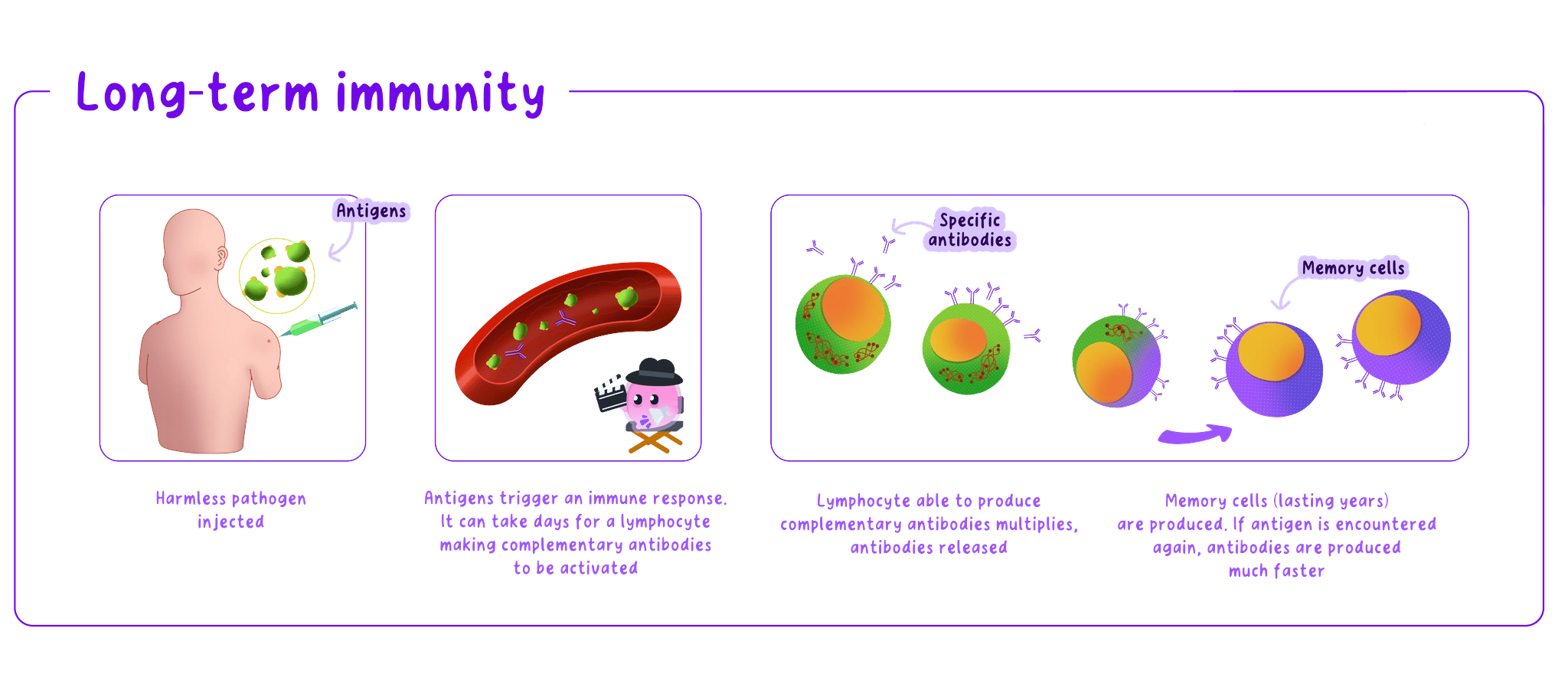
Some viruses, such as the viruses that cause colds and flu, change their antigens often, so memory cells made during one infection may not recognise the next strain.
Primary and secondary responses
Primary immune response
The slow production of a small amount of antibody that follows the first exposure to an antigen.
Secondary immune response
The rapid production of a large amount of antibody by memory cells that follows a later exposure to the same antigen.
- The response to the first exposure to a pathogen is called the primary immune response.
- It is slow, because only a few lymphocytes have the right antibody shape and they must divide many times before much antibody is made.
- There is a delay of several days before antibody appears in the blood, and during this time the pathogens reproduce and the person develops symptoms.
- The concentration of antibody peaks after about one to two weeks and then falls as the pathogen is cleared.
- The response to a later exposure to the same pathogen is called the secondary immune response.
- It is faster, because memory cells are already present and start producing antibody within a day or two.
- It is larger, because there are many more memory cells than there were matching lymphocytes at the start, so the peak concentration of antibody is often ten times higher or more.
- It lasts longer, so antibody stays in the blood at a high concentration for longer.
- On a graph of antibody concentration against time, the secondary response therefore appears as a curve that rises sooner, climbs more steeply and reaches a much higher peak than the primary response.
Comparing two responses from a graph
- A graph shows the antibody concentration in a person's blood after two exposures to the same pathogen, on day 000 and on day 404040.
- After the first exposure, antibody first appears on day 666 and reaches a peak of 888 arbitrary units on day 141414.
- After the second exposure, antibody appears on day 424242, which is only 222 days after exposure, and reaches a peak of 969696 arbitrary units on day 464646.
- The delay before antibody appears is 666 days in the primary response and 222 days in the secondary response, so the secondary response starts 444 days sooner.
- The ratio of the peaks is 968=12\dfrac{96}{8}=12896=12, so the secondary response produces 121212 times as much antibody.
- The person became ill after the first exposure but not after the second, because memory cells destroyed the pathogens before they could cause symptoms.
Explaining the immune response
- Write the steps in order, which are recognising the antigen, dividing to make a clone, releasing antibodies and binding to the antigen.
- Use the word complementary whenever you describe how an antibody fits an antigen.
- When comparing primary and secondary responses on a graph, give both the speed and the size of the response and quote values from the axes.
- Explain why a person does not become ill the second time by linking memory cells to the pathogen being destroyed before symptoms appear.
- Explain how the immune system recognises a pathogen as foreign.
- Describe what happens to a lymphocyte after it binds to a complementary antigen.
- Give three ways in which antibodies help to destroy pathogens.
- State the function of an antitoxin.
- Explain why the secondary immune response is faster and larger than the primary immune response.
6.3.11 Monoclonal antibodies
What monoclonal antibodies are
Monoclonal antibody
One of a large number of identical antibodies produced by a single clone of cells, all binding to the same specific antigen.
Clone
A group of genetically identical cells produced from a single parent cell.
Antibody
A protein produced by lymphocytes that binds to a specific antigen with a complementary shape.
- An antibody binds only to the antigen whose shape is complementary to its binding sites, which makes antibodies extremely precise tools for finding one particular molecule.
- The antibodies in your blood after an infection come from many different lymphocytes, so they are a mixture of slightly different shapes.
- Monoclonal antibodies are different because they all come from a single clone of cells, so every antibody molecule is identical and binds to exactly the same antigen.
- Scientists can choose the antigen, so monoclonal antibodies can be made to bind to a hormone, a protein on a pathogen, a chemical in the blood or a protein found only on cancer cells.
- Making large amounts of one antibody is difficult, because a lymphocyte that makes the antibody does not divide when it is grown outside the body.
- The solution is to join the lymphocyte to a cell that does divide, which is the basis of the method used to produce them.
Producing monoclonal antibodies
Hybridoma
A cell formed by fusing a lymphocyte with a tumour cell that divides rapidly and produces one specific antibody.
- Monoclonal antibodies are produced in a series of steps.
- A mouse is injected with the chosen antigen, such as a protein found on a particular pathogen.
- The mouse's immune system responds, and its lymphocytes begin to produce antibodies complementary to that antigen.
- The lymphocytes are removed from the mouse, usually from its spleen.
- The lymphocytes are fused with tumour cells, which are cells that divide over and over without stopping.
- Each fused cell is called a hybridoma cell.
- The hybridoma cells are separated and tested, and a single hybridoma cell that makes the wanted antibody is selected.
- The selected cell is grown in a culture, where it divides repeatedly to produce a clone of identical hybridoma cells.
- The clone releases large amounts of one antibody, which is collected from the culture and purified.
- The hybridoma combines the useful property of each parent cell.
- From the lymphocyte it inherits the ability to make one specific antibody.
- From the tumour cell it inherits the ability to divide rapidly and indefinitely.
- Because all the cells in the culture come from one hybridoma cell, all the antibodies they release are identical, which is where the name monoclonal comes from.
- The culture can be kept going for years, so a steady supply of the same antibody can be produced for tests and treatments.
- Do not write that the lymphocyte is fused with an antibody or with an antigen, because it is fused with a tumour cell.
- Do not write that the tumour cell makes the antibody, because the antibody comes from the lymphocyte part of the hybridoma.
- Do not skip the selection step, because only one hybridoma cell making the correct antibody is cloned.
Pregnancy tests
Human chorionic gonadotrophin (hCG)
A hormone produced by a developing embryo that passes into the urine of a pregnant woman.
- A developing embryo releases a hormone called human chorionic gonadotrophin, or hCG, which passes into the mother's blood and then into her urine.
- A home pregnancy test uses monoclonal antibodies that are complementary to hCG to detect it in a urine sample.
- The test stick has three important zones, each containing a different set of monoclonal antibodies.
- The reaction zone near the tip holds mobile antibodies that bind to hCG and that carry a coloured dye or a blue bead.
- The test line holds antibodies fixed to the strip that also bind to hCG.
- The control line holds fixed antibodies that bind to the mobile antibodies themselves, whether or not they are carrying hCG.
- Urine is placed on the tip of the stick and soaks along the strip, carrying the mobile antibodies with it.
- If hCG is present, it binds to the mobile antibodies, and the hCG-antibody complexes are then caught by the fixed antibodies at the test line, which turns coloured.
- If there is no hCG, the mobile antibodies pass the test line without being caught, so the test line stays blank.
- In both cases the remaining mobile antibodies are caught at the control line, which turns coloured to show that the test has worked.
Reading two pregnancy tests
- Test A shows a coloured control line and a coloured test line.
- The control line shows the urine has soaked along the strip and the mobile antibodies have reached the end.
- The test line has trapped hCG attached to mobile antibodies, so hCG is present and the result is positive.
- Test B shows a coloured control line but no test line.
- The test has worked, but no hCG was present to link the mobile antibodies to the test line, so the result is negative.
- A test that shows no control line has failed and must be repeated, whatever the test line shows.
Detecting disease
Prostate-specific antigen (PSA)
A protein made by cells of the prostate gland that is often present at raised levels in the blood of a man with prostate cancer.
- Monoclonal antibodies are used in hospital laboratories to detect and measure particular molecules in samples of blood.
- Men with prostate cancer often have raised levels of a protein called prostate-specific antigen, or PSA, in their blood.
- Monoclonal antibodies complementary to PSA are attached to a dye or a fluorescent marker and mixed with a blood sample.
- The antibodies bind only to PSA, so the amount of colour or fluorescence shows how much PSA is present.
- A high PSA level is a signal that the man should have further tests, although PSA can also be raised by other conditions of the prostate.
- Monoclonal antibodies are also used to locate diseased tissue inside the body.
- Antibodies that bind to an antigen found only on cancer cells are attached to a radioactive or fluorescent marker.
- The labelled antibodies are injected and travel in the blood until they bind to the cancer cells.
- A scanner detects where the marker has built up, which shows the position and size of a tumour.
- The same approach can detect a pathogen in a blood or tissue sample, or find the position of a blood clot, by choosing an antibody that binds to that pathogen or to a protein in the clot.
Treating disease
- Monoclonal antibodies can potentially be used to treat cancer by carrying a treatment directly to the cancer cells.
- A monoclonal antibody that binds to an antigen found only on the surface of cancer cells is made first.
- A drug, a toxin or a radioactive substance is then attached to the antibody.
- When the antibody is injected, it binds only to the cancer cells, so the attached substance kills the cancer cells while leaving healthy cells largely unharmed.
- Some monoclonal antibodies work without any attached substance, by binding to cancer cells and marking them so that the patient's own white blood cells destroy them.
- Targeting the treatment in this way should cause fewer side effects than treatments such as chemotherapy, which damage healthy dividing cells throughout the body.
- Monoclonal antibodies also have disadvantages that have limited their use.
- They have caused more side effects than was expected when they were first developed, such as fever, vomiting and a fall in blood pressure.
- They are expensive to develop and to produce.
- Their production uses mice, which some people object to on ethical grounds.
Describing production and uses
- Describe production as an ordered sequence, and make sure you mention the mouse, the lymphocyte, the tumour cell, the hybridoma and cloning.
- Explain why the lymphocyte is fused with a tumour cell, since "so that it divides and makes antibodies" is often worth a mark on its own.
- In a pregnancy test question, say that the antibodies are complementary to hCG and that hCG binds to them, rather than saying the stick "detects pregnancy".
- When evaluating treatment, give a benefit such as fewer effects on healthy cells and a drawback such as unexpected side effects, then say which you think matters more.
- Explain why a lymphocyte is fused with a tumour cell when monoclonal antibodies are produced.
- Describe the steps used to produce a monoclonal antibody, starting with the mouse.
- Explain what causes the test line of a pregnancy test to change colour.
- State the purpose of the control line on a pregnancy test.
- Describe how a monoclonal antibody could be used to deliver a drug to cancer cells.
6.3.12 Vaccines and medicines
Vaccines
Vaccine
A preparation containing dead, inactive or weakened pathogens, or their antigens, that produces immunity to a specific disease without causing it.
Vaccination
The giving of a vaccine so that lymphocytes produce antibodies and memory cells against a specific pathogen.
- A vaccine contains a harmless form of a pathogen that still carries the pathogen's antigens.
- The harmless form can be made in several different ways.
- Dead or inactivated pathogens, which cannot reproduce at all.
- Weakened pathogens, which can reproduce only very slowly and do not cause the disease in a healthy person.
- Fragments of the pathogen, such as its surface proteins, which carry the antigens without the rest of the pathogen.
- Genetic instructions for one antigen, which body cells use to make that antigen for a short time.
- Most vaccines are given by injection, although a few are given by mouth or as a nasal spray.
- Because the antigens have the same shape as those on the live pathogen, the immune system responds to the vaccine exactly as it would to a real infection.
- The vaccine cannot cause the disease, so the person gains protection without the risk of becoming seriously ill.
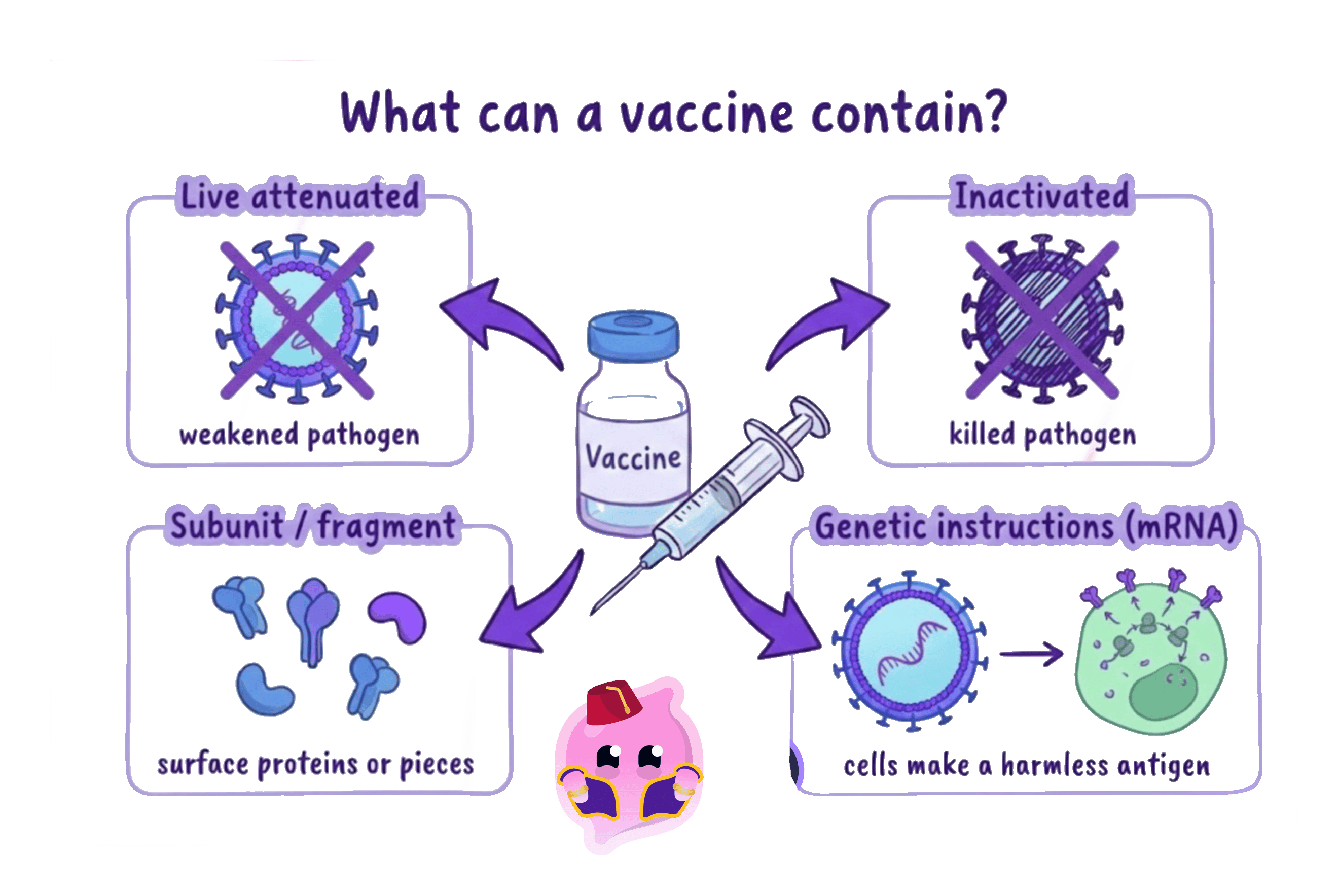
How vaccines prevent disease
Booster
A later dose of a vaccine that raises the number of memory cells against a pathogen again.
- A vaccine is given before the person meets the pathogen, so vaccination is a way of preventing disease rather than treating it.
- Vaccination works by starting the immune response in advance.
- The lymphocytes with antibodies complementary to the vaccine's antigens bind to them, divide and release antibodies.
- Some of the cloned lymphocytes become memory cells, which remain in the blood.
- If the live pathogen later enters the body, the memory cells recognise its antigens straight away.
- They produce the matching antibodies rapidly and in large amounts, in a secondary response.
- The pathogens are destroyed before they can cause symptoms, so the vaccinated person does not become ill.
- The number of memory cells can fall over the years, so some vaccines are followed by a booster dose that raises the number of memory cells again.
- In the UK the tetanus vaccine is given several times through childhood for this reason.
- A vaccine protects against one disease only, because the memory cells it produces recognise only the antigens in that vaccine.
- Some vaccines, such as the flu vaccine, must be changed every year, because the flu virus changes its antigens and last year's memory cells no longer match.
- Do not write that a vaccine contains antibodies, because it contains antigens and your own lymphocytes make the antibodies.
- Do not write that a vaccine cures a disease, because it is given in advance to prevent the disease.
Herd immunity
Herd immunity
The protection of unvaccinated individuals that results when so many members of a population are immune that a pathogen can no longer spread easily.
- A vaccinated person cannot carry and pass on the pathogen easily, because the pathogen is destroyed soon after it enters their body.
- When a high proportion of a population is vaccinated, a pathogen rarely finds an unvaccinated person to infect, so it cannot spread.
- This protects the few people who are not immune, and the effect is called herd immunity.
- Herd immunity protects people who cannot be vaccinated, such as babies too young for a vaccine, people having cancer treatment and people with a weakened immune system.
- The proportion needed depends on how easily the disease spreads, and for measles about 95%95\%95% of the population must be immune.
- If vaccination rates fall below this level, outbreaks return, as happened with measles in parts of the UK when fewer children received the MMR vaccine.
- Vaccination on a worldwide scale can eradicate a disease completely, and smallpox was declared eradicated in 198019801980 after a global vaccination programme.
Vaccination rates in a school
- A secondary school has 120012001200 pupils, and 110411041104 of them have had two doses of the MMR vaccine.
- The percentage vaccinated is 11041200×100=92%\dfrac{1104}{1200}\times100=92\%12001104×100=92%.
- This is below the 95%95\%95% needed for herd immunity against measles.
- A single pupil returning from a trip with measles could therefore spread it among the 969696 unvaccinated pupils.
- Raising the vaccination rate to 95%95\%95% would need 0.95×1200=11400.95\times1200=11400.95×1200=1140 vaccinated pupils, which is 363636 more than at present.
Benefits and risks of vaccination
- The decision to vaccinate every child routinely is made by weighing the benefits against the risks.
- The benefits are large and are felt by the whole population.
- Vaccinated children are protected from diseases such as measles, which can cause brain damage and death.
- Epidemics are prevented, and herd immunity protects those who cannot be vaccinated.
- Fewer people need hospital care, which reduces the cost to the NHS.
- The risks are small but real.
- Many people have mild side effects, such as a sore arm or a slight fever for a day or two.
- A very small number of people have a serious reaction, such as a severe allergic reaction to one of the ingredients.
- Vaccination does not guarantee protection, because a small number of people do not produce enough memory cells.
- Some people choose not to vaccinate their children for personal, religious or ethical reasons, which raises the question of whether individual choice or the protection of others should come first.
Antibiotics
Medicine
A substance given to prevent or treat a disease or to relieve its symptoms.
Antibiotic
A medicine that kills bacteria or stops their growth inside the body without harming human cells.
Bacterium
A single-celled prokaryotic microorganism with no nucleus, some species of which are pathogens.
- Medicines are used to treat a disease once a person is ill, or in some cases to prevent it.
- Antibiotics are medicines that kill bacteria inside the body or stop them growing and dividing.
- They work by damaging structures or processes found in bacterial cells but not in human cells, such as the bacterial cell wall, so they harm the bacteria without harming the patient's own cells.
- Penicillin, the first widely used antibiotic, works by stopping bacteria building their cell walls, so the bacteria burst.
- Different antibiotics work against different bacteria, so the doctor must choose one that will kill the particular bacterium causing the infection.
- Antibiotics have no effect on viruses, because viruses have no cell wall and reproduce inside the patient's own cells, where an antibiotic cannot reach them without harming the cell.
- Some painkillers, such as paracetamol, are also medicines, but they only relieve the symptoms and do not kill the pathogen.
- The overuse of antibiotics has allowed antibiotic-resistant bacteria to become common, so antibiotics are prescribed only for bacterial infections that need them, and the full course should be completed.
Antivirals
Antiviral
A medicine that slows or stops the reproduction of viruses inside the body.
Virus
A very small infectious particle made of genetic material inside a protein coat that can only reproduce inside a living host cell.
- Antivirals are medicines used to treat infections caused by viruses.
- They work by stopping the virus reproducing inside host cells, for example by blocking an enzyme the virus needs to copy itself.
- Antivirals are difficult to develop, because viruses use the host cell's own machinery, so a drug that stops the virus can easily damage the host cell too.
- Most antivirals slow down a viral infection rather than cure it, which gives the immune system more time to destroy the virus.
- People with HIV take a combination of antiviral drugs every day, which keeps the amount of virus in the blood so low that it does not develop into AIDS.
- Antivirals can also be used against flu in people at high risk, such as elderly people in a care home during an outbreak.
- Viruses change quickly, so an antiviral that works against one strain can stop working against a new one.
Antiseptics
Antiseptic
A chemical applied to the skin or other living tissue that kills microorganisms or stops their growth.
Disinfectant
A chemical used on non-living surfaces and objects to kill microorganisms.
- Antiseptics are chemicals applied to the outside of the body, on the skin or on a wound, that kill microorganisms or stop their growth.
- They are used to prevent infection rather than treat it, by reducing the number of pathogens before they enter the body.
- Alcohol hand gels used in hospitals and schools, and the solutions used to clean the skin before an injection or an operation, are examples of antiseptics.
- Antiseptics are too harmful to be swallowed or injected, so they cannot be used to treat an infection that is already inside the body.
- Disinfectants are similar chemicals used on non-living surfaces such as floors, worktops and surgical instruments, and they are too strong to use on skin.
- Regular hand washing and the use of antiseptic gels in hospitals have reduced the spread of infections from one patient to another.
- Do not write that antibiotics can be used to treat colds or flu, because these are caused by viruses and antibiotics have no effect on viruses.
- Do not confuse an antiseptic, which is used on living tissue, with a disinfectant, which is used on non-living surfaces.
Prevention and treatment questions
- Decide first whether the question is about preventing disease, which points to vaccines and antiseptics, or treating it, which points to antibiotics and antivirals.
- Match the medicine to the type of pathogen, so bacterial infections are treated with antibiotics and viral infections with antivirals.
- When explaining how a vaccine works, go all the way to the end of the chain and say that memory cells destroy the pathogen before symptoms develop.
- In an evaluation of routine vaccination, give at least one benefit to the individual, one benefit to the population and one risk, then make a judgement.
- Describe what a vaccine contains and explain why it cannot cause the disease.
- Explain how vaccination prevents a person becoming ill when they later meet the live pathogen.
- Explain how herd immunity protects a baby who is too young to be vaccinated.
- Explain why antibiotics cannot be used to treat a viral infection.
- State one difference between how an antiseptic and an antibiotic are used.
6.3.13 Aseptic techniques
Culturing microorganisms
Culture medium
A liquid or gel containing the nutrients that microorganisms need to grow.
Colony
A visible group of microorganisms on agar that has grown from a single cell by repeated division.
Bacterial lawn
An even layer of bacteria grown over the whole surface of an agar plate.
- Microorganisms are grown, or cultured, in the laboratory so that they can be studied, identified and used to test substances such as antibiotics and antiseptics.
- They are grown on a culture medium that supplies everything they need to grow.
- Carbohydrates, such as glucose, provide a source of energy for respiration.
- Proteins or other nitrogen compounds provide the raw material for making new proteins.
- Mineral ions and vitamins are needed for healthy growth.
- Water is needed for all the chemical reactions inside the cells.
- The medium can be a liquid called nutrient broth, or a jelly called nutrient agar, which is melted, poured into a Petri dish and left to set.
- Bacteria reproduce by splitting in two, and in good conditions some bacteria divide as often as once every 202020 minutes.
- A single bacterium placed on agar divides again and again until a visible colony of millions of identical cells forms on the surface.
- When a liquid culture is spread evenly across the whole plate, the bacteria grow into a continuous layer called a bacterial lawn.
- Any culture should contain only the one type of microorganism being studied, and the methods used to keep it that way are called aseptic techniques.
Why aseptic technique is needed
Aseptic technique
A set of procedures that stops unwanted microorganisms contaminating a culture and stops cultured microorganisms escaping.
Contamination
The presence of unwanted microorganisms in a culture, a growth medium or on equipment.
- Aseptic technique has two separate purposes, and a good answer always gives both.
- The first purpose is to prevent contamination of the culture by unwanted microorganisms.
- Microorganisms are present on hands, benches, equipment and dust in the air, and any that reach the medium will grow alongside the culture.
- Unwanted microorganisms compete with the culture for nutrients and space, so the results of the investigation are no longer valid.
- The second purpose is to protect people from pathogens.
- A contaminating microorganism could be a pathogen that grows to large numbers on the plate.
- Even a harmless culture could produce a mutated, harmful strain as it divides millions of times.
- For these reasons school cultures use only harmless bacteria, and every culture is treated as though it could be harmful.
Sterilising equipment and media
Sterilisation
The killing of all microorganisms and their spores on equipment or in a growth medium.
Autoclave
A machine that sterilises equipment and growth media with steam at high pressure and about 121 ∘C121\ ^\circ\text{C}121 ∘C.
Inoculating loop
A thin wire loop on a handle that is used to transfer microorganisms.
- Before any microorganisms are transferred, every piece of equipment and all of the culture medium must be sterilised so that no living microorganisms are left on or in them.
- Glassware, culture media and solutions are sterilised in an autoclave.
- An autoclave works like a large pressure cooker, heating items with steam at high pressure to about 121 ∘C121\ ^\circ\text{C}121 ∘C.
- Items are usually kept at this temperature for about 151515 minutes.
- The high temperature kills all bacteria, fungi and viruses, including the tough spores that some bacteria form, which boiling water at 100 ∘C100\ ^\circ\text{C}100 ∘C would not kill.
- Plastic Petri dishes and pipettes are bought already sterilised, having been treated with radiation in a sealed pack, and they should only be unwrapped just before use.
- The inoculating loop is sterilised by flaming.
- The wire loop is held in the hottest part of a blue Bunsen flame until it glows red hot, which kills any microorganisms on it.
- The loop is then held still for a few seconds to cool, because a hot loop would kill the microorganisms it is about to pick up.
- The neck of a bottle of culture is passed briefly through the flame after its lid is removed and again before the lid is replaced, which kills microorganisms at the opening and creates an upward current of air.
- Alcohol, such as ethanol, is used to wipe down the bench before and after the work, which kills microorganisms on the surface.
- A glass spreader is dipped in alcohol and then passed through the flame so the alcohol burns off, which sterilises it without melting it.
Do not return a spreader to the ethanol beaker while the alcohol on it is still burning, because the flame can set the whole beaker alight.
Keeping contaminants out
- Once everything is sterile, the aim is to stop microorganisms from the air and from your body falling onto or into the medium.
- Work is carried out close to a lit Bunsen burner, because the flame heats the air above it, and the rising current of warm air carries airborne microorganisms upwards and away from the plate.
- The lid of the Petri dish is lifted only slightly and at an angle, and only for as short a time as possible, so that the lid acts as a shield against falling dust.
- Lids of bottles are held in the hand rather than put down on the bench, where they would pick up microorganisms.
- You should not talk, cough or breathe over an open plate, because droplets from the mouth and nose carry bacteria.
- After inoculation, the lid is secured with two short strips of tape rather than sealed all the way round.
- The tape stops the lid being knocked off or lifted, so microorganisms from the air cannot get in and the culture cannot get out.
- Leaving gaps lets oxygen in, which stops the growth of harmful anaerobic bacteria that grow without oxygen.
- The plate is labelled on the base, not the lid, and incubated upside down, so that drops of water condensing on the lid do not fall onto the agar and spread the colonies.
- In school laboratories plates are incubated at no higher than 25 ∘C25\ ^\circ\text{C}25 ∘C, because warmer temperatures close to body temperature, 37 ∘C37\ ^\circ\text{C}37 ∘C, favour the growth of human pathogens.
- When the work is finished, plates are never opened, and they are sterilised in an autoclave before they are thrown away.
Measuring the effect of antimicrobial substances
Zone of inhibition
The clear area of agar surrounding a disc of antimicrobial substance in which bacteria have been prevented from growing.
- A bacterial lawn can be used to compare how well different antiseptics or antibiotics kill bacteria.
- Paper discs soaked in each substance are placed on the lawn before incubation, and the substance spreads out from each disc into the agar.
- Where the concentration is high enough, the bacteria are killed or cannot grow, leaving a clear ring called a zone of inhibition around the disc.
- The larger the zone of inhibition, the more effective the substance is at killing or stopping the growth of that bacterium.
- A zone is roughly circular, so its size is best compared by calculating its area from its radius using the equation A=πr2A=\pi r^2A=πr2.
- The radius rrr is half of the diameter, so the diameter is measured across the widest part of the zone with a ruler and then halved.
- The same equation can be used to find the area of a single circular colony or of a whole Petri dish.
- To improve the reliability of the results, each substance is tested on several plates and a mean zone area is calculated.
Effect of antiseptics on bacterial growth
- Aim: to compare how effective three antiseptics are at stopping the growth of bacteria, by measuring the zones of inhibition they produce on a bacterial lawn.
- Apparatus: a sterile nutrient agar plate, a broth culture of a harmless bacterium, a sterile pipette, a sterile glass spreader, a beaker of ethanol, sterile forceps, sterile filter paper discs, three antiseptics in labelled bottles, sterile distilled water, a Bunsen burner and heatproof mat, adhesive tape, a marker pen, a ruler, disinfectant, and eye protection.
- Method, preparing the bench:
- Wash your hands, then wipe the bench with disinfectant and leave it to dry.
- Light the Bunsen burner and set it to a blue flame, then work within about 20 cm20\ \text{cm}20 cm of it for the rest of the practical.
- Turn the unopened agar plate over and use the marker pen to divide the base into four sections, labelling three with the antiseptics and one with "control".
- Method, making the bacterial lawn:
- Remove the lid of the culture bottle, keep hold of the lid, and pass the neck of the bottle briefly through the flame.
- Use the sterile pipette to draw up 0.1 cm30.1\ \text{cm}^30.1 cm3 of the broth culture, then flame the neck of the bottle again and replace the lid.
- Lift the lid of the Petri dish slightly at an angle, release the culture onto the centre of the agar, and replace the lid.
- Dip the glass spreader in ethanol, pass it through the flame to burn off the alcohol, and let it cool for a few seconds.
- Lift the lid again and move the spreader gently across the whole agar surface while turning the dish, so the culture is spread in an even layer.
- Replace the lid and put the spreader back in the ethanol beaker.
- Method, adding the discs:
- Flame the tips of the forceps and let them cool.
- Use the forceps to pick up a filter paper disc, dip it in the first antiseptic, and let the excess drain off against the inside of the bottle.
- Lift the lid slightly and place the disc in the centre of the labelled section, pressing it down gently so it lies flat on the agar.
- Repeat with the other two antiseptics, flaming the forceps between each one so the antiseptics do not mix.
- Place a disc soaked in sterile distilled water in the control section.
- Method, incubating and measuring:
- Secure the lid with two short strips of tape, leaving gaps round the edge.
- Incubate the plate upside down at 25 ∘C25\ ^\circ\text{C}25 ∘C for 484848 hours.
- Without opening the plate, hold it up to the light and measure the diameter of each clear zone with a ruler through the base.
- Repeat the whole investigation on at least two more plates and calculate a mean zone area for each antiseptic.
- Results: the bacteria form a cloudy, cream-coloured lawn over the agar, with a clear zone around each antiseptic disc and no clear zone around the control disc. The antiseptic with the largest clear zone is the most effective against this bacterium.
- Maths: halve each diameter to find the radius, then calculate the area of each zone with A=πr2A=\pi r^2A=πr2, giving answers in mm2\text{mm}^2mm2.
- Watch out: discs that are too wet let the antiseptic run across the agar, discs placed too close together make zones overlap, and an uneven lawn makes zones hard to measure. The control disc shows that the paper disc itself does not stop the bacteria growing.
- Safety: use only a harmless bacterium, never open the plate after incubation, keep ethanol well away from the flame, wash your hands at the end, and return all plates and used equipment for sterilising in an autoclave.
Comparing zones of inhibition
- A disc of antiseptic X produces a clear zone with a diameter of 24 mm24\ \text{mm}24 mm, and a disc of antiseptic Y produces a zone with a diameter of 16 mm16\ \text{mm}16 mm.
- The radius of the zone for X is 242=12 mm\dfrac{24}{2}=12\ \text{mm}224=12 mm.
- The area of the zone for X is A=πr2=π×122=452 mm2A=\pi r^2=\pi\times12^2=452\ \text{mm}^2A=πr2=π×122=452 mm2 to three significant figures.
- The radius of the zone for Y is 162=8 mm\dfrac{16}{2}=8\ \text{mm}216=8 mm.
- The area of the zone for Y is A=π×82=201 mm2A=\pi\times8^2=201\ \text{mm}^2A=π×82=201 mm2 to three significant figures.
- The zone for X has more than twice the area of the zone for Y, so X is the more effective antiseptic against this bacterium.
Explaining aseptic steps
- For every step you describe, give its reason, such as "the loop is flamed to kill microorganisms on it".
- Make sure your reasons cover both preventing contamination of the culture and protecting people from pathogens.
- Use the word sterilise for killing all microorganisms, and name the method, such as autoclaving or flaming.
- In a calculation, write the equation A=πr2A=\pi r^2A=πr2 first and check that you have used the radius and not the diameter.
- State the two purposes of aseptic technique.
- Explain why culture media and glassware are sterilised in an autoclave rather than by boiling.
- Explain why an inoculating loop is flamed and then allowed to cool before use.
- Explain why the lid of a Petri dish is taped with two strips and not sealed all the way round.
- Calculate the area of a zone of inhibition with a diameter of 18 mm18\ \text{mm}18 mm.
6.3.14 Discovery and development of new medicines
Discovering new medicines
Drug
A chemical substance that changes the way the body works.
- A drug changes the way the body works, and a medicine is a drug that is used to prevent or treat disease or to relieve its symptoms.
- Many of the first medicines were found in plants, which make chemicals to defend themselves against pathogens and animals.
- Digitalis, which slows and strengthens the heartbeat in people with heart failure, comes from foxgloves.
- Aspirin, a painkiller, was developed from a chemical found in the bark of willow trees.
- Other medicines have been found in microorganisms.
- In 192819281928 Alexander Fleming noticed that a mould called Penicillium had killed the bacteria growing around it on a Petri dish.
- The substance released by the mould was the antibiotic penicillin.
- Penicillin was not produced in large amounts until the early 1940s, when Howard Florey and Ernst Chain found a way to purify it and test it on patients.
- Most new medicines are now made, or synthesised, by chemists in the laboratory.
- Scientists first identify a target, such as a protein that a pathogen needs or a protein that is not working properly in a disease.
- Computers are used to model the shape of the target and design molecules that might bind to it.
- Huge libraries of chemicals, containing hundreds of thousands of compounds, are also tested automatically against the target to find any that have the right effect.
- A compound that looks promising is called a potential new medicine, and it must now be tested thoroughly before it can be given to patients.
- Most potential medicines fail during testing, and only a very small proportion of the compounds first identified ever reach patients.
Preclinical testing
Preclinical testing
The testing of a potential new medicine on cells, tissues and animals before it is given to any human.
Efficacy
How well a medicine produces the effect it is intended to have.
Toxicity
How harmful a substance is to the body.
- Preclinical testing is carried out in the laboratory before a potential medicine is given to any human.
- It checks three things about the medicine.
- Its toxicity, which is whether it is harmful to cells and to the body.
- Its efficacy, which is whether it has the effect it is meant to have.
- The dose that is likely to be effective without being harmful.
- The medicine is first tested on cells and tissues grown in the laboratory.
- These tests are quick and cheap, and they show whether the medicine damages living cells.
- They cannot show how the medicine affects a whole body, with its many organs working together.
- It is then tested on live animals, usually mice or rats, and in the UK a second species of animal is normally used as well.
- Animal tests show how the medicine is absorbed, carried around the body, broken down and removed.
- They show whether it harms any organ, such as the liver or kidneys.
- Animal testing has limitations and raises ethical questions.
- The bodies of animals differ from human bodies, so a medicine that is safe in mice may still harm humans.
- Some people believe it is wrong to cause animals harm or suffering to test medicines.
- UK law requires animal tests to use as few animals as possible and to reduce any suffering.
- Only medicines that pass preclinical testing are allowed to move on to testing in humans.
Clinical trials
Clinical trial
The testing of a potential new medicine on human volunteers to find out whether it is safe, whether it works and which dose to use.
Dose
The amount of a medicine that is given and how often it is given.
Side effect
An unwanted effect of a medicine on the body.
- Clinical trials test the potential medicine on human volunteers, and they are carried out in phases, each involving more people.
- In the first phase the medicine is given to a small number of healthy volunteers, often between 202020 and 100100100 people.
- It starts at a very low dose, which is then increased slowly.
- The aim is to check that the medicine is safe in humans and to find any side effects.
- Healthy volunteers are used because the aim is only to test safety, and a person who is already ill might react badly to an untested drug.
- In the second phase the medicine is given to a small number of patients who have the disease.
- This tests whether the medicine works in people with the illness.
- Different doses are compared to find the optimum dose, which is the dose that works best with the fewest side effects.
- In the third phase the medicine is given to a large number of patients, often several thousand, in many different hospitals.
- The medicine is compared with a placebo or with the best existing treatment.
- The large number of patients means that rare side effects are more likely to be found and that the results are more reliable.
- A clinical trial can be stopped at any point if the medicine causes serious side effects or clearly does not work.
- The whole process from discovery to a medicine being available often takes more than ten years and costs a very large amount of money.
- Do not write that healthy volunteers are used to test whether the medicine works, because they do not have the disease, so they are used to test its safety.
- Do not mix up the order, because preclinical testing on cells, tissues and animals always comes before any clinical trial in humans.
Placebos and blind trials
Placebo
A substance that looks like the medicine being tested but contains no active drug.
Blind trial
A clinical trial in which the volunteers do not know whether they are receiving the medicine or a placebo.
Double-blind trial
A clinical trial in which neither the volunteers nor the doctors know who is receiving the medicine and who is receiving a placebo.
- People often feel better after taking any treatment simply because they expect it to help, and this is called the placebo effect.
- To show that a medicine really works, the patients are split at random into two groups.
- One group receives the medicine being tested.
- The other group, called the control group, receives a placebo, a dummy tablet or injection that looks the same but contains no active drug.
- If the group taking the medicine improves more than the placebo group, the difference must be caused by the medicine itself.
- Patients are placed in the groups at random, so each group has a similar mix of ages, sexes and severity of illness.
- In a blind trial, the patients do not know which group they are in, so their expectations cannot affect the results.
- In a double-blind trial, neither the patients nor the doctors know who is receiving the medicine and who is receiving the placebo.
- This removes bias from the doctors as well, because a doctor who knows which patient has the medicine might treat them differently or judge their improvement more favourably.
- The information about who received what is held by a third party and revealed only when the trial ends.
- It can be unethical to give a placebo to a patient with a serious illness, because it means withholding a treatment that could help them.
- In these cases the new medicine is compared with the best existing treatment instead of a placebo.
Analysing the results of a trial
- A trial of a new medicine for migraine uses 400400400 patients split at random into two groups of 200200200.
- In the group given the medicine, 124124124 patients report fewer migraines, so the percentage who improved is 124200×100=62%\dfrac{124}{200}\times100=62\%200124×100=62%.
- In the group given the placebo, 464646 patients report fewer migraines, so the percentage who improved is 46200×100=23%\dfrac{46}{200}\times100=23\%20046×100=23%.
- Some patients improved on the placebo, which shows the placebo effect is present.
- The medicine group improved by 62−23=3962-23=3962−23=39 percentage points more than the placebo group, so the medicine has a real effect beyond the placebo effect.
Approval and publication
Peer review
The checking of a scientist's methods, results and conclusions by other experts in the same field before the work is published.
- When a trial is finished, the scientists write up their methods and results and send them to a scientific journal.
- Before it is published, the work goes through peer review, in which other scientists who are experts in the same field check it.
- Peer review checks that the methods were suitable, that the results support the conclusions, and that no mistakes or false claims have been made.
- Publishing the results allows other scientists to repeat the work and check that they get the same results.
- In the UK a medicine can only be sold once the Medicines and Healthcare products Regulatory Agency, the MHRA, has examined all the trial data and granted a licence.
- Doctors continue to report side effects after the medicine is licensed, because very rare side effects may only appear once millions of people have taken it.
Describing drug development
- Write the stages in the correct order, which are discovery, preclinical testing on cells and tissues, preclinical testing on animals, then clinical trials on healthy volunteers and then on patients.
- Give the purpose of each stage, such as "healthy volunteers are given low doses to test for safety and side effects".
- When explaining a double-blind trial, say that neither the patient nor the doctor knows who has the placebo, and give the reason, which is to remove bias.
- When analysing trial data, compare percentages rather than raw numbers if the groups are different sizes.
- Name one medicine that was first found in a plant and one that was first found in a microorganism.
- State the two stages of preclinical testing and give one limitation of each.
- Explain why the first clinical trials use low doses given to healthy volunteers.
- Describe the difference between a blind trial and a double-blind trial.
- Explain why the results of a drug trial are peer reviewed before they are published.
6.3.15 Causes of non-communicable diseases
Non-communicable diseases
Non-communicable disease
A disease that is not caused by a pathogen and cannot be transmitted from one organism to another.
Risk factor
A risk factor is any feature of a person's lifestyle, environment or genes that increases the probability of developing a particular disease.
- A non-communicable disease is not caused by a pathogen, so it cannot be passed from one person to another.
- Most non-communicable diseases develop slowly over many years and last for a long time once they appear.
- Very few of them have a single cause, because most arise from the interaction of several factors acting on the body at the same time.
- These factors fall into three groups.
- Genetic factors are the alleles a person inherits, which can make them more or less likely to develop a disease.
- Lifestyle factors are the choices a person makes, such as their diet, how much exercise they take, whether they smoke and how much alcohol they drink.
- Environmental factors are features of a person's surroundings, such as air pollution, harmful chemicals breathed in at work or ultraviolet light from the Sun.
- Each of these factors is called a risk factor, because it raises the probability of developing a disease without making the disease certain.
- A person with no obvious risk factors can still develop a non-communicable disease, and a person with several risk factors may never develop one.
- When risk factors combine, the overall risk usually rises by more than the risk from each factor on its own, because the factors often damage the same organ in different ways.
- The main non-communicable diseases caused in this way are cardiovascular diseases, many forms of cancer, lung diseases such as bronchitis, liver diseases such as cirrhosis and diseases influenced by nutrition, including type 2 diabetes.
- Do not describe a non-communicable disease as one that is always inherited, because most are caused by lifestyle and environmental factors interacting with a person's genes.
- Do not say that a risk factor causes a disease, because a risk factor only increases the chance of the disease developing.
Cardiovascular disease
Cardiovascular disease
Cardiovascular disease is any non-communicable disease that affects the heart or the blood vessels.
Coronary heart disease
Coronary heart disease is a condition in which fatty deposits build up in the walls of the coronary arteries, narrowing them and reducing the supply of oxygen to the heart muscle.
Cholesterol
Cholesterol is a fatty substance made mainly in the liver and carried in the blood, which is needed for cell membranes but can build up in the walls of arteries.
- Cardiovascular disease includes coronary heart disease, heart attacks, strokes and high blood pressure.
- In coronary heart disease, fatty deposits containing cholesterol build up in the inner walls of the coronary arteries, which supply the heart muscle with blood.
- The deposits narrow the lumen of each artery, so less blood reaches the heart muscle.
- With less blood, the heart muscle receives less oxygen and glucose, so it cannot carry out enough aerobic respiration to release the energy it needs to contract.
- If a fatty deposit breaks open, a blood clot can form on it and block the artery completely, and the heart muscle beyond the blockage dies in a heart attack.
- A clot that blocks an artery supplying the brain causes a stroke.
- Several risk factors interact to cause cardiovascular disease.
- A diet high in saturated fat raises the concentration of cholesterol in the blood, which speeds up the build-up of fatty deposits.
- A diet high in salt raises blood pressure, and high blood pressure damages the lining of the arteries so that deposits form more easily.
- Smoking damages the lining of the arteries, and the carbon monoxide in the smoke reduces the amount of oxygen the blood can carry, so the heart has to work harder.
- The nicotine in tobacco raises the heart rate and blood pressure.
- Drinking large amounts of alcohol over many years raises blood pressure.
- Lack of exercise and obesity raise blood pressure and blood cholesterol and put extra strain on the heart.
- Some people inherit alleles that make their liver produce more cholesterol, so they develop fatty deposits even when they eat a healthy diet.
- A smoker with high blood pressure and a high-fat diet has a far greater risk than a person with only one of these factors, because each factor adds to the damage in the same arteries.
Cancer
- Many forms of cancer are caused by the interaction of several factors rather than by a single cause.
- Smoking is the main risk factor for lung cancer, because tobacco smoke contains chemicals that damage the DNA of the cells lining the airways.
- Exposure to ultraviolet light from the Sun or from sunbeds increases the risk of skin cancer.
- Heavy alcohol consumption and obesity both increase the risk of several cancers, including cancers of the mouth, liver, bowel and breast.
- Some people inherit faulty alleles of genes such as BRCA1 and BRCA2, which greatly increase their risk of breast cancer and ovarian cancer.
- A person who inherits one of these alleles and also smokes or drinks heavily has a higher risk still, which shows how genetic and lifestyle factors combine.
Bronchitis
Bronchitis
Bronchitis is inflammation of the lining of the bronchi that causes too much mucus to be produced and a persistent cough.
- Bronchitis affects the bronchi, the tubes that carry air into the lungs.
- The inflamed lining of the bronchi produces extra mucus, and the cilia that normally sweep mucus out of the airways are damaged, so mucus collects in the lungs.
- The person develops a persistent cough, becomes short of breath and is more likely to get lung infections.
- When the condition lasts for months or years, it is called chronic bronchitis.
- The main risk factor is smoking, because the tar and other chemicals in smoke irritate the airways and stop the cilia from beating.
- Air pollution, including smoke, dust and fumes breathed in at work, also irritates the airways and increases the risk.
- Inherited differences in how the lungs respond to irritants help to explain why some smokers develop bronchitis while others do not.
- A smoker who also lives or works in polluted air has a much higher risk than a person exposed to only one of these factors.
Cirrhosis
Cirrhosis
Cirrhosis is permanent scarring of the liver in which healthy liver tissue is replaced by scar tissue, so the liver can no longer work properly.
- In cirrhosis, healthy liver tissue is gradually replaced by scar tissue.
- Scar tissue cannot carry out the jobs of the liver, such as breaking down toxins and making important proteins, so the liver slowly fails.
- The main risk factor is drinking large amounts of alcohol over many years, because liver cells are damaged each time they break down alcohol.
- Obesity and a diet high in fat and sugar cause fat to build up in the liver, and this can also lead to scarring.
- Long-term infection with the hepatitis B or hepatitis C virus inflames the liver, so a person who is infected and also drinks heavily is at particularly high risk.
- Cirrhosis often causes no symptoms until a large part of the liver has been damaged.
Type 2 diabetes
Type 2 diabetes
Type 2 diabetes is a non-communicable disease in which body cells no longer respond properly to insulin, so blood glucose concentration cannot be controlled.
- Type 2 diabetes is a disease strongly influenced by nutrition.
- In type 2 diabetes, body cells stop responding properly to the hormone insulin, so blood glucose concentration stays too high after a meal.
- The strongest risk factor is obesity, especially fat stored around the abdomen.
- A diet high in sugar and fat, combined with little exercise, leads to weight gain and so increases the risk.
- The risk also rises with age and is higher in people who have a close relative with the disease, which shows that inherited alleles play a part.
- Losing weight, eating a balanced diet and taking regular exercise greatly reduce the risk, even for someone with a family history of the disease.
Risk factors combining in one person
- A 555555-year-old man has smoked 202020 cigarettes a day since his teens, drinks heavily at weekends, eats a diet high in saturated fat and rarely exercises.
- His smoking damages the lining of his arteries and his bronchi, so he has a raised risk of coronary heart disease, bronchitis and lung cancer.
- His high-fat diet raises his blood cholesterol, which adds to the fatty deposits forming in his already damaged coronary arteries.
- His heavy drinking raises his blood pressure and damages his liver cells, which increases his risk of both a heart attack and cirrhosis.
- His lack of exercise makes weight gain more likely, which raises his risk of type 2 diabetes and puts further strain on his heart.
- His father had a heart attack at 484848, so he may also have inherited alleles that raise his cholesterol, meaning his genes and his lifestyle are acting together.
- Stopping smoking alone would lower his risk of several of these diseases at once, which is why a single lifestyle change can have a large effect.
Answering on causes of non-communicable disease
- When asked why a disease is non-communicable, state that it is not caused by a pathogen and so cannot be transmitted between people.
- Link each risk factor to the organ it damages and the effect it has, such as smoking damaging the lining of the coronary arteries, rather than simply listing factors.
- Write that a factor increases the risk of a disease, because answers claiming that a factor always causes the disease do not gain credit.
- If a question asks why a disease has many causes, give at least one genetic factor and at least one lifestyle or environmental factor.
- What is meant by a non-communicable disease?
- Name the three groups of factor that interact to cause non-communicable diseases.
- Explain how fatty deposits in the coronary arteries can lead to a heart attack.
- Give two risk factors for bronchitis and two risk factors for cirrhosis.
- State the strongest risk factor for type 2 diabetes and describe what goes wrong in the body.
6.3.16 Treatments for cardiovascular disease
Types of treatment
- Cardiovascular disease can be treated in three main ways: by lifestyle changes, by medicines and by surgery.
- Most treatments aim to slow the build-up of fatty deposits, to widen or bypass a narrowed artery, or to replace a part of the heart that no longer works.
- Doctors choose a treatment by weighing its benefits against its risks, its cost and how quickly it works.
- Many patients receive more than one type of treatment, such as a stent followed by daily medicines and a change of diet.
Lifestyle changes
- Lifestyle changes are usually the first treatment offered, and they are also advised alongside every other treatment.
- Eating less saturated fat lowers blood cholesterol, so fatty deposits build up more slowly.
- Eating less salt lowers blood pressure, which reduces damage to the lining of the arteries.
- Regular aerobic exercise strengthens the heart muscle, lowers blood pressure and helps with weight loss.
- Stopping smoking allows the lining of the arteries to recover and removes carbon monoxide from the blood.
- Drinking less alcohol lowers blood pressure and helps with weight loss.
- Lifestyle changes have clear benefits.
- They are cheap or free, and they have no side effects.
- They also reduce the risk of other diseases, such as type 2 diabetes, several cancers and bronchitis.
- Lifestyle changes also have drawbacks.
- They work slowly and cannot clear an artery that is already badly narrowed, so on their own they cannot help a patient in immediate danger.
- They only work if the patient keeps to them for the rest of their life, which many people find difficult.
Medicines
Statin
A statin is a drug that lowers the concentration of cholesterol in the blood by reducing the amount of cholesterol made in the liver.
Anticoagulant
An anticoagulant is a drug that reduces the ability of the blood to clot.
Antihypertensive drug
An antihypertensive drug is a medicine that lowers high blood pressure.
- Statins reduce the amount of cholesterol made by the liver, which lowers blood cholesterol and slows the formation of new fatty deposits.
- Statins reduce the risk of heart attacks and strokes, and they are taken as a daily tablet.
- They must be taken for life, and some people get side effects such as muscle pain, headaches or, rarely, liver damage.
- They take several weeks to have an effect, so they prevent future problems rather than treat an emergency.
- Anticoagulants, such as warfarin, make the blood less likely to clot, and a daily low dose of aspirin has a similar effect by stopping platelets sticking together.
- This reduces the chance of a clot forming on a fatty deposit and blocking a coronary artery or an artery to the brain.
- The main risk is excessive bleeding, because cuts and internal injuries take longer to stop bleeding.
- Antihypertensive drugs lower blood pressure, so the artery walls are damaged less and the heart does not have to work as hard.
- Some antihypertensive drugs cause side effects such as dizziness, headaches or swollen ankles.
- Medicines do not need an operation, they are relatively cheap and they can be started without a stay in hospital.
- However, medicines control the disease rather than cure it, and most must be taken every day for life.
Stents and bypass surgery
Stent
A stent is a small mesh tube inserted into a narrowed artery to hold it open so that blood can flow through it freely.
Coronary bypass surgery
Coronary bypass surgery is an operation in which a length of blood vessel taken from elsewhere in the body is attached to a coronary artery so that blood can flow around a blocked section.
- A stent is inserted using a thin tube called a catheter, which is passed into an artery in the groin or wrist and guided up to the narrowed coronary artery.
- A small balloon inside the stent is inflated at the narrowed section, which squashes the fatty deposit against the artery wall and expands the mesh.
- The balloon is then deflated and removed, leaving the stent in place to hold the artery open.
- Stents have several benefits.
- Blood flow to the heart muscle is restored almost immediately, so a stent can be fitted in an emergency during a heart attack.
- The patient usually needs only a local anaesthetic and can often go home within a day or two.
- Recovery is much quicker than after open-heart surgery.
- Stents also have drawbacks.
- A blood clot can form on the stent, so the patient must take drugs that reduce clotting afterwards.
- The artery can narrow again over time.
- There is a small risk of bleeding, infection or damage to the artery during the procedure.
- In coronary bypass surgery, a length of healthy blood vessel is taken from the patient's leg, arm or chest and attached to the coronary artery above and below the blockage.
- Blood then flows through the new vessel and bypasses the narrowed section.
- Bypass surgery is used when several arteries are blocked or when a blockage is too long for a stent.
- It can relieve chest pain and improve blood flow to the heart muscle for many years.
- However, it is major surgery under a general anaesthetic, with risks of infection, blood loss and stroke, and recovery takes several weeks.
Replacing heart valves
- A faulty heart valve may not open fully or may not close properly, so blood flows backwards and the heart has to work harder.
- A damaged valve can be replaced with a mechanical valve made of metal or plastic, or with a biological valve taken from a pig, a cow or a human donor.
- Mechanical valves last for many years, but blood can clot on them, so the patient must take anticoagulants for the rest of their life.
- Biological valves do not need lifelong anticoagulants, but they wear out and may need replacing after 101010 to 202020 years.
- Both types involve heart surgery, with the risks of infection and blood loss that any major operation carries.
Heart transplants and artificial hearts
Heart transplant
A heart transplant is an operation in which a patient's diseased heart is replaced with a healthy heart from a donor.
Rejection
Rejection is the destruction of transplanted cells, tissue or an organ by the recipient's immune system because it recognises their antigens as foreign.
Immunosuppressant drug
An immunosuppressant drug is a medicine that reduces the activity of the immune system so that a transplant is less likely to be rejected.
- A heart transplant is used when the heart is so badly damaged that it can no longer pump enough blood around the body, a condition called heart failure.
- The donor heart usually comes from a person who has died, and its tissue type must match the patient's as closely as possible.
- The patient's immune system recognises the antigens on the donor cells as foreign, and lymphocytes may attack and destroy the new heart in a process called rejection.
- To prevent rejection, the patient must take immunosuppressant drugs for the rest of their life.
- These drugs weaken the whole immune system, so the patient is more likely to catch serious infections.
- There are far fewer donor hearts than patients who need them, so many people wait a long time for a transplant.
- An artificial heart is a mechanical pump that can take over the pumping of blood while a patient waits for a donor heart.
- Artificial hearts are made from materials that do not cause rejection, but blood can clot on them, they carry a risk of infection and the patient's movement is limited by the power supply.
- Artificial hearts are not yet a permanent replacement for most patients.
Choosing a treatment for a narrowed artery
- A 626262-year-old woman gets chest pain when she climbs stairs, and tests show that one short section of a coronary artery is 70%70\%70% blocked.
- A stent would restore blood flow within an hour and she could go home the next day, but she would need drugs to reduce clotting and the artery could narrow again.
- Bypass surgery would give a longer-lasting route for blood, but it would mean a general anaesthetic, about a week in hospital and several weeks of recovery.
- Because only one short section of one artery is blocked, a stent gives the best balance of benefit and risk for her.
- She would also be prescribed a statin and advised to eat less saturated fat, because neither a stent nor surgery stops new fatty deposits forming in her other arteries.
Evaluating a treatment
- An evaluate question expects at least one benefit and one drawback of each treatment you discuss, followed by a judgement.
- Make each point specific, such as a stent working immediately but the artery possibly narrowing again, rather than writing a vague phrase such as "it is risky".
- Compare treatments using the same features each time, such as speed, risk, cost and whether the treatment has to continue for life.
- In the longest questions, the highest marks go to answers that reach a conclusion supported by the points made, such as choosing a treatment for the patient described.
- Lifestyle changes, medicines and surgery are often used together, so a good conclusion can recommend a combination.
- Do not write that a stent or bypass surgery cures cardiovascular disease, because fatty deposits can still form in the same artery and in others.
- Do not confuse statins with anticoagulants, because statins lower blood cholesterol while anticoagulants reduce blood clotting.
- Do not say that immunosuppressant drugs only stop rejection, because they weaken the whole immune system and increase the risk of infection.
- Describe how a stent is put into a narrowed coronary artery.
- Explain how statins reduce the risk of a heart attack.
- Give one benefit and one drawback of a mechanical heart valve compared with a biological valve.
- Explain why a patient who has had a heart transplant must take immunosuppressant drugs.
- Give two reasons why lifestyle changes are usually offered before surgery.
6.3.17 Lifestyle factors and non-communicable diseases
Measuring incidence
Incidence
The incidence of a disease is the number of new cases that arise in a population over a stated period of time.
Representative sample
A representative sample is a group chosen from a population whose characteristics match those of the whole population.
- The incidence of a disease is the number of new cases that appear in a population over a set time, usually one year.
- Because populations differ in size, incidence is normally given as a rate, such as the number of new cases per 100 000100\,000100000 people per year.
- The incidence rate is calculated using incidence rate=number of new casespopulation size×100 000\text{incidence rate} = \frac{\text{number of new cases}}{\text{population size}} \times 100\,000incidence rate=population sizenumber of new cases×100000
- Using a rate allows a small town, a whole country and the whole world to be compared fairly.
- Incidence data is collected from hospital and GP records and from large health surveys.
- It is impossible to study everyone, so scientists collect data from a sample of people and use it to draw conclusions about the whole population.
- For those conclusions to be valid, the sample must be representative, containing the same mix of ages, sexes, incomes and backgrounds as the population.
- The sample must also be large, because results from a small sample are more likely to be affected by chance.
- People should be chosen at random, so that the researcher cannot pick people who are likely to give a particular result.
- Incidence in separate groups, such as different countries or age groups, is shown on a bar chart.
- When a continuous variable such as alcohol intake is grouped into classes, the data is recorded in a frequency table and shown on a histogram.
Lifestyle factors
Risk factor
A risk factor is any feature of a person's lifestyle, environment or genes that increases the probability of developing a particular disease.
- The four lifestyle factors with the greatest effect on the incidence of non-communicable diseases are smoking, diet, alcohol and exercise.
- Smoking increases the incidence of lung cancer, several other cancers, bronchitis and cardiovascular disease.
- A diet high in saturated fat, salt and sugar, or one that provides more energy than the body uses, increases the incidence of cardiovascular disease, obesity and type 2 diabetes.
- A diet low in fruit, vegetables and fibre is linked to a higher incidence of bowel cancer.
- Regularly drinking more alcohol than the recommended limit increases the incidence of cirrhosis, several cancers and high blood pressure.
- In the UK, adults are advised to drink no more than 141414 units of alcohol a week.
- Taking little exercise increases the incidence of cardiovascular disease, obesity and type 2 diabetes, while regular exercise reduces it.
- Many people have more than one of these risk factors, so a change in one factor across a population can change the incidence of several diseases at once.
Local, national and global patterns
- At a local level, incidence can differ greatly between neighbouring areas of the same town or city.
- Areas with more deprivation usually have higher rates of smoking and obesity, and so a higher incidence of lung cancer, heart disease and type 2 diabetes.
- Local differences also reflect how easy it is to buy healthy food, find safe places to exercise and see a doctor.
- At a national level, incidence changes over time as the lifestyle of the whole population changes.
- In the UK, the proportion of adults who smoke has fallen steadily since the 1970s, and the incidence of lung cancer in men has fallen as a result.
- The fall in lung cancer came many years after the fall in smoking, because cancers take a long time to develop.
- Over the same period, the proportion of adults who are obese has risen, and the number of people with type 2 diabetes has increased sharply.
- National laws, such as banning smoking in enclosed public places, can be followed by falls in the incidence of smoking-related diseases.
- At a global level, non-communicable diseases cause around three quarters of all deaths.
- Incidence has been highest in high-income countries, where diets are rich in fat and sugar and many jobs involve little physical activity.
- In many low- and middle-income countries, incidence is now rising quickly as diets change, car use increases and smoking becomes more common.
- Comparing countries helps scientists to identify which lifestyle factors matter most, because countries differ in their diet, smoking and drinking habits.
Correlation and cause
Correlation
A correlation is a relationship in which two variables change together, which on its own does not show that one causes the other.
Causal link
A causal link is a relationship in which a change in one factor has been shown to bring about a change in another.
- Data on a lifestyle factor and a disease is often plotted on a scatter diagram, with the lifestyle factor on the xxx-axis and the incidence of the disease on the yyy-axis.
- If the points slope upwards, there is a positive correlation, meaning the disease is more common where the factor is higher.
- If the points slope downwards, there is a negative correlation, such as the incidence of heart disease being lower in groups who take more exercise.
- If the points show no pattern, there is no correlation.
- A correlation on its own does not prove that the factor causes the disease.
- The link may be due to chance, especially when the sample is small.
- A third factor may affect both variables, for example older people may exercise less and also be more likely to have heart disease simply because of their age.
- Scientists accept a causal link when several kinds of evidence agree.
- The same correlation is found repeatedly in large, representative samples from different countries.
- There is a plausible mechanism that explains how the factor affects the body, such as chemicals in tobacco smoke damaging the DNA of lung cells.
- The risk increases as exposure increases, so heavy smokers have a greater risk than light smokers.
- Reducing the factor reduces the incidence, as shown by the falling risk of lung cancer in people who stop smoking.
Comparing incidence in two towns
- Town A has a population of 48 00048\,00048000 and recorded 363636 new cases of type 2 diabetes in one year.
- Town B has a population of 125 000125\,000125000 and recorded 707070 new cases in the same year.
- For town A, the incidence rate is 3648 000×100 000=75\frac{36}{48\,000} \times 100\,000 = 754800036×100000=75 new cases per 100 000100\,000100000 people per year.
- For town B, the incidence rate is 70125 000×100 000=56\frac{70}{125\,000} \times 100\,000 = 5612500070×100000=56 new cases per 100 000100\,000100000 people per year.
- Town B has more cases in total, but town A has the higher incidence because its population is much smaller.
- A survey showing that 31%31\%31% of adults in town A are obese, compared with 22%22\%22% in town B, suggests that obesity could explain part of the difference.
- Before concluding that obesity causes the difference, you would need to check whether other factors, such as the average age of each population, also differ between the towns.
Analysing data on lifestyle and disease
- Describe the overall trend first, then quote figures from the graph or table, with units, to support it.
- Compare incidence rates rather than total numbers of cases when the populations are different sizes.
- When asked whether data shows that a factor causes a disease, state that it shows a correlation and explain that another factor could be responsible.
- When asked how reliable a conclusion is, comment on the sample, such as whether it is large enough and representative of the population.
- Do not use the total number of cases to compare populations of different sizes, because a larger population will have more cases even if its incidence rate is lower.
- Do not write that a correlation proves that a lifestyle factor causes a disease.
- What is meant by the incidence of a disease?
- Why is incidence usually expressed per 100 000100\,000100000 people?
- Give two features of a sample that make its results more valid.
- Explain why a positive correlation between alcohol intake and liver disease does not on its own prove that alcohol causes liver disease.
- Suggest why the incidence of type 2 diabetes is rising in many low- and middle-income countries.
6.3.18 Cancer
Controlled cell division
- In a healthy body, cells divide by mitosis only when new cells are needed for growth or to repair damaged tissue.
- The timing of each division is controlled by genes in the nucleus of the cell.
- Some of these genes make a cell divide when the body needs more cells, while others stop division once enough cells have been made.
- Cells that are too badly damaged to work properly are normally made to die, so they cannot keep dividing.
- This control keeps each tissue at the right size and makes sure old or damaged cells are replaced at the same rate as they are lost.
What cancer is
Cancer
Cancer is a non-communicable disease in which mutated body cells divide repeatedly without control and can invade other tissues.
Mutation
A mutation is a change in the base sequence of DNA.
Tumour
A tumour is a mass of abnormal cells formed when cells divide without control.
- Cancer begins when changes in a cell's DNA remove the normal control over when that cell divides.
- These changes are mutations in the genes that control cell division.
- A single mutation is rarely enough, and cancer usually develops only after several mutations have built up in the same cell over many years.
- This is one reason why the risk of most cancers increases with age.
- The mutated cell divides again and again, and every daughter cell inherits the same mutations, so the abnormal cells keep multiplying.
- The cancer cells do not respond to the signals that would normally stop division, so they form a growing lump of cells called a tumour.
- The tumour takes nutrients and space from the healthy cells around it, so the tissue can no longer work normally.
- Most mutations that cause cancer happen in body cells during a person's life, so most cancers are not inherited.
- Some people do inherit alleles that make these mutations more likely to lead to cancer, which increases their risk without making cancer certain.
Benign and malignant tumours
Benign tumour
A benign tumour is a tumour that stays in one place, usually inside a membrane, and does not invade other tissues or spread around the body.
Malignant tumour
A malignant tumour is a cancerous tumour whose cells invade neighbouring tissues and can spread in the blood or lymph to form secondary tumours.
Metastasis
Metastasis is the spread of cancer cells from a primary tumour through the blood or lymph to form secondary tumours in other parts of the body.
- Tumours are described as benign or malignant, depending on whether their cells can spread.
- A benign tumour grows in one place, is usually surrounded by a membrane, and does not invade the tissues around it.
- Benign tumours are not cancer, but they can still be harmful if they press on an organ, such as a benign tumour in the skull pressing on the brain.
- A benign tumour can often be removed completely by surgery, and it usually does not grow back.
- A malignant tumour is a cancer, because its cells invade the healthy tissue around it and destroy it.
- Cells can break away from a malignant tumour and enter the blood or the lymph.
- These cells are carried to other parts of the body, where they settle and divide to form secondary tumours.
- The spread of cancer cells in this way is called metastasis.
- The first tumour to form is the primary tumour, and a cancer is named after the organ where the primary tumour began, even when secondary tumours are found elsewhere.
- Metastasis makes cancer much harder to treat, because there may be many tumours in different organs.
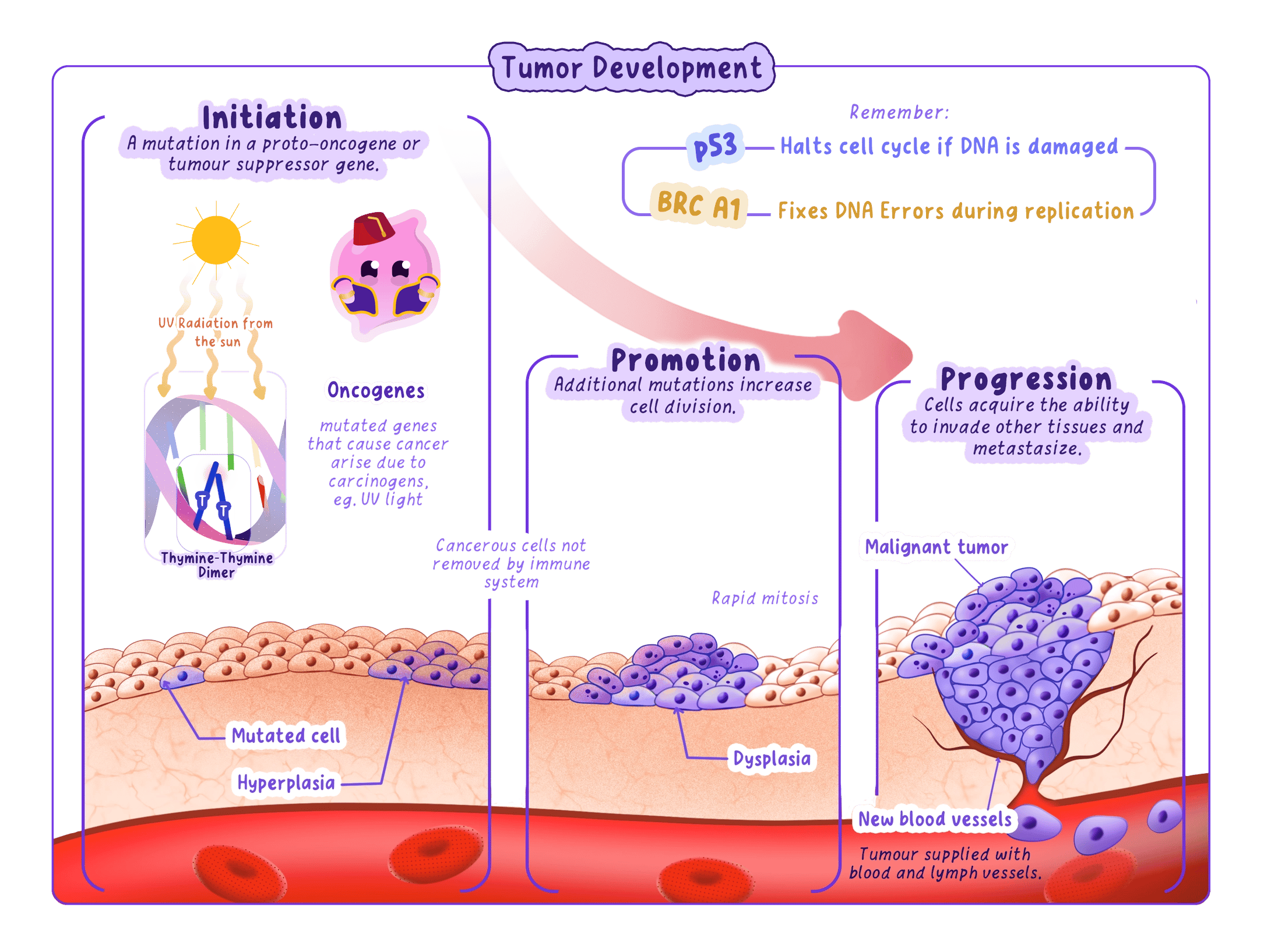
- Do not use the words tumour and cancer as if they mean the same thing, because only malignant tumours are cancers.
- Do not describe cancer as a disease you catch or a disease you always inherit, because it is caused by mutations in a person's own body cells.
- Do not write only that cancer cells divide quickly, because the key feature is that their division is no longer controlled.
Causes of the mutations
Carcinogen
A carcinogen is any chemical, form of radiation or other agent that increases the chance of the mutations that lead to cancer.
- Anything that increases the chance of the mutations that lead to cancer is called a carcinogen.
- Radiation, including ultraviolet light from the Sun and sunbeds and X-rays, can damage DNA directly.
- Many chemicals are carcinogens, including dozens of the substances in tobacco smoke and the fibres of asbestos.
- Some viruses increase the risk of cancer, such as the human papillomavirus, which can cause cervical cancer.
- Lifestyle factors change how much a person is exposed to carcinogens, which is why smoking, heavy drinking and sunbathing all raise the risk of cancer.
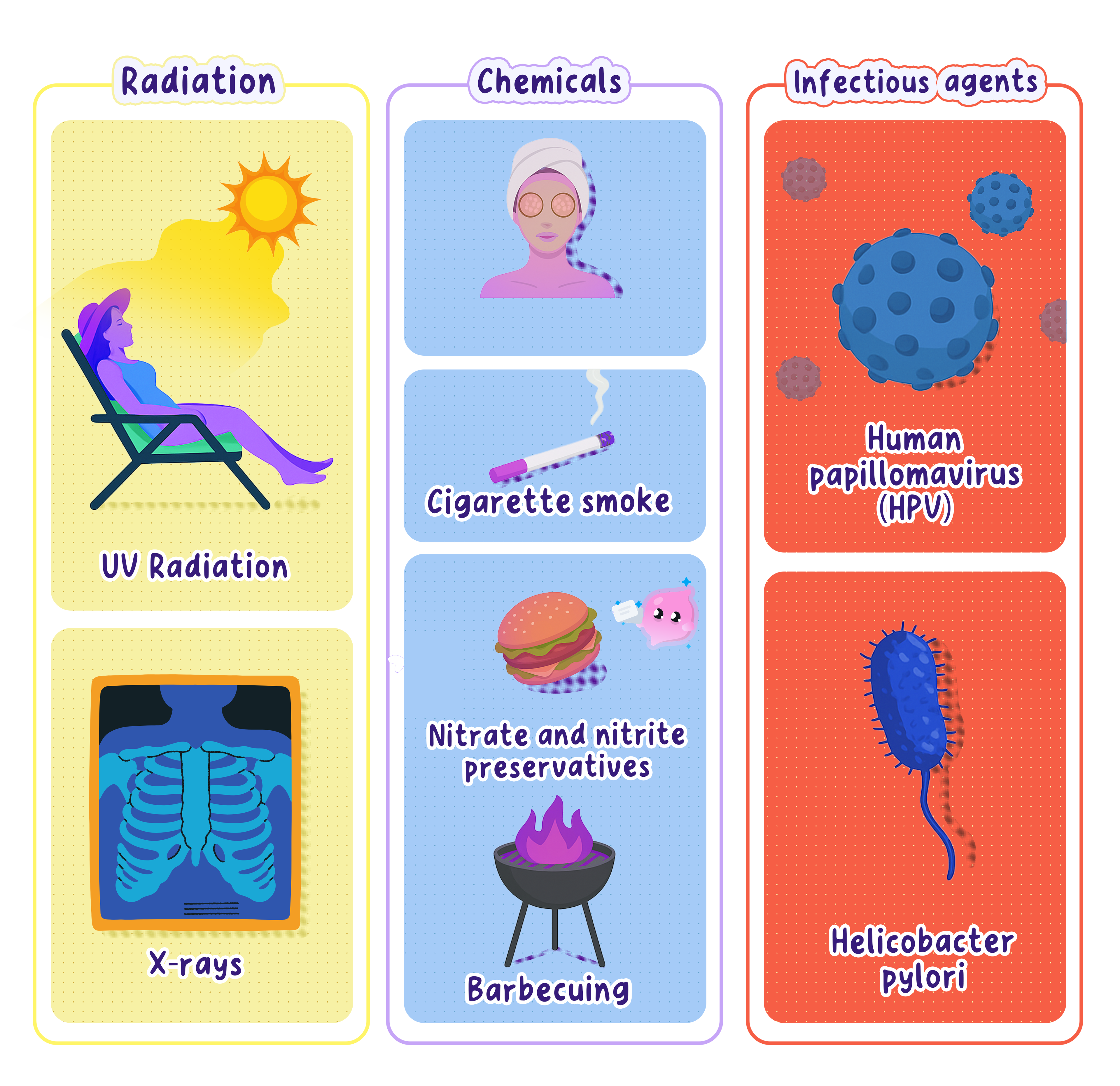
Skin cancer after repeated sunburn
- A teenager spends several summer holidays sunbathing without sun cream and is badly sunburnt each year.
- The ultraviolet light penetrates the skin and causes mutations in the DNA of some skin cells.
- Most of the damaged cells are repaired or die, but over many years one skin cell collects mutations in several of the genes that control its division.
- That cell begins to divide without control and forms a small tumour, which appears as a dark, irregular mole.
- If the tumour is malignant, its cells invade the deeper layers of the skin and reach the blood vessels there.
- Cells carried away in the blood can form secondary tumours in organs such as the lungs or liver, which is why doctors remove suspicious moles as early as possible.
Describing how cancer develops
- Start with the cause, a mutation in the genes that control cell division, then describe the uncontrolled division and the formation of a tumour.
- When you compare the two types of tumour, state what each one does, such as a benign tumour staying in one place and a malignant tumour spreading.
- For spreading, name the route, the blood or lymph, and the result, secondary tumours, because these are separate marking points.
- Mention cell division rather than writing only that cells "grow out of control", because the mark is for the idea of uncontrolled division.
- What change in a cell starts the development of cancer?
- Explain why the risk of most cancers increases with age.
- Give two differences between a benign tumour and a malignant tumour.
- Describe how a secondary tumour forms.
- Name two types of carcinogen and give an example of each.
6.3.19 Stem cells in medicine
Stem cells as a treatment
Stem cell
An undifferentiated cell that can divide to make more cells of the same kind and can differentiate into specialised cells.
Transplant
A transplant is the transfer of cells, tissue or an organ from a donor into a recipient to replace ones that are damaged or missing.
- A stem cell can divide many times and then differentiate into specialised cells, so it can be used to produce new cells to replace ones that have been damaged or lost.
- Many diseases and injuries destroy cells that the body cannot replace on its own, such as nerve cells in the spinal cord or the insulin-secreting cells of the pancreas.
- Stem cells can be grown in the laboratory and treated with chemicals that switch on the genes needed for a particular cell type, so that they differentiate into the cells the patient is missing.
- The new cells are then placed into the patient's body in a transplant.
- In the future, stem cells could also be used to grow whole tissues or organs for transplant, which would reduce the shortage of donor organs.
- Tissues grown from stem cells can also be used to test new drugs, so fewer tests need to be carried out on animals and people.
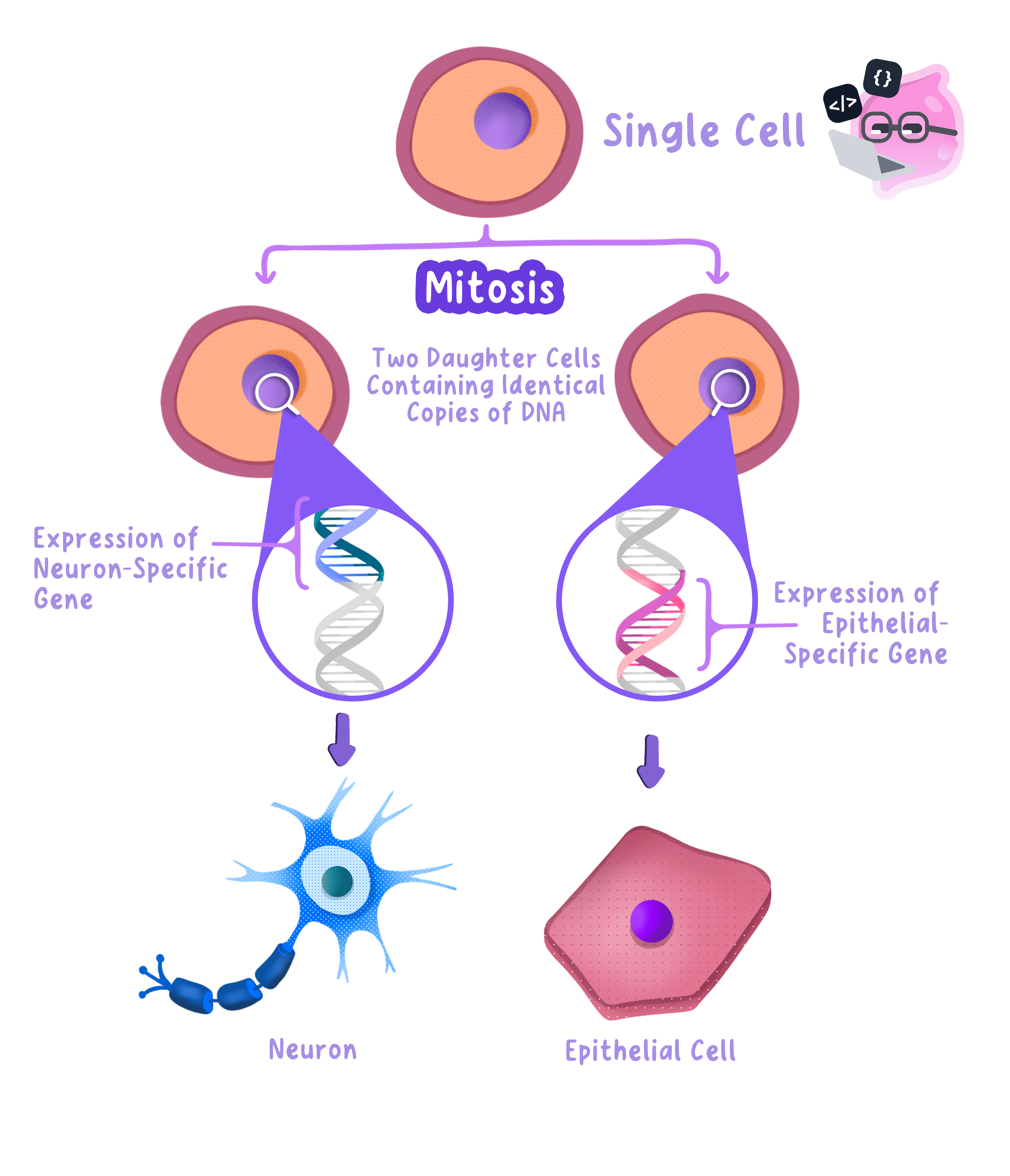
Uses in medicine
- Some stem cell treatments are already in routine use.
- In a bone marrow transplant, stem cells from a donor's bone marrow are given to a patient with leukaemia, a cancer of the blood, after the patient's own diseased bone marrow has been destroyed.
- The donor stem cells divide and differentiate to produce healthy red blood cells, white blood cells and platelets.
- Sheets of skin grown from stem cells are used to cover severe burns.
- Other stem cell treatments are being tested for conditions that cannot yet be cured.
- Insulin-secreting cells made from stem cells could treat type 1 diabetes, so the patient would no longer need insulin injections.
- New nerve cells could repair damage to the spinal cord and help people with paralysis.
- Replacement brain cells could treat Parkinson's disease, in which a group of brain cells that control movement die.
- Light-sensitive cells could replace damaged cells in the retina and restore some sight to people with certain types of blindness.
Tissue transplantation and rejection
Rejection
Rejection is the destruction of transplanted cells, tissue or an organ by the recipient's immune system because it recognises their antigens as foreign.
Immunosuppressant drug
An immunosuppressant drug is a medicine that reduces the activity of the immune system so that a transplant is less likely to be rejected.
Therapeutic cloning
Therapeutic cloning is producing an early embryo with the same genes as a patient so that its stem cells can be used to treat that patient.
- Every cell carries antigens on its surface, and the pattern of these antigens differs from one person to another.
- When cells from a donor are transplanted, the patient's lymphocytes can recognise the donor's antigens as foreign.
- The lymphocytes then attack and destroy the transplanted cells, and this is called rejection.
- To reduce the risk of rejection, doctors choose a donor whose tissue type is as close as possible to the patient's, often a brother or sister.
- The patient is usually also given immunosuppressant drugs, which reduce the activity of the immune system.
- Immunosuppressant drugs leave the patient more likely to suffer serious infections, and they may have to be taken for many years.
- Rejection can be avoided if the stem cells come from the patient's own body, because the cells carry the patient's own antigens.
- Adult stem cells can sometimes be collected from the patient's own bone marrow, stored and returned after treatment.
- Therapeutic cloning would produce an embryo with the same genes as the patient, so the embryonic stem cells taken from it would not be rejected.
- A drawback of using a patient's own cells to treat a genetic disorder is that those cells carry the same faulty alleles that caused the disease.
Risks of stem cell treatments
- Stem cells divide rapidly, and if their division is not controlled after the transplant they could form a tumour and lead to cancer.
- Stem cells grown in a laboratory could become contaminated with a virus, which would be transferred to the patient and cause an infection.
- The transplanted cells may not differentiate into the right cell type, or they may not work properly once inside the patient.
- Many stem cell treatments are still at the research stage, so their long-term effects are not yet known.
- The treatments are expensive to develop and carry out, so they may not be available to every patient who could benefit.
Ethical issues
Embryonic stem cell
A stem cell taken from an early embryo that can differentiate into any type of cell in the body.
- Collecting embryonic stem cells destroys the embryo, and some people believe that an embryo has the same right to life as a person.
- Other people argue that an embryo a few days old is a small ball of cells with no nervous system, so it cannot feel pain and is not yet a person.
- Most embryos used for research are spare embryos left over from IVF treatment, which would otherwise be thrown away.
- Some people are concerned that therapeutic cloning could lead to attempts to clone whole humans.
- In the UK, research on human embryos is allowed only under licence, and an embryo may not be kept beyond 141414 days of development.
- Using adult stem cells avoids destroying embryos, but they can differentiate into only a limited range of cell types, so they cannot be used to treat as many conditions.
Stem cells for type 1 diabetes
- In type 1 diabetes, the cells in the pancreas that secrete insulin have been destroyed.
- Scientists grow embryonic stem cells in the laboratory and add chemicals that switch on the genes for making insulin, so the cells differentiate into insulin-secreting cells.
- The new cells are transplanted into the patient, where they respond to rising blood glucose by releasing insulin.
- The benefit is that the patient may no longer need several insulin injections every day.
- Because the cells come from another person's embryo, the patient must take immunosuppressant drugs to prevent rejection, which increases the risk of infection.
- The cells must be checked carefully before the transplant, because any that stay undifferentiated could keep dividing and form a tumour.
Discussing stem cell treatments
- A discuss question expects both benefits and risks, and the top marks need points on both sides followed by a conclusion.
- Name a specific condition and explain how the stem cells would help, such as insulin-secreting cells for type 1 diabetes.
- When writing about rejection, state that the immune system recognises the antigens on the transplanted cells as foreign.
- Keep ethical arguments separate from medical risks, because examiners credit them as different points.
- Give the reason behind any ethical objection, such as the destruction of an embryo that some people see as a potential life.
- Do not say that embryonic stem cells are taken from adults, or that adult stem cells can form any type of cell.
- Do not write that immunosuppressant drugs are needed when the stem cells come from the patient's own body, because those cells will not be rejected.
- Give two conditions that stem cells could be used to treat, and state the type of cell needed for each.
- Explain why stem cells transplanted from a donor may be rejected.
- Describe one way of reducing the risk of rejection.
- Give two risks of using stem cells in medicine.
- Give one argument for and one argument against using embryonic stem cells.
6.3.20 Gene technology in medicine
Gene technology in medicine
Genetic engineering
Genetic engineering is changing the genome of an organism by inserting a gene taken from a different organism so that the organism shows a desired characteristic.
Genetic disorder
A genetic disorder is a disease caused by a faulty allele that can be passed from parents to their children.
- Gene technology in medicine is used in two main ways.
- Genetic engineering of microorganisms inserts human genes into bacteria or yeast so that they make human proteins that can be used as medicines.
- Gene therapy inserts working alleles into a patient's own cells to treat a genetic disorder.
- Both uses rely on cutting out a gene and carrying it into another cell using a vector.
- Each use brings benefits, but each also raises practical difficulties and ethical questions that have to be weighed up.
Medicines made by GM bacteria
Genetically modified organism
A genetically modified organism is an organism whose genome has had a gene from another organism inserted into it by genetic engineering.
Vector
A vector is a piece of DNA, usually a plasmid or a virus, that is used to carry a gene into a host cell.
- The human gene for a useful protein, such as insulin, is cut out of human DNA and inserted into a plasmid, which acts as the vector.
- The plasmid is taken up by bacteria, which become genetically modified.
- The GM bacteria are grown in large fermenters, where they divide rapidly and every cell uses the human gene to make the human protein.
- The protein is then extracted from the fermenter and purified so that it can be used as a medicine.
- Other medicines made in this way include human growth hormone, used to treat children who do not grow normally, and the clotting factors needed by people with haemophilia.
- Making medicines in GM bacteria has several benefits.
- Large quantities of the protein can be made quickly and cheaply, because bacteria reproduce so rapidly.
- The protein is identical to the human version, so it is less likely to cause an allergic reaction than insulin extracted from pigs or cows.
- The supply does not depend on animals being slaughtered, which some people object to for ethical or religious reasons.
- The products are free of human viruses, unlike some clotting factors that were once extracted from donated human blood.
- There are also drawbacks.
- Building fermenters and purifying the product is expensive, so some of these medicines are still costly.
- The GM bacteria must be contained carefully, because some people are concerned about the effects if they escaped into the environment.
Gene therapy
Gene therapy
Gene therapy is the treatment of a genetic disorder by inserting a working allele into a patient's cells to make up for a faulty one.
Somatic gene therapy
Somatic gene therapy is gene therapy that changes only the patient's body cells, so the new allele is not passed on to their children.
Germline gene therapy
Germline gene therapy is gene therapy that changes gametes or an early embryo, so the new allele is passed on to all future generations.
- Many genetic disorders, such as cystic fibrosis, are caused by a faulty allele that stops a cell making a working protein.
- In gene therapy, a working copy of the allele is inserted into the patient's cells so that the cells can make the missing protein.
- The working allele is carried into the cells by a vector, usually a virus that has been modified so that it cannot cause disease.
- Tiny spheres of lipid called liposomes can also be used, and these can be breathed into the lungs.
- In somatic gene therapy, only body cells are changed, such as the cells lining the airways of a person with cystic fibrosis.
- The change is not passed on to the patient's children.
- Body cells are replaced over time, so the treatment may have to be repeated.
- In germline gene therapy, the allele would be inserted into gametes or an early embryo, so every cell of the person would carry it and it would be passed on to their descendants.
- Germline gene therapy in humans is not allowed in the UK.
- Somatic gene therapy has already been used to treat a rare inherited condition in which children are born with almost no working immune system, and some inherited forms of blindness.
Practical considerations
- It is difficult to get the allele into enough of the right cells, because a vector cannot reach every cell in an organ.
- The allele may work for only a short time, especially in cells that are regularly replaced, so the treatment has to be repeated.
- The patient's immune system may recognise a viral vector as foreign and attack it, which can cause inflammation and make repeat treatments less effective.
- The inserted allele may enter the DNA in the wrong place and disrupt another gene.
- In a few early trials, this caused some patients to develop leukaemia.
- Gene therapy works best for disorders caused by a single gene, while most common diseases are influenced by many genes and by the environment.
- Gene therapies are extremely expensive to develop, and a single treatment can cost hundreds of thousands of pounds.
Ethical considerations
- Many people support somatic gene therapy, because it treats a patient who has given consent and affects only that person.
- Germline gene therapy raises greater concern, because it changes future generations who cannot give consent.
- Some people fear the same technology could be used to choose characteristics that have nothing to do with health, such as height or eye colour, producing so-called designer babies.
- There is debate about who should decide which conditions are serious enough to be treated.
- The high cost raises questions of fairness, because treatments may be available only in wealthy countries or to people who can pay.
- Some people have religious or moral objections to changing human genes at all.
- Others argue that it would be wrong not to use a technology that could prevent serious suffering.
Gene therapy for cystic fibrosis
- In cystic fibrosis, a faulty allele means that cells lining the airways cannot make a working membrane protein, so thick, sticky mucus builds up in the lungs.
- In trials, working copies of the allele were packed into liposomes and breathed into the lungs through an inhaler.
- Some airway cells took up the allele and began to make the working protein, which slightly improved lung function in some patients.
- The improvement was small, because the thick mucus stopped the liposomes from reaching many of the cells.
- The cells lining the airways are replaced regularly, so the treatment had to be repeated every few weeks to keep working.
- Because only body cells were changed, the patients could still pass the faulty allele on to their children.
Explaining benefits and risks
- For an explain question, give a reason for every benefit or risk, such as bacteria making insulin cheaply because they reproduce so quickly.
- Keep practical difficulties, such as getting the allele into enough cells, separate from ethical issues, such as consent for future generations.
- Make clear whether you are writing about somatic or germline gene therapy, because the ethical arguments are different.
- When a question asks about the benefits of genetically engineered insulin, compare it with insulin taken from animals.
- Do not write that gene therapy removes the faulty allele, because it adds a working allele while the faulty one stays in the cell.
- Do not say that the effects of somatic gene therapy are passed on to children, because only body cells are changed and the gametes are not.
- Describe how GM bacteria are used to produce human insulin.
- Give two benefits of producing insulin from GM bacteria rather than from animals.
- What is the difference between somatic and germline gene therapy?
- Give two practical difficulties of gene therapy.
- Explain one ethical concern about germline gene therapy.
6.3.21 The human genome and medicine
Reading the human genome
Genome
The genome is the complete genetic material of an organism.
Human Genome Project
The Human Genome Project was an international research programme that worked out the complete sequence of bases in human DNA.
- The human genome is the complete set of genetic material in a human cell.
- The Human Genome Project worked out the order of the bases in human DNA and was declared complete in 200320032003.
- Scientists from several countries, including a large team in the UK, shared the work and made the results freely available to researchers everywhere.
- The project found that the human genome contains around 20 00020\,00020000 genes that code for proteins.
- Since then, reading a genome has become much faster and cheaper, so a person's whole genome can now be sequenced in a few days.
- Comparing the genomes of many people shows which alleles are more common in people who have a particular disease.
- This allows scientists to link particular alleles to an increased risk of disease, and to find out how different alleles affect the way the body responds to drugs.
- In England, the 100,000 Genomes Project sequenced the genomes of NHS patients with rare diseases and cancers to find the genetic causes of their conditions.
Predicting the likelihood of disease
Genetic testing
Genetic testing is the analysis of a person's DNA to find out whether they carry particular alleles.
Allele
An allele is an alternative version of a gene.
- Genetic testing analyses a person's DNA to see whether they carry alleles linked to a disease.
- For a disorder caused by a single faulty allele, such as cystic fibrosis or Huntington's disease, a test can show whether a person has the disorder or carries the allele.
- For most common diseases, such as heart disease, type 2 diabetes and many cancers, a test can show only an increased risk, because these diseases also depend on many other genes and on lifestyle.
- For example, women who carry a faulty BRCA1 or BRCA2 allele have a much higher chance of developing breast cancer or ovarian cancer during their lives.
- Knowing about an increased risk allows a person to act early.
- They can have more frequent screening, such as regular scans, so that a disease is found and treated at an early stage.
- They can make lifestyle changes, such as stopping smoking or losing weight, that lower their overall risk.
- Some women with a faulty BRCA1 allele choose surgery to remove their breasts or ovaries before cancer can develop.
- Couples who carry a faulty allele can find out the chance that their children will inherit a genetic disorder.
Drugs targeted to the genome
Personalised medicine
Personalised medicine is the choice of drug and dose for a patient based on the alleles in their genome.
- People respond differently to the same drug, partly because they carry different alleles.
- Some alleles code for liver enzymes that break down drugs faster or more slowly than usual.
- A person who breaks a drug down quickly may need a higher dose for it to work.
- A person who breaks a drug down slowly may suffer harmful side effects from a normal dose.
- Testing a patient's genome before treatment lets a doctor choose the drug and dose most likely to work for them with the fewest side effects.
- This approach is called personalised medicine.
- Cancer cells carry their own mutations, so reading the genome of a tumour shows which drug is most likely to attack it.
- Some breast cancers have cells with extra copies of a gene called HER2, and a drug that targets the protein made by this gene works only on these cancers.
- Knowing which genes are involved in a disease also helps scientists design new drugs that act on the proteins those genes produce.
Problems and concerns
- A genetic test for a common disease gives a probability rather than a certainty, so a person told they have a high risk may never develop the disease, while a person told they have a low risk still might.
- Learning about a high risk of a disease that cannot be prevented or cured, such as Huntington's disease, can cause great anxiety.
- Genetic information about one person also reveals information about their relatives, who may not want to know it.
- There are concerns that insurance companies or employers could treat people unfairly if they had access to their genetic information.
- Genome data must be stored securely, because it is personal and cannot be changed if it is leaked.
- Genetic testing and targeted drugs are expensive, so they may not be available to everyone who could benefit.
- The effects of many alleles are not yet understood, so some test results are difficult to interpret.
Testing for a faulty BRCA1 allele
- A woman's mother and aunt both developed breast cancer before the age of 505050, so her doctor refers her for genetic testing.
- A blood sample is taken, and DNA from her white blood cells is analysed for faulty versions of the BRCA1 and BRCA2 genes.
- The test shows that she carries a faulty BRCA1 allele, which greatly increases her lifetime chance of breast cancer compared with women who do not carry it.
- The result does not mean she will certainly develop cancer, so she is offered regular breast scans from a younger age than usual to find any tumour early.
- She is also offered surgery to reduce her risk, and she must weigh the benefit of a much lower risk against the effects of a major operation.
- Her sisters and her children may also carry the allele, so the result raises the question of whether, and how, to tell them.
Discussing the genome in medicine
- Organise your answer around the two main uses, predicting the likelihood of disease and targeting drugs to a person's genome.
- Explain how each use helps the patient, such as early screening for a person at high risk or a drug dose chosen to avoid side effects.
- Include at least one problem, such as a test giving only a probability or genetic information being misused by insurers.
- When a disease is influenced by many genes and the environment, say that a test shows a risk rather than a certainty.
Do not claim that reading a person's genome shows exactly which diseases they will get, because most diseases depend on many genes and on lifestyle.
- What did the Human Genome Project achieve?
- Explain why a genetic test for heart disease can show only an increased risk.
- Give two ways a person could use the knowledge that they carry a faulty BRCA1 allele.
- Explain how a person's alleles can affect the dose of a drug they need.
- Give two concerns about genetic testing.
