Antigens Trigger a Specific Immune Response
Definition
Antigen
A molecule on the surface of a pathogen that the immune system recognises as foreign.
Definition
Lymphocyte
A type of white blood cell that produces antibodies and antitoxins against a specific pathogen.
- An antigen is a molecule on a pathogen that the immune system recognises as foreign.
- A lymphocyte with a complementary receptor recognises the antigen and is activated.
- The activated lymphocyte divides to form many identical cells.
Key Idea
Specificity comes from the complementary match between one antigen and one lymphocyte receptor.
Antibodies Bind Specific Antigens
Definition
Antibody
A protein made by lymphocytes that binds to a specific antigen, marking the pathogen for destruction.
- Activated lymphocytes produce antibodies with binding sites complementary to the antigen.
- Antibodies bind pathogens, neutralise them or mark them for destruction by phagocytes.
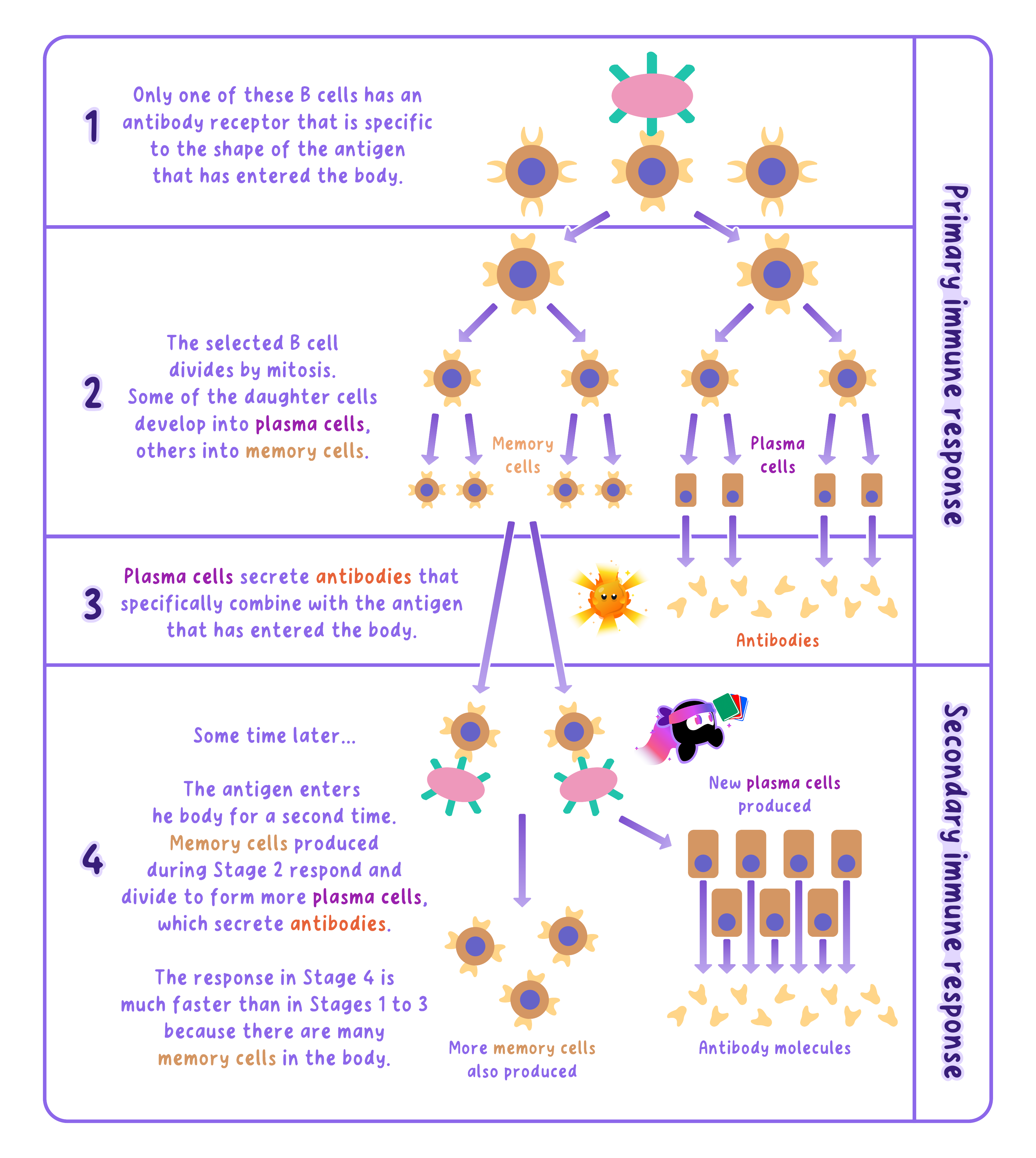
- The first response is slow because the correct lymphocyte must be selected and cloned.
- Each lymphocyte carries receptors with one binding shape, so only cells complementary to the antigen are selected.
- Selected lymphocytes divide by mitosis, producing a clone that can generate a large concentration of one specific antibody.
- Antibody binding can neutralise a pathogen, cause pathogens to clump or mark them for phagocytosis.
Example
an antibody against a measles antigen will not bind an influenza antigen because the binding-site shapes are different.
Memory Cells Produce a Faster Second Response
Definition
Memory cell
A white blood cell that stays in the body after an infection so the body can respond faster and more strongly if the same pathogen returns.
- Some activated lymphocytes become long-lived memory cells after the infection is controlled.
- If the same antigen enters again, memory cells divide rapidly and produce many antibody-secreting cells.
- Antibody concentration rises faster and higher, often destroying the pathogen before symptoms develop.
- The primary response takes time, so symptoms may develop before antibody concentration is high enough to control the pathogen.
- Memory lymphocytes persist after recovery and undergo rapid clonal expansion on re-exposure, producing a faster, larger secondary response.
Exam technique
- For a secondary response, include memory cells, faster antibody production and pathogen destruction before serious symptoms.
- Do not say antibodies remember the pathogen because memory lymphocytes provide the memory.
The Response Is Antigen-specific
- Memory cells for one antigen do not protect against an unrelated antigen.
- A pathogen with changed surface antigens may escape an existing immune response.
Self review
- What is an antigen?
- How are antibodies specific?
- Why is the primary response slow?
- Why is the secondary response faster?
