From one cell to many cell types
From one cell to many cell types
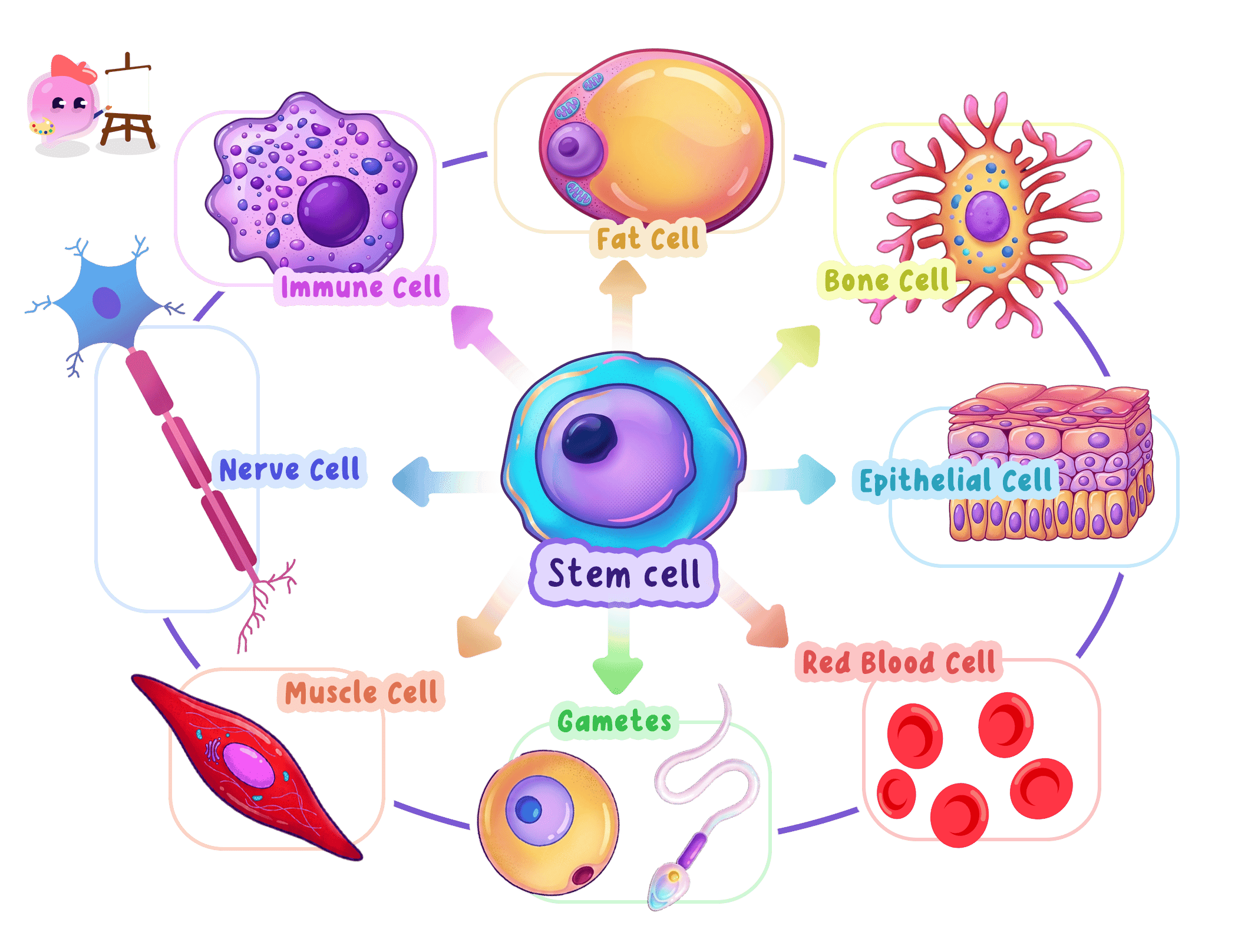
A specialised cell has structures that adapt it to carry out a particular function. Most nucleated somatic cells in a multicellular organism contain the same set of genes because they developed from the same fertilised egg. Gametes are an exception: they are haploid and contain different combinations of alleles following meiosis. Mature human red blood cells are also an exception because they have no nucleus and therefore contain no nuclear genes.
1.1.2 Specialised cells and their adaptations Lesson
Step-by-step lessons on Edexcel GCSE Biology 1.1.2 Specialised cells and their adaptations. Each one builds up to exam-style questions. Start with the foundational topics and build up to the higher-tier material.