Pathogens Cause Communicable Disease
Pathogen
A microorganism that causes disease. Pathogens include some bacteria, viruses, fungi and protists.
- A pathogen is a microorganism or virus that causes disease.
- Pathogens cause disease by damaging cells and tissues or by producing toxins.
- A pathogen can be present before symptoms appear, so an infected person may transmit disease during an incubation period.
The four pathogen groups you must distinguish are bacteria, viruses, fungi and protists.
Bacteria Are Living Prokaryotic Cells
Bacterium
A single-celled prokaryotic microorganism. Harmful bacteria cause disease by reproducing rapidly and often releasing toxins that damage cells.
- A bacterium is a single prokaryotic cell with cytoplasm, ribosomes, a cell membrane and a cell wall but no nucleus.
- Its main DNA is a circular loop in the cytoplasm, and some bacteria also contain plasmids.
- Pathogenic bacteria may reproduce rapidly and release toxins that damage cells.
- Bacteria reproduce by binary fission, so favourable conditions can produce a rapid increase in bacterial number.
- Bacterial toxins may damage cell membranes, disrupt enzymes or stimulate water loss from tissues, producing disease symptoms.
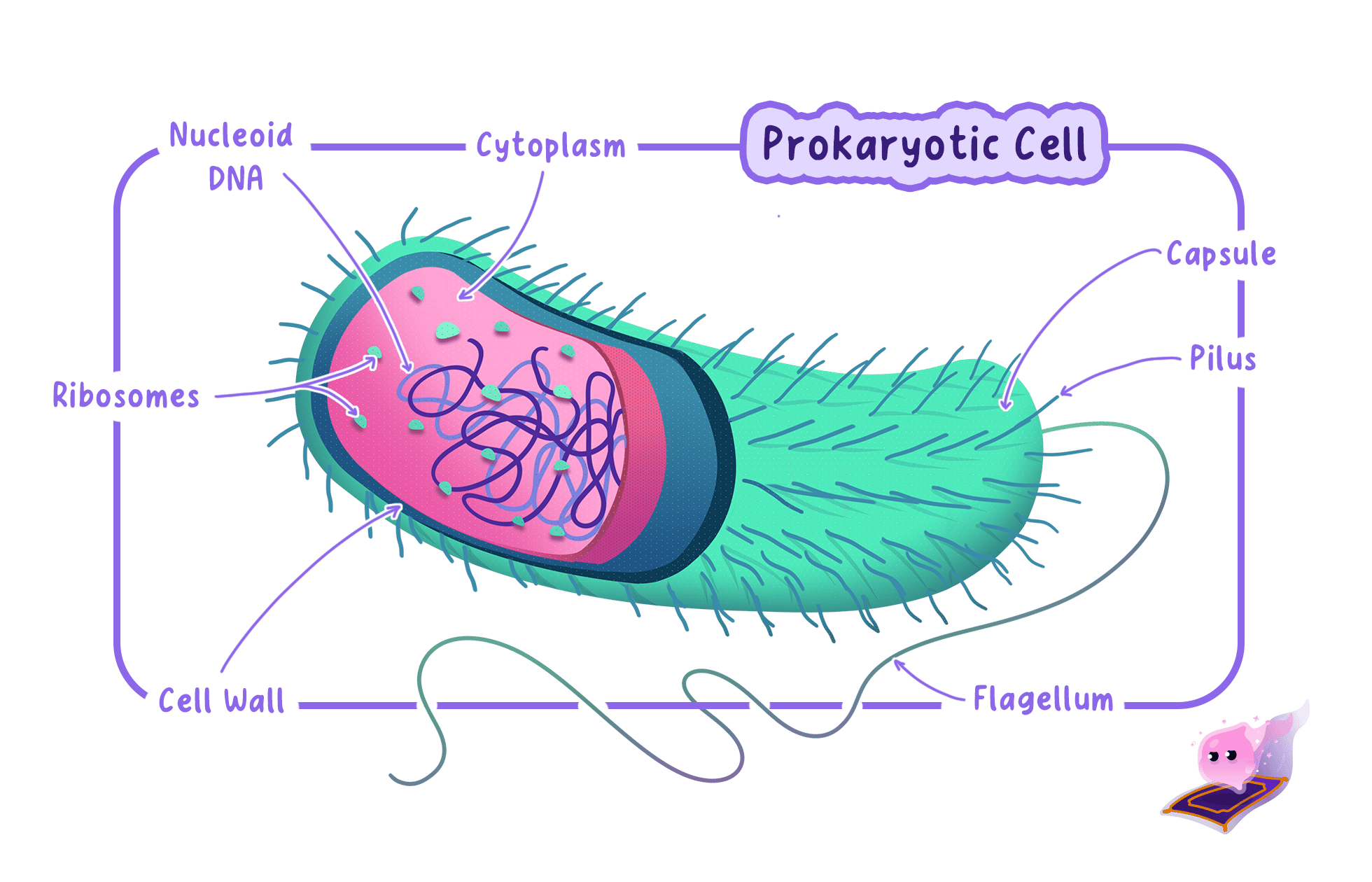
Salmonella bacteria reproduce in the gut and release toxins, which cause fever, abdominal cramps and diarrhoea.
Viruses Reproduce Inside Host Cells
Virus
A non-cellular infectious particle made of a strand of genetic material enclosed in a protein coat, which can reproduce only inside a living host cell.
- A virus is a non-cellular particle containing genetic material inside a protein coat.
- A virus enters a host cell and uses the cell's machinery to make new virus particles.
- The host cell is damaged or destroyed as the new viruses are released.
- Virus attachment is specific because surface proteins bind only to complementary receptors on suitable host cells.
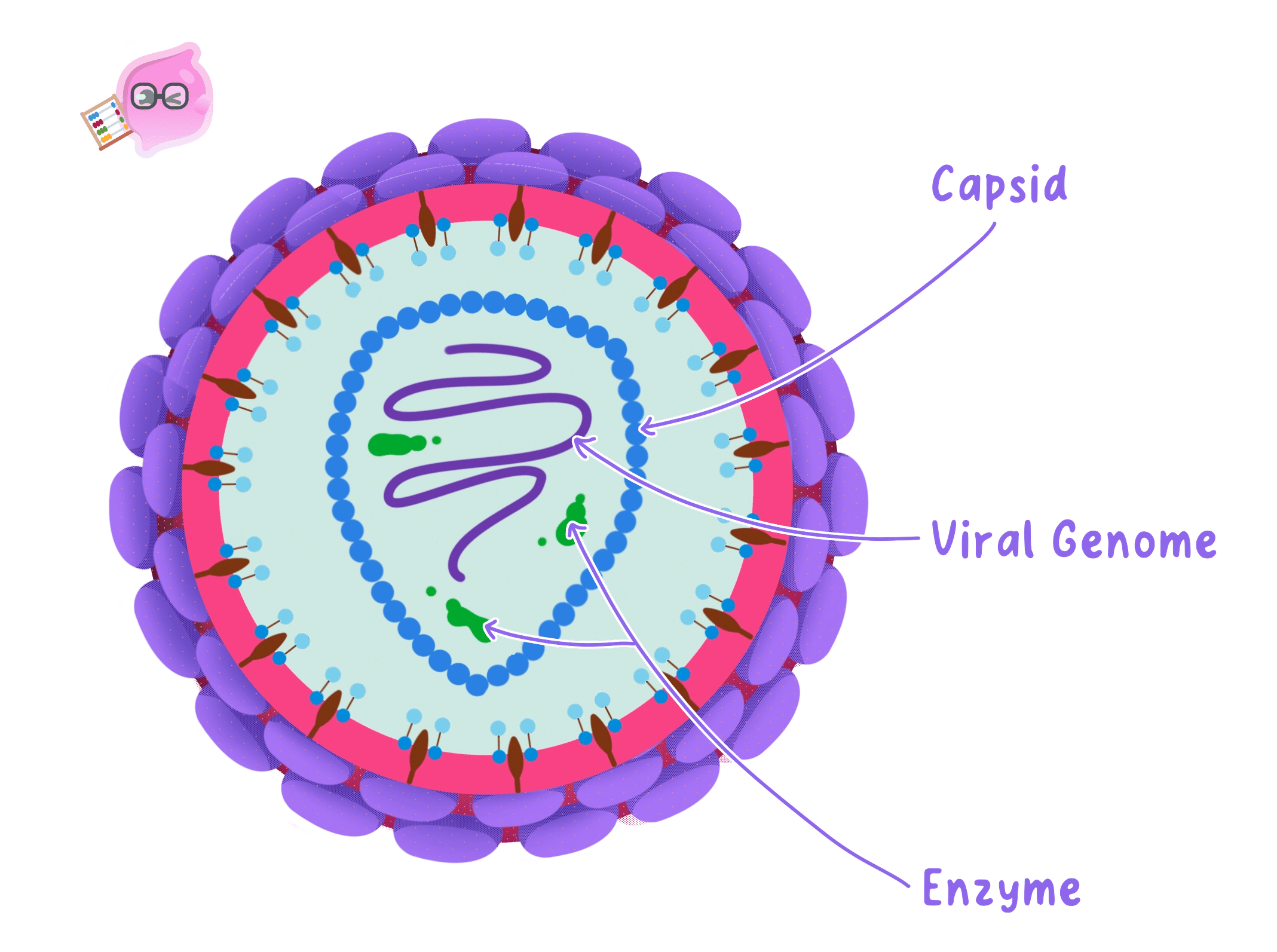
Do not call a virus a cell because it has no cytoplasm, cell membrane or independent metabolism.
Fungi and Protists Are Eukaryotic
Fungus
A eukaryotic organism that may be single-celled (like yeast) or made of thread-like hyphae. Some fungi are pathogens of plants or animals.
Protist
A single-celled eukaryotic organism. Some protists are pathogens and are usually carried to a host by a vector, such as the malarial protist spread by mosquitoes.
- A pathogenic fungus may grow as thread-like hyphae through tissues and produce spores that spread to new hosts.
- A pathogenic protist is a single-celled eukaryote that damages host cells, and some are transferred by vectors.
- Fungal hyphae penetrate tissues, absorb nutrients and damage cells, while spores allow the infection to reach new hosts.
- Protists are eukaryotic cells with a nucleus and organelles, but pathogenic species live in or on a host and take resources from it.
- When asked how a pathogen causes symptoms, name the mechanism, such as toxin release or host-cell damage, and then state the tissue effect.
- Do not gain a mechanism mark by naming the pathogen group alone.
Compare Pathogens by Cell Structure
- Bacteria are prokaryotic cells, fungi and protists are eukaryotic, and viruses are not cells.
- Viruses are much smaller than bacteria and cannot reproduce without a living host cell.
- Define pathogen.
- Name the four pathogen groups.
- How can bacteria cause symptoms?
- Why can a virus reproduce only inside a host cell?
