Enzymes cut and join the required gene
Definition
Restriction enzyme
An enzyme that cuts DNA at a specific base sequence, used in genetic engineering to cut out a required gene and to open a vector.
- A restriction enzyme cuts DNA at a specific recognition sequence.
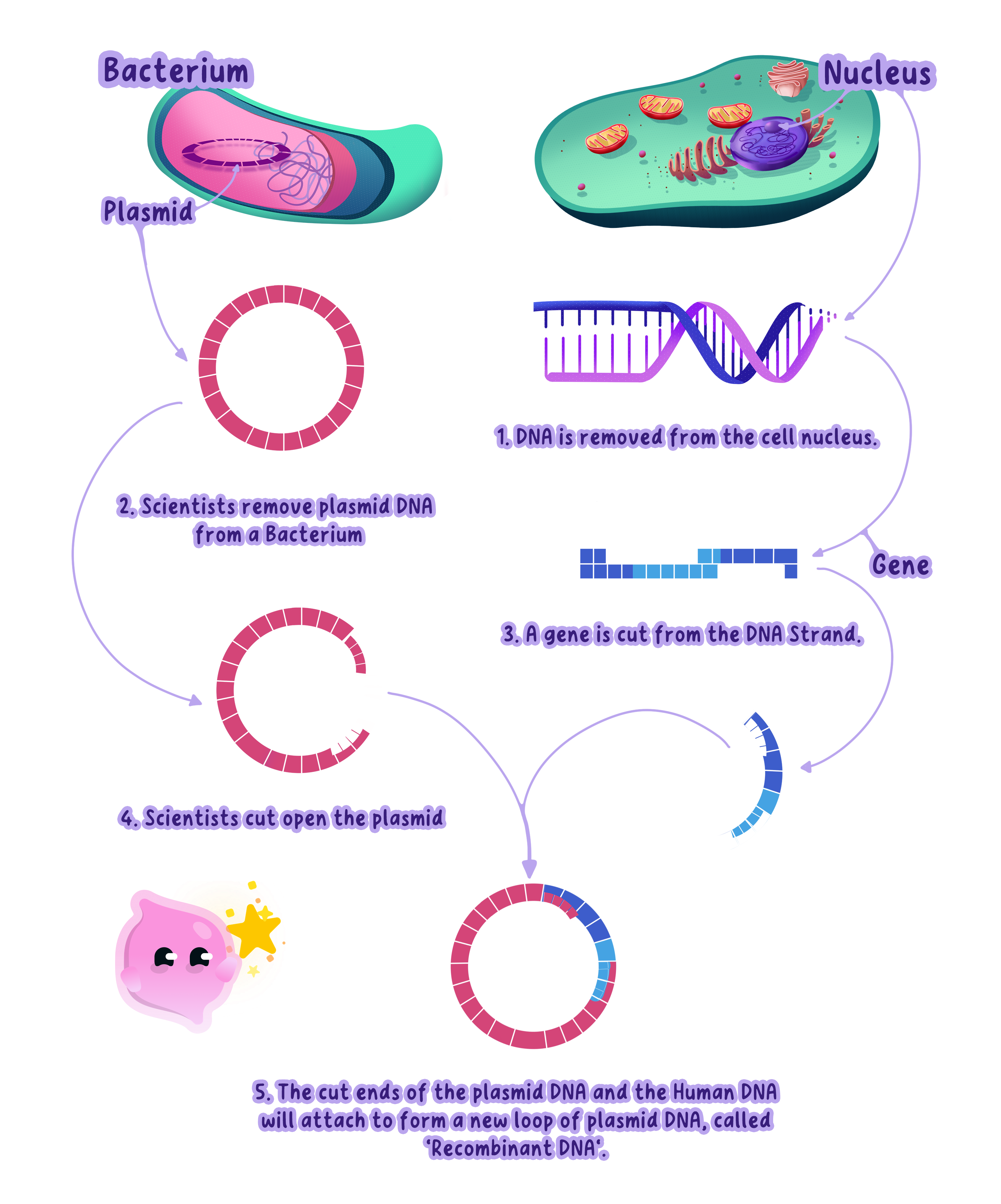
- Use a restriction enzyme to cut the required gene from donor DNA.
- Cut a plasmid with the same restriction enzyme so the gene and plasmid have complementary sticky ends.
- Sticky ends are short exposed single-stranded DNA sequences that pair by complementary base pairing.
- Mix the gene and opened plasmid so matching sticky ends join.
- DNA ligase seals the sugar-phosphate backbone, producing a recombinant plasmid.
Common Mistake
Restriction enzymes cut DNA, while DNA ligase joins the DNA backbone.
A vector carries the gene into cells
Definition
Vector
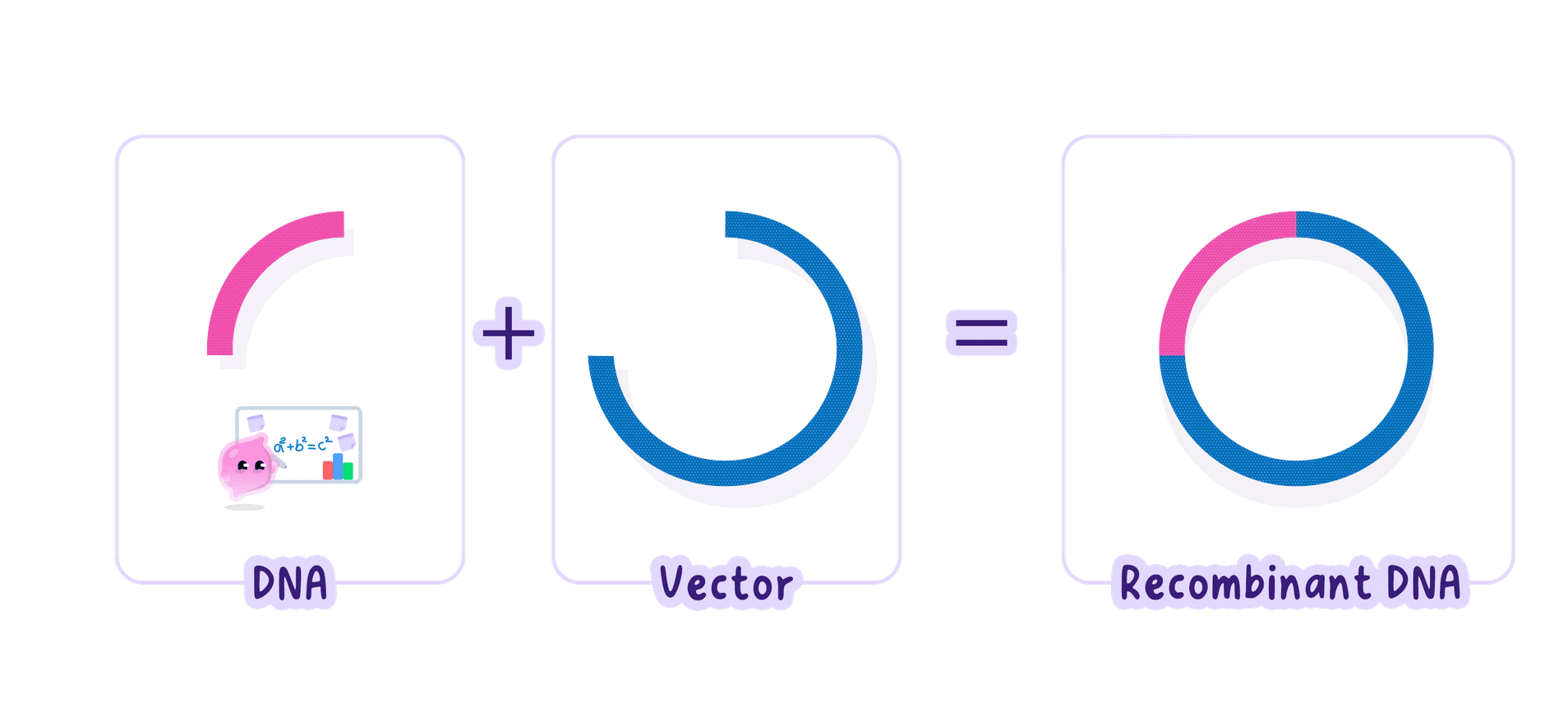
Something used to carry a gene into a cell during genetic engineering, usually a plasmid or a virus.
- A vector is a carrier used to transfer genetic material into a cell.
- Plasmids are small circular DNA molecules that can be removed from bacteria, modified and returned to bacterial cells.
- Viruses can also act as vectors because they naturally insert genetic material into cells.
- Introduce the recombinant vector into recipient cells, then use a marker to identify cells that received it.
- Grow the selected cells by mitosis so the inserted gene is copied and its protein can be produced on a large scale.
Exam technique
Keep the sequence precise: isolate the gene, cut donor DNA and vector with the same restriction enzyme, pair sticky ends, seal with ligase, transfer with a vector, then select and clone modified cells.
The whole process forms a causal chain
- The restriction site determines where DNA is cut and whether compatible sticky ends form.
- Complementary sticky ends hold the two DNA pieces together before ligase makes the join permanent.
- The vector protects and transports the gene, while the host cell supplies the machinery for gene expression.
- Selection separates successfully modified cells from cells that did not take up the vector.
Example
Bacteria containing a recombinant plasmid can be cultured in fermenters to make a protein such as human insulin.
Self review
- What does a restriction enzyme do?
- How do sticky ends help join DNA?
- What does DNA ligase do?
- What is the role of a vector?
