What a Stem Cell Is
Stem cell
An undifferentiated cell that can keep dividing by mitosis and can differentiate into other types of cell.
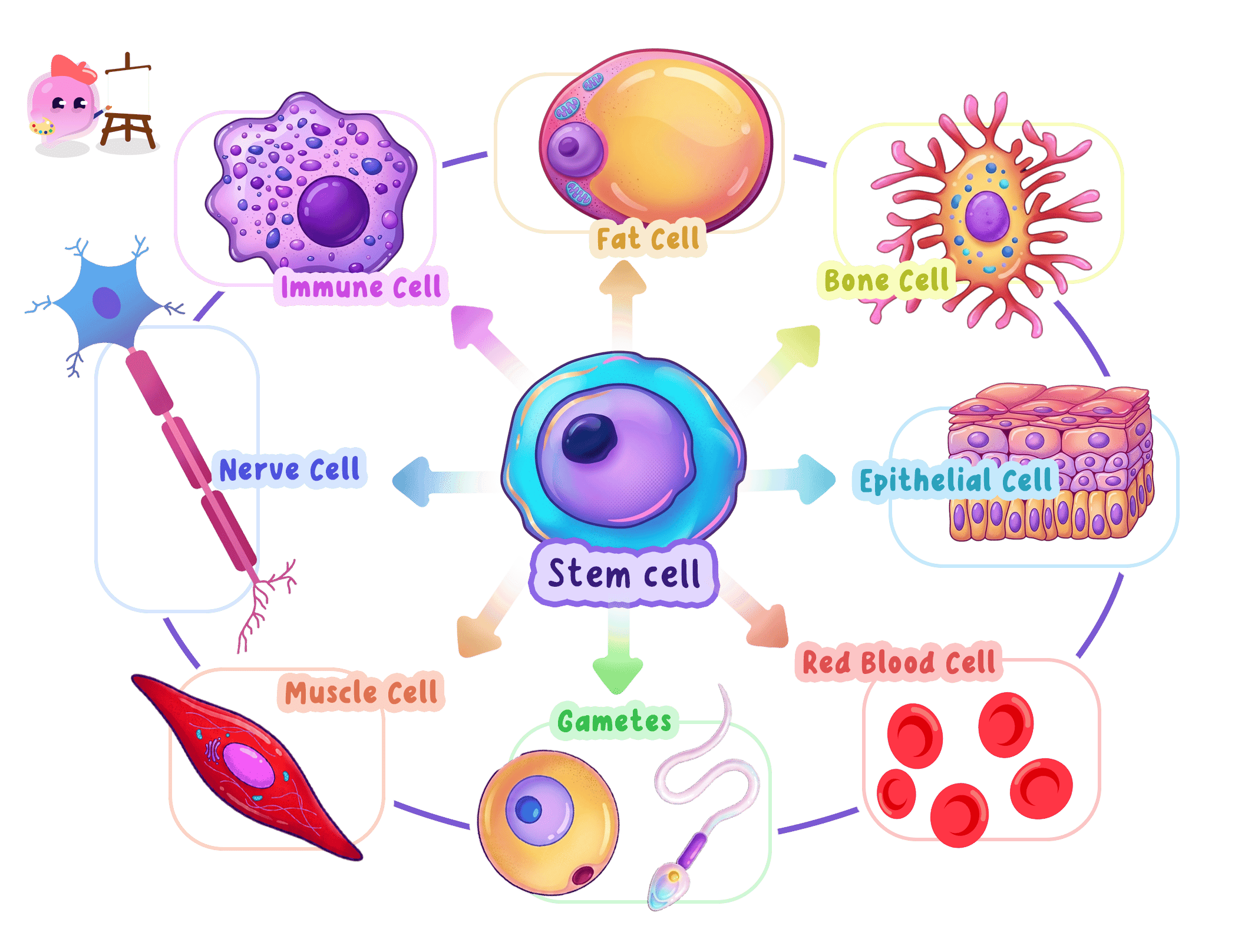
- A stem cell is an undifferentiated cell, which means it has not yet taken on a specialised job.
- It can divide by mitosis over and over again to produce more cells.
- It can also differentiate into one or more types of specialised cell.
- When a stem cell divides, one daughter cell often differentiates while the other stays a stem cell, so the supply of stem cells is not used up.
Embryonic Stem Cells
Embryonic stem cell
A stem cell taken from an early embryo, which can differentiate into any type of body cell.
- Embryonic stem cells come from a very early embryo, a few days after fertilisation, when the ball of cells is called a blastocyst.
- They are taken from the inner cell mass inside the blastocyst.
- They can differentiate into any type of body cell, which makes them the most useful stem cells for medicine.
- The embryos used are usually spare embryos left over from fertility treatment, donated with consent.
- Removing the inner cell mass destroys the embryo, which is the source of the ethical objection to using them.
Adult Stem Cells
Adult stem cell
A stem cell found in a mature tissue such as bone marrow, which can differentiate into only a limited range of cell types.
- Adult stem cells are found in mature tissues, and the best known source is the bone marrow.
- They can only differentiate into a limited range of cell types, so bone marrow stem cells produce blood cells and not nerve cells.
- Their main function in the body is to replace cells that are worn out, damaged or lost.
- Red blood cells survive only about 120 days, so bone marrow stem cells must keep producing replacements throughout life.
- They are also found in the skin, the lining of the gut and the base of hair follicles, all tissues that are constantly renewed.
- Adult stem cells can be taken from a patient without destroying an embryo, so they raise far fewer ethical objections.
Do not say that adult stem cells can turn into any cell. That is only true of embryonic stem cells, and the word to use for adult stem cells is a limited range.
Meristems in Plants
Meristem
A region of a plant, at the root and shoot tips and in the cambium, where cells stay able to divide and differentiate throughout the plant's life.
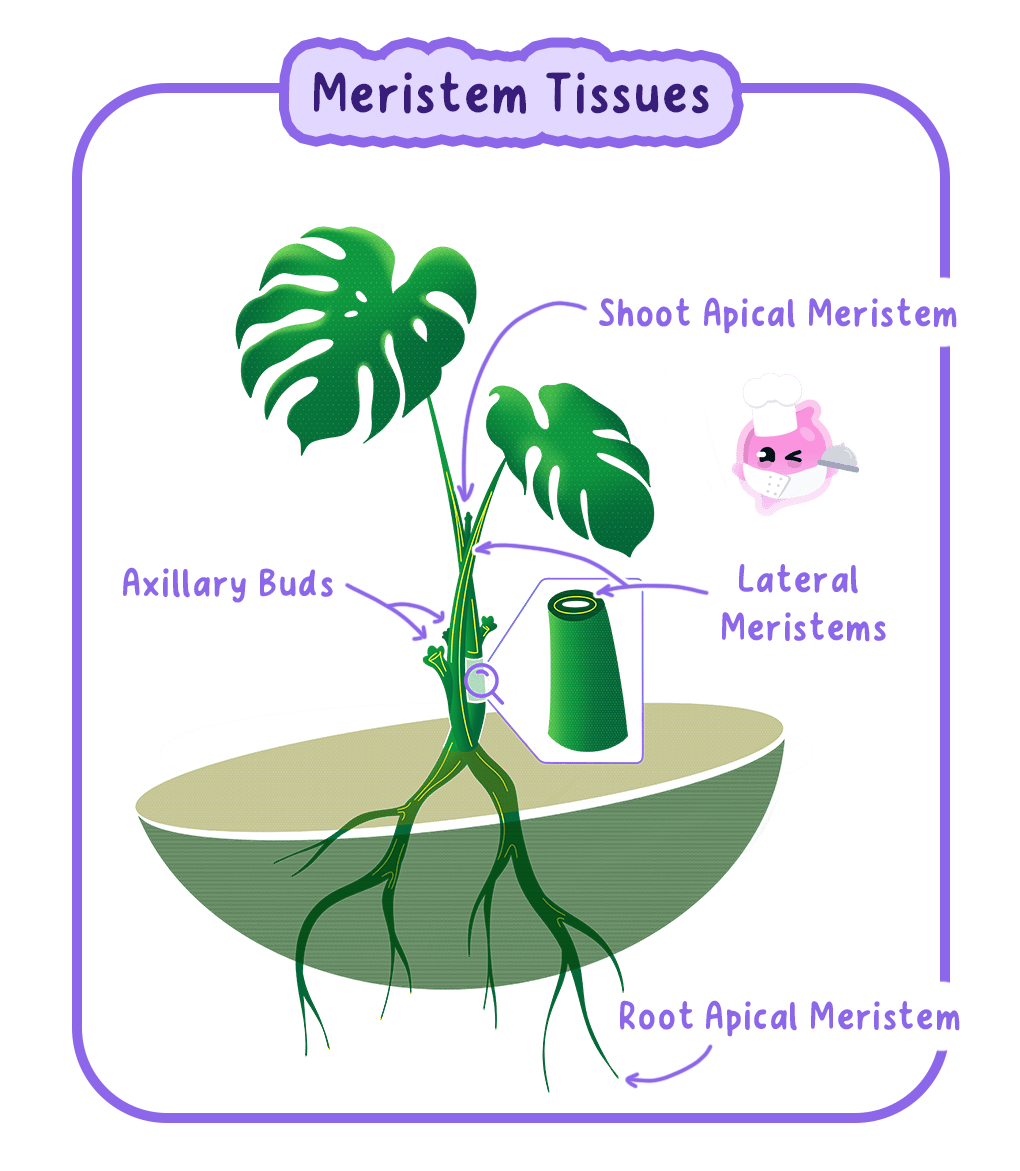
- A meristem is a region of a plant where the cells stay able to divide and differentiate.
- Apical meristems sit at the tips of roots and shoots, and they make the plant longer.
- The cambium is a meristem inside the stem and root that makes the plant wider.
- Meristem cells can differentiate into any plant cell type, including xylem, phloem and root hair cells.
- Unlike animal stem cells, meristem cells keep this ability for the whole life of the plant, which is why plants never stop growing.
Using Meristems to Clone Plants
- A small piece of meristem tissue can be grown into a whole new plant, a technique called tissue culture.
- Every plant produced is a clone of the parent, so a rare or high yielding variety can be reproduced exactly.
- Thousands of identical plants can be produced from one parent in a small space and at any time of year.
- This is how endangered plant species are conserved and how commercial growers produce uniform crops.
Using Stem Cells in Medicine
Differentiation
The process by which an unspecialised cell switches on particular genes and develops the structures it needs to carry out one specific job.
- Stem cells are given to a patient so that they differentiate into the cells the patient has lost.
- Bone marrow transplants are the longest established treatment, and they replace the stem cells that make blood cells in patients with leukaemia.
- Stem cells have been used to grow retinal cells to treat some forms of blindness caused by a damaged retina.
- Trials are looking at replacing the insulin producing cells in type 1 diabetes and the nerve cells lost in Parkinson's disease.
- Stem cells are also grown in the laboratory to test new drugs on human tissue before trials on people.
In a bone marrow transplant the patient's faulty marrow is destroyed, then donor stem cells are given into a vein, settle in the bones and divide by mitosis to produce healthy white blood cells.
Therapeutic Cloning
Therapeutic cloning
The production of an embryo with the same genes as a patient, so that stem cells taken from it will not be rejected when used to treat that patient.
- Cells transplanted from a donor carry different antigens, so the patient's immune system may attack and destroy them.
- In therapeutic cloning, the nucleus of one of the patient's own body cells is placed into an empty egg cell.
- The egg cell divides to form an early embryo whose cells carry the patient's own genes.
- Stem cells taken from this embryo have the same antigens as the patient, so they are not rejected.
- The patient also avoids a lifetime of immunosuppressant drugs, which would otherwise leave them vulnerable to infection.
- The two marks for what a stem cell does are almost always divides by mitosis and differentiates into specialised cells, so write both.
- Mark schemes reject meiosis in this topic, so never use that word about a stem cell.
- If the question names a disease, say which cell type the stem cells would differentiate into and what that cell would then do for the patient.
- When comparing embryonic and adult stem cells, contrast what each can differentiate into and where each comes from.
- Define a stem cell.
- State one difference between an embryonic stem cell and an adult stem cell.
- Where in a plant are the meristems found?
- Explain why meristem cells can be used to produce a clone of an entire plant.
- Explain how therapeutic cloning reduces the chance of transplanted cells being rejected.
