6.3.3 The understanding of genetics
Mendel's pea experiments
- Gregor Mendel was a monk who carried out breeding experiments on pea plants in the mid-180018001800s.
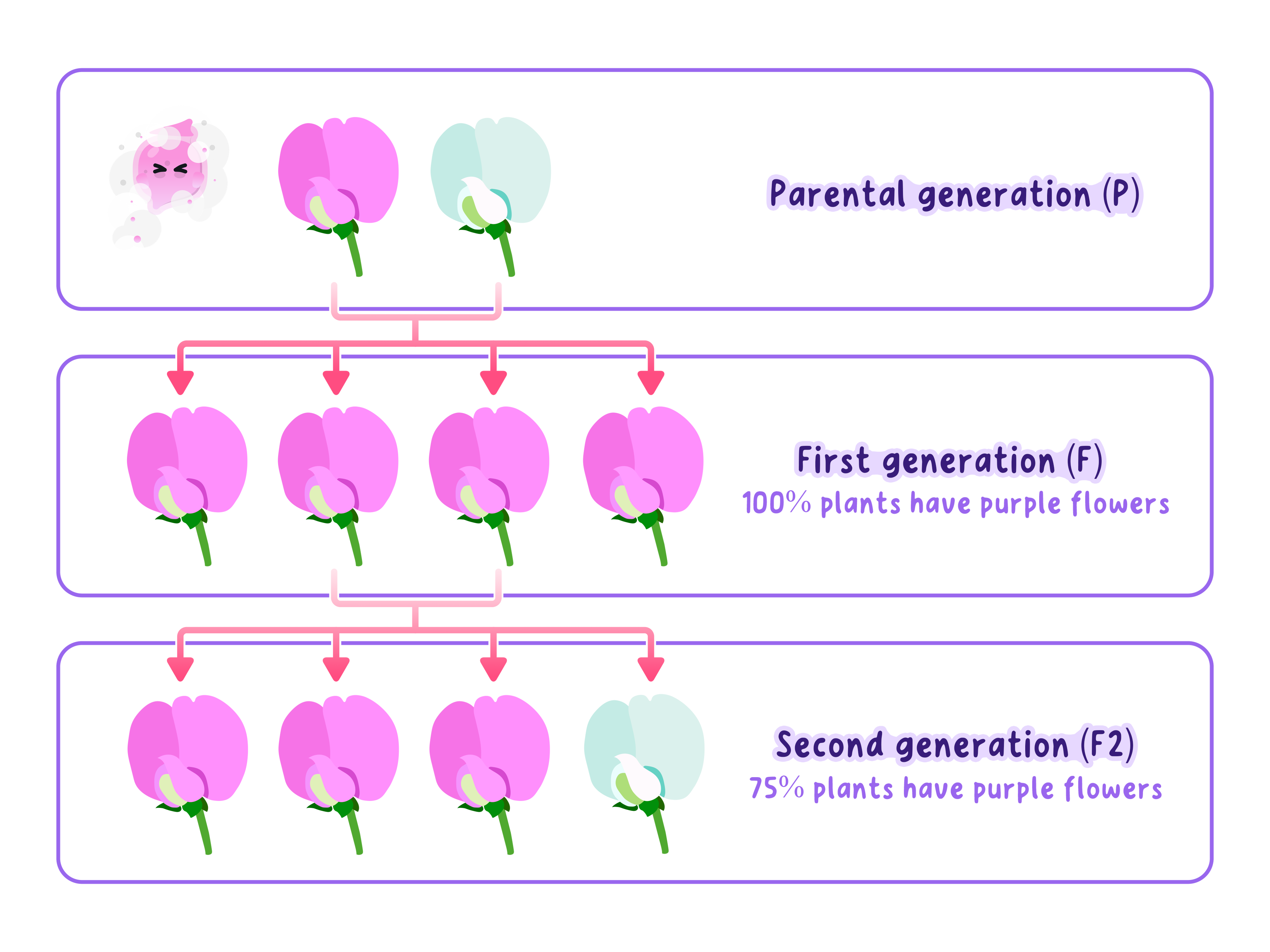
- He crossed pea plants with different characteristics, such as tall and short, and counted the offspring over several generations.
- He found that each characteristic was passed on in fixed ratios, such as 3:13:13:1.
- From this he concluded that each characteristic is determined by separate units of inheritance, passed from parents to offspring unchanged.
Example
Crossing tall and short peas, then breeding the offspring, gave a 3:13:13:1 ratio of tall to short.
Why Mendel was overlooked
- Mendel worked before chromosomes, genes or DNA were known about.
- Because there was no way to explain what his units were, the importance of his discovery was not recognised at the time.
- His work was only appreciated after his death, once chromosomes had been discovered.
Note
Mendel described how characteristics are inherited long before anyone knew that genes or DNA existed.
From units to genes and DNA
Definition
Gene
A short section of DNA that codes for a particular protein and controls a characteristic.
- During the late 1800s, scientists watching cells divide were able to see how chromosomes moved and separated.
- By the early 1900s, researchers had noticed that these chromosomes behaved in much the same way as Mendel's units.
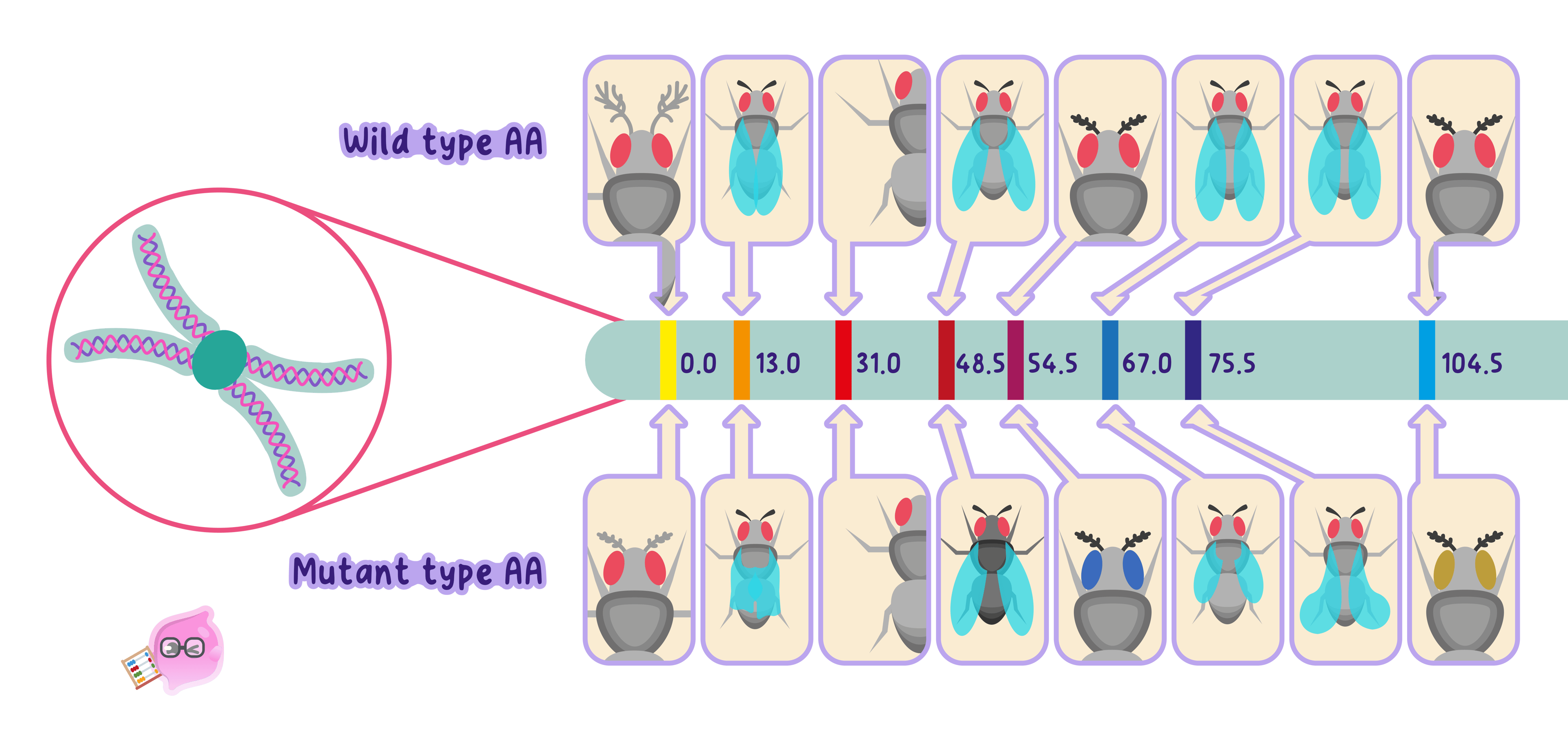
- That similarity pointed to a clear conclusion: the units, which we now call genes, must sit on the chromosomes themselves.
- Around the middle of the 1900s, the structure of DNA was worked out, which finally revealed how genes actually do their job.
Key Idea
The order to remember is Mendel's units, then chromosomes, then genes located on chromosomes, then the structure of DNA.
Self review
- Who was Gregor Mendel and what did he study?
- What did Mendel conclude controls each characteristic?
- Why was the importance of Mendel's work not recognised until after his death?
- What are Mendel's units of inheritance now known to be, and where are they found?
