Context
An educational psychologist was interested in the relationship between emotional regulation (the ability to monitor and manage energy states, emotions, thoughts, and behaviors in ways that are acceptable and produce positive results) and the time spent in active outdoor play. She decided to investigate whether this relationship was present in 10-year-old children.
The psychologist designed her own questionnaire to measure emotional regulation. The higher the score achieved, the greater the emotional regulation. Twenty children, all from one primary school, took part. Each child completed the questionnaire individually.
She also designed a daily activities tracker to measure 'time spent in active outdoor play'. Parents filled out this log over a four-week period to record daily active play outdoors. Using the responses, the psychologist calculated the average time per day (in hours) each child spent in active outdoor play.
Figure 1
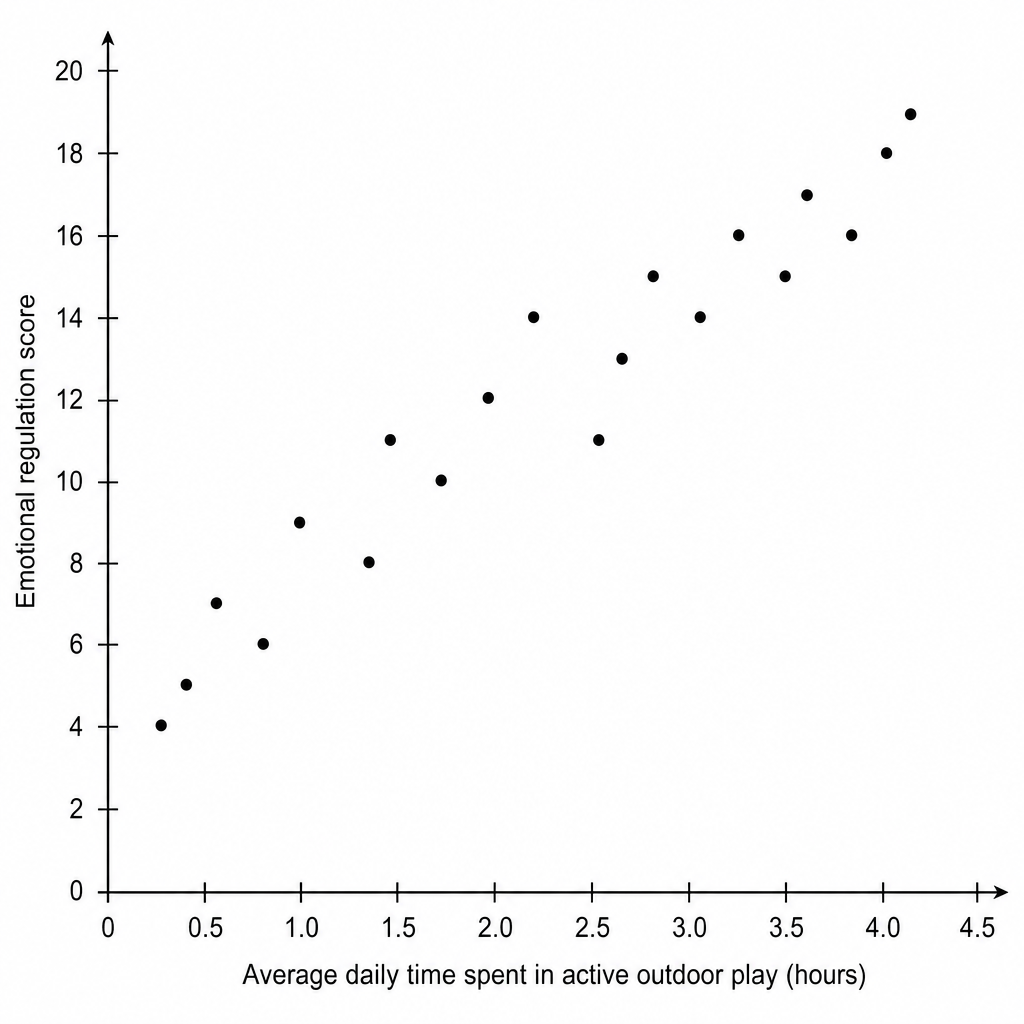
Figure 1: Scattergram of children's emotional regulation scores and the average daily time spent in active outdoor play (hours)
| Weekly average daily hours in active outdoor play | Emotional regulation score |
|---|---|
| 0.4 | 4 |
| 0.6 | 5 |
| 0.8 | 7 |
| 1.0 | 6 |
| 1.2 | 9 |
| 1.5 | 8 |
| 1.6 | 11 |
| 1.8 | 10 |
| 2.0 | 12 |
| 2.2 | 14 |
| 2.5 | 11 |
| 2.6 | 13 |
| 2.8 | 15 |
| 3.0 | 14 |
| 3.2 | 16 |
| 3.4 | 15 |
| 3.5 | 17 |
| 3.7 | 16 |
| 3.9 | 18 |
| 4.0 | 19 |
Using the data in Figure 1, outline the relationship between average daily active outdoor play and emotional regulation.
Correlations Questions
Practise AQA A Level Psychology Correlations with exam-style questions for A Level Psychology. 30 questions, matched to the AQA A Level Psychology (7182) specification and written in Paper 1, Paper 2 and Paper 3 style. Every question includes a full worked solution and mark scheme, so you can see where marks are awarded rather than just whether you got the answer right.