Doppler effect and wavefronts
Doppler effect and wavefronts
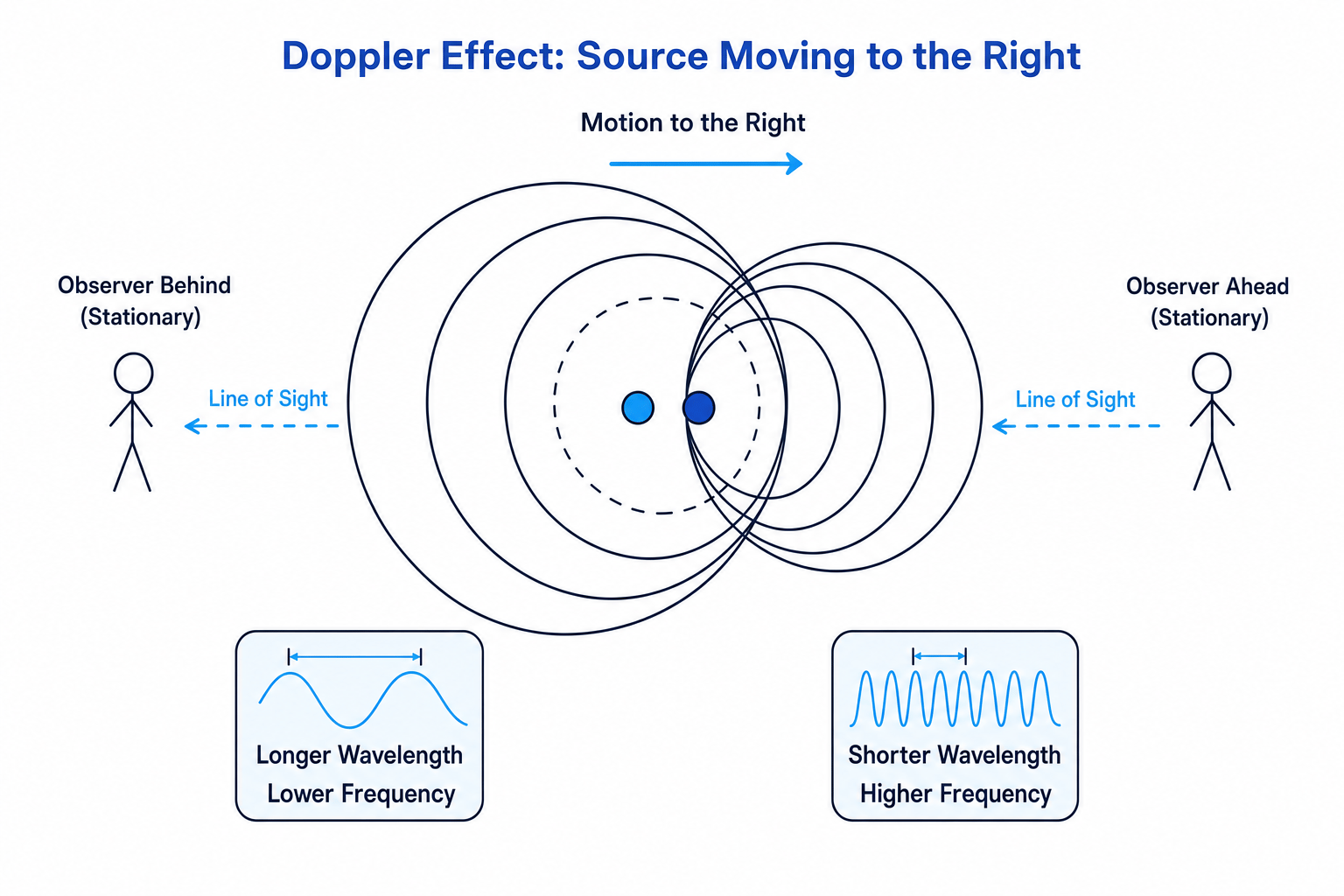
The Doppler effect is the change in observed wavelength and frequency when a source and observer move relative to each other. If the source moves towards you, the wavefronts arrive closer together; if it moves away, they arrive more spread out.
Doppler effect, redshift and Hubble's law Lesson
Step-by-step lessons on Edexcel A Level Physics Doppler effect, redshift and Hubble's law. Each one builds up to exam-style questions. Physics is one of the most mathematically demanding A Levels -- at least 40% of the marks across the three papers require maths skills at Level 2 (GCSE) standard or above, so build calculation and graph-handling fluency alongside the conceptual content from the start.