What the Doppler effect tells us
What the Doppler effect tells us
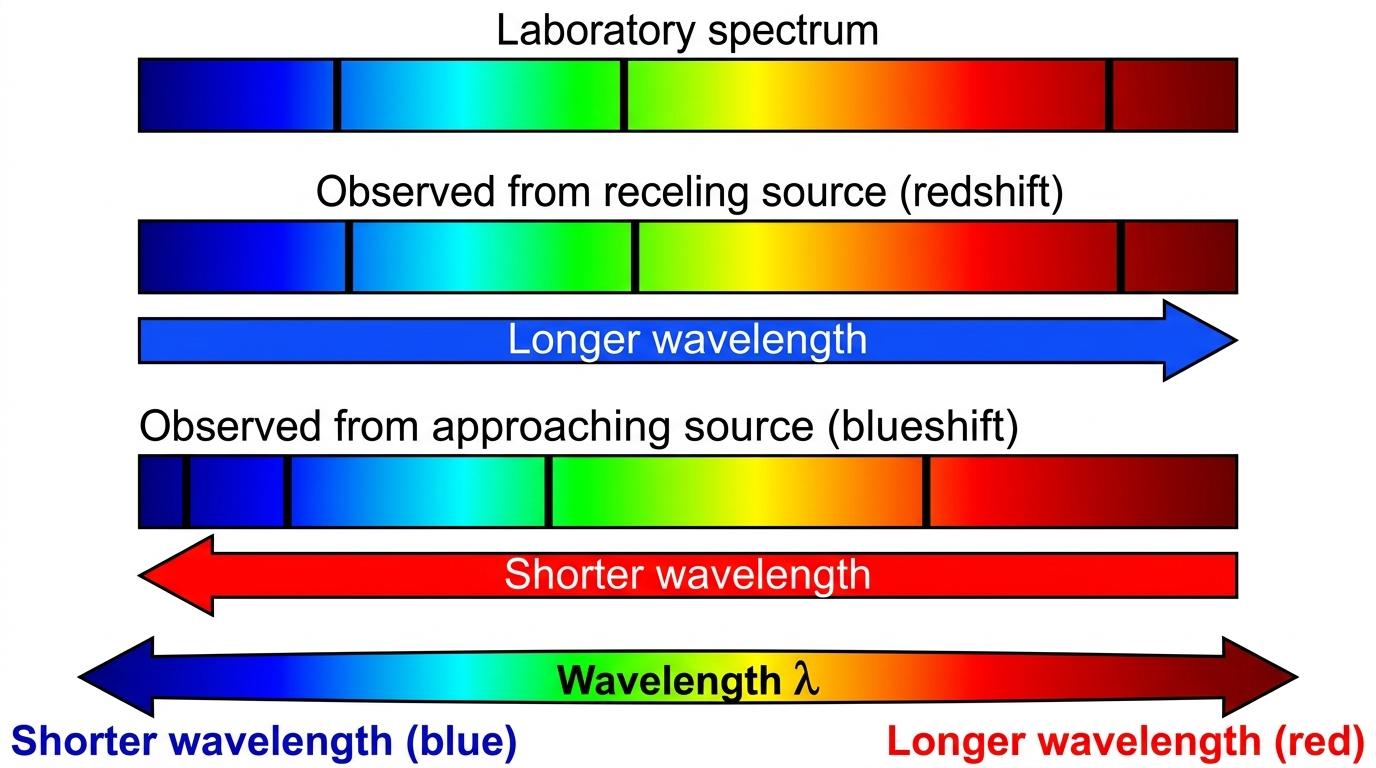 The Doppler effect for light is the change in observed wavelength and frequency caused by relative motion between a source and an observer. Astronomers detect it by comparing known absorption lines from a laboratory spectrum with the same lines from a star or galaxy.
Doppler effect (A-level only) Lesson
Step-by-step lessons on AQA A Level Physics Doppler effect (A-level only). Each one builds up to exam-style questions. Physics is one of the most mathematically demanding A Levels -- at least 40% of the marks require maths skills at Level 2 (GCSE) standard or above, so build calculation and graph-handling fluency alongside the conceptual content from the start.