Why atoms bond
Why atoms bond
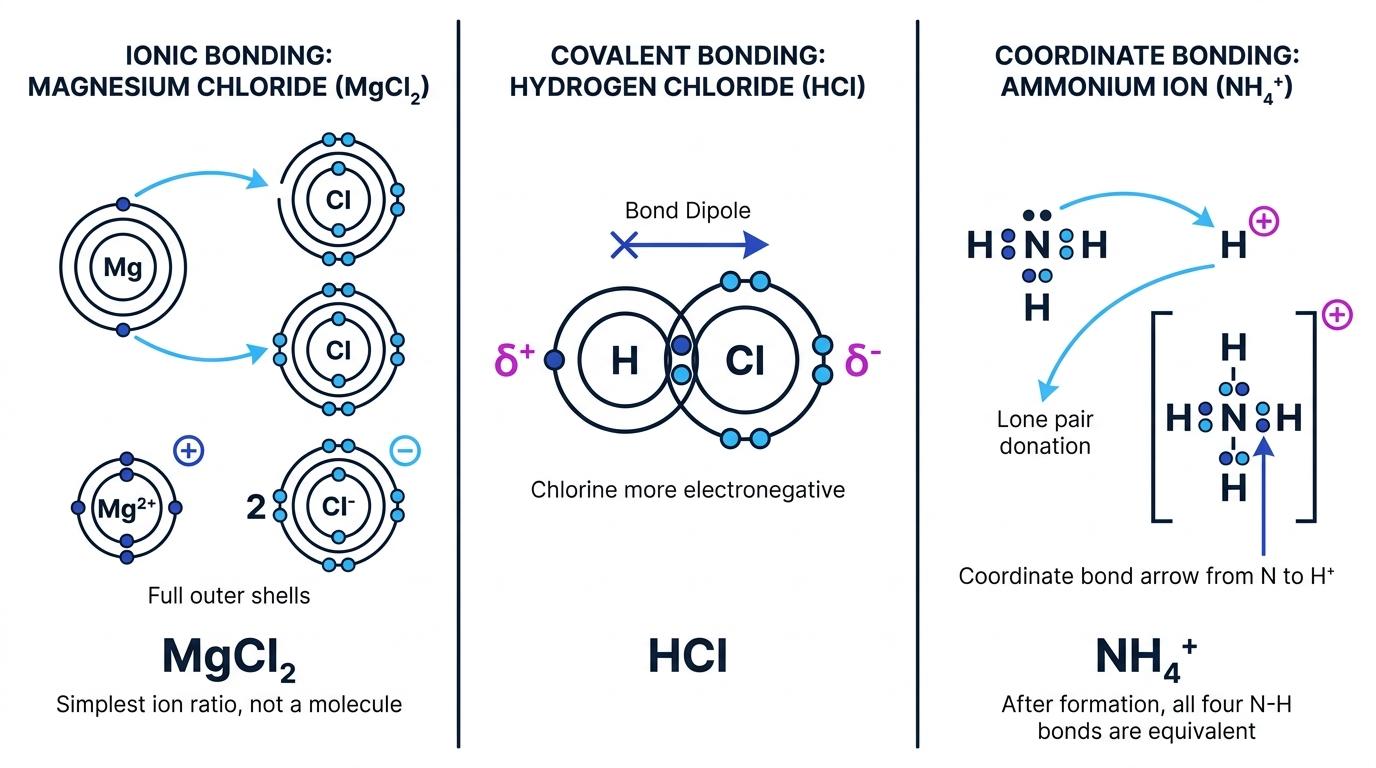
Chemical bonding mainly involves valence electrons, because these are the electrons that can be lost, gained, or shared. Atoms usually bond because the bonded arrangement is lower in energy than the separate atoms. A full outer shell is a useful model for many main-group elements.
Bonding Lesson
Step-by-step lessons on Eduqas A Level Chemistry Bonding. Each one builds up to exam-style questions. Build confidence with atomic structure, bonding and moles calculations early on, since these underpin the more demanding organic mechanisms, equilibrium and practical-analysis topics that dominate Year 2.