What photosynthesis does
What photosynthesis does
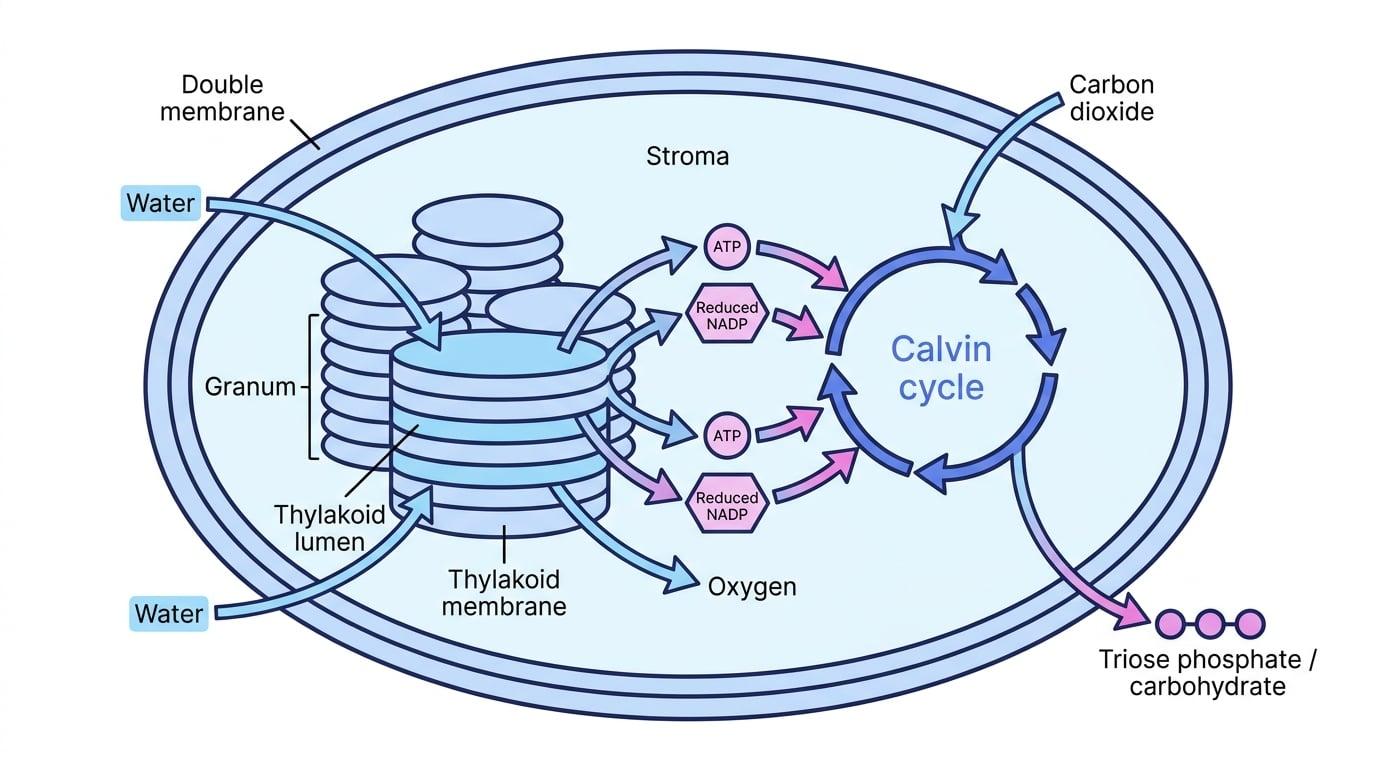
Photosynthesis is the process by which plants, algae and some bacteria use light energy to make organic molecules from carbon dioxide and water. The main product is carbohydrate, and oxygen is released as a by-product.
Photosynthesis uses light energy to synthesise organic molecules Lesson
Step-by-step lessons on Eduqas A Level Biology Photosynthesis uses light energy to synthesise organic molecules. Each one builds up to exam-style questions. Build a strong foundation in cell biology and biochemistry early on, since later topics on genetics, ecology and physiology all draw on these core concepts.